
Introduction to Patient Entertainment Systems
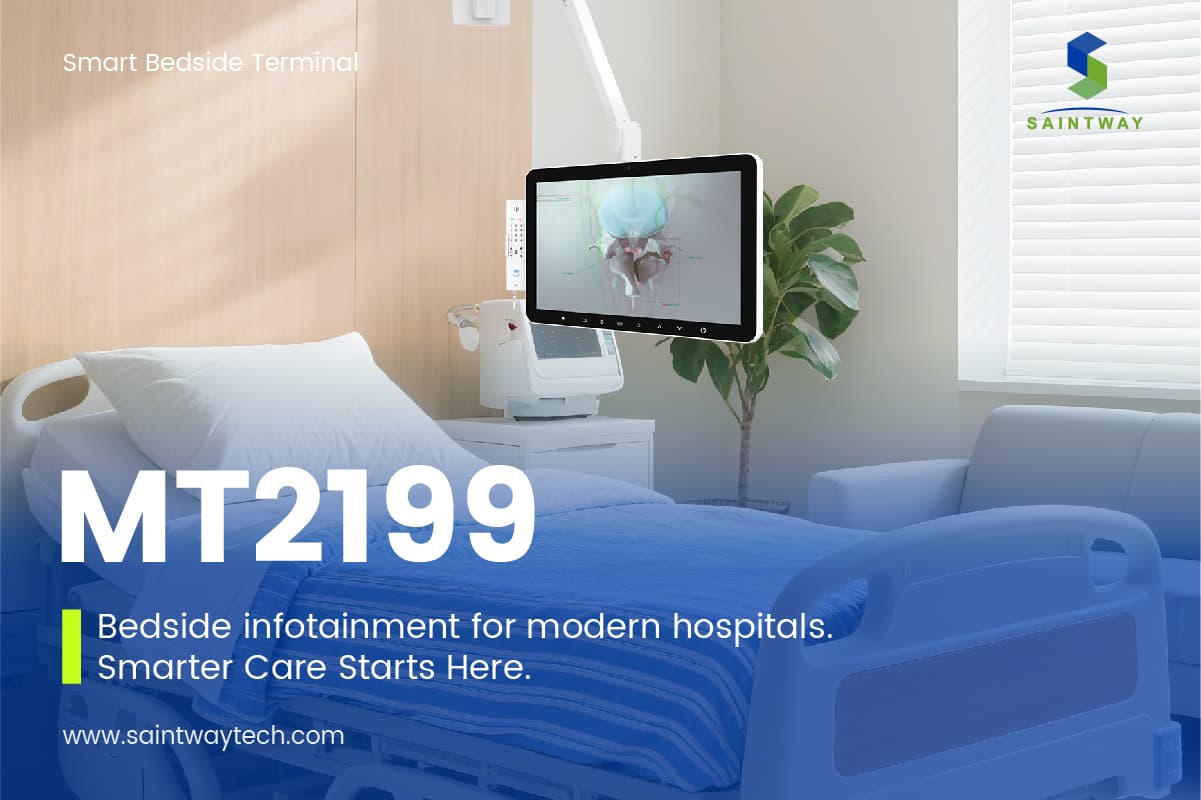
A patient entertainment system is a hospital-based digital solution designed to provide infotainment, communication, and healthcare integration directly at the bedside. These systems have evolved from simple hospital TV setups into advanced platforms that combine hospital bedside infotainment solutions, digital signage, and touchscreen bedside terminals in hospitals.
Patients often ask: “What is a patient entertainment system?” The answer is straightforward: it is a technology that enhances the hospital stay by offering access to television, movies, internet, educational content, and even integration with electronic medical records (EMR).
How a Modern Patient Entertainment System Works (System Topology)
To achieve high-speed data transmission without compromising hospital network security, a standard enterprise-level system requires a dual-isolated network architecture.
- Hardware Layer: Medical-grade smart bedside terminals (e.g., Saintway MT2199) equipped with PoE+ (Power over Ethernet) and anti-microbial housing.
- Network & Control Layer: Sub-interfaces separating the Hospital Intranet (for HIS/EMR access) and the Public Internet (for IPTV, streaming, and gaming).
- Software Layer: Middleware that bridges the HL7/FHIR protocols with the Android/Linux-based infotainment user interface.
Benefits for Hospitals and Patients
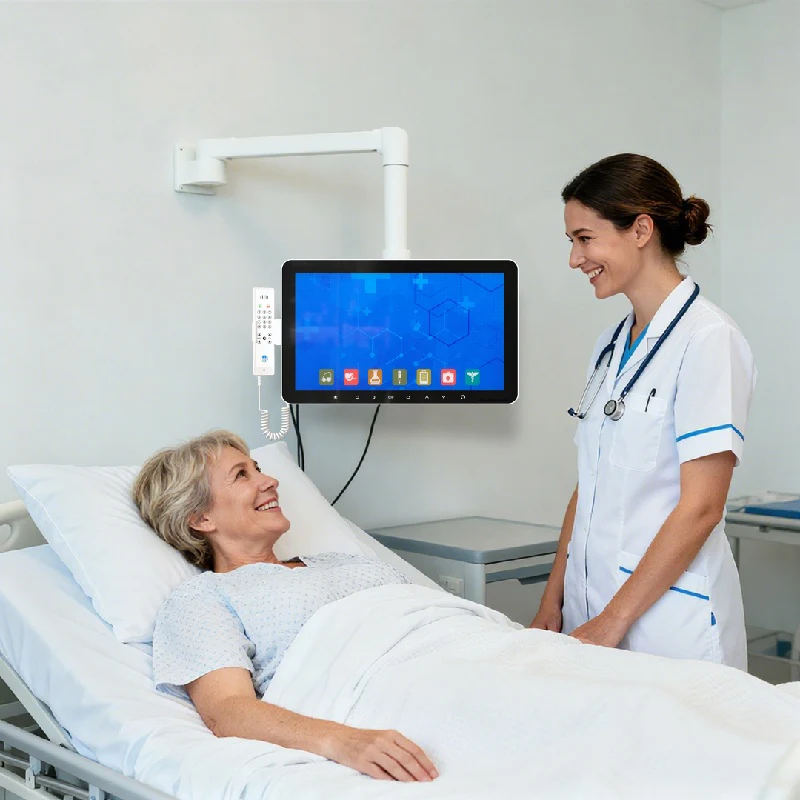
Hospitals increasingly recognize the benefits of patient entertainment systems in hospitals. These systems improve patient satisfaction scores, reduce anxiety, and provide distraction during long stays.
- Role in reducing anxiety: Studies show that entertainment options help patients relax, especially in oncology and surgical wards.
- Pediatric wards: A patient entertainment system for pediatric wards can include games, cartoons, and interactive learning tools, making hospital stays less intimidating for children.
- Patient satisfaction: According to feedback from specific case studies, the introduction of a bedside interactive system can lead to an average increase of 12% to 15% in hospital patient satisfaction (HCAHPS scores)., as patients appreciate the comfort and engagement.
Core Features and Technologies
Modern systems go far beyond traditional TV. Key features include:
Medical-Grade Hardware Compliance (Crucial for Procurement)
Unlike consumer tablets, a true patient entertainment system terminal must meet strict clinical environment demands:
- Certification: Must be certified with IEC/EN 60601-1 (Medical Electrical Equipment Safety).
- Infection Control: Antimicrobial plastics with an IP65 waterproof front rating, allowing continuous disinfection with medical-grade isopropyl alcohol or bleach wipes without degrading the capacitive touchscreen.
- Electrical Safety: Built-in galvanic isolation for I/O ports (LAN, COM) to prevent leakage currents from reaching the patient.
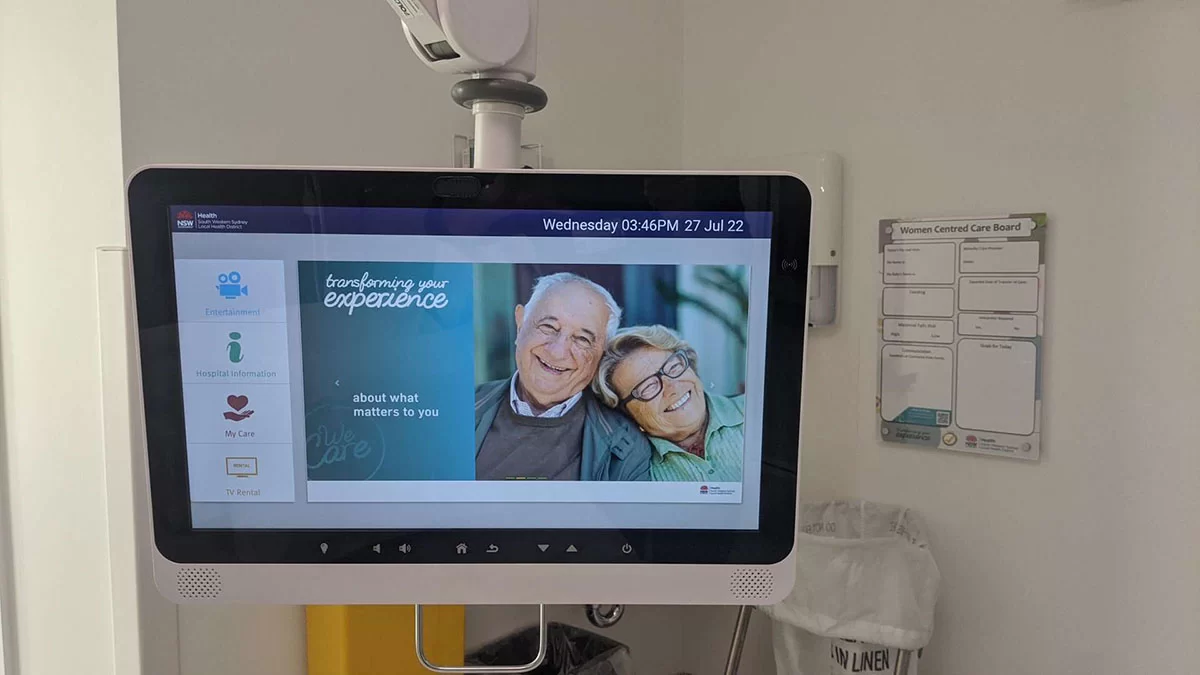
- Bedside terminals: Interactive touchscreen bedside terminals in hospitals allow patients to access entertainment, order meals, and communicate with staff.
- Hospital IPTV systems: Provide customized channels and hospital-specific content.
- Digital signage for patient engagement: Used in waiting areas and wards to share health information.
- Integration with EMR: Patients can view their care plans, medication schedules, and educational materials.
These hospital bedside infotainment solutions are designed to improve both patient experience and clinical workflow.
Integration with Healthcare IT
One of the most powerful aspects is integration of patient entertainment system with EMR. This allows:
- Personalized content delivery based on patient records.
- Secure communication between patients and clinicians.
- Compliance with HIPAA and other healthcare IT standards.
Real-time data exchange relies heavily on HL7 (Health Level Seven) and FHIR (Fast Healthcare Interoperability Resources) web services. By integrating with leading EMR systems like Epic or Cerner, the patient entertainment system automatically:
- Displays customized post-surgery educational videos assigned by the attending physician.
- Syncs with the Nurse Call System (via RJ45 or dry-contact interface), allowing patients to request water or pain relief directly from the bedside touchscreen, triaging non-clinical requests and reducing nurse alarm fatigue by up to 30%.
Cloud-based platforms are emerging, offering cloud-based patient entertainment platforms that reduce infrastructure costs and improve scalability.
Cost and Vendor Selection
Hospitals often ask: “What is the cost of patient entertainment systems for hospitals?”
Costs vary depending on:
- Number of beds.
- Features (basic TV vs. full EMR integration).
- Vendor pricing models (subscription vs. one-time purchase).
When considering how to choose patient entertainment system vendor, hospitals should evaluate:
- Integration capabilities.
- Support and training.
- Compliance with healthcare regulations.
- ROI and patient satisfaction impact.
Case Studies and Examples
Several hospitals worldwide have implemented examples of patient entertainment systems in healthcare:
- Children’s hospitals: Deploying interactive games and educational content.
- Oncology centers: Using relaxation videos and guided meditation.
- General hospitals: Offering IPTV and bedside terminals for communication.
These case studies highlight how patient entertainment systems for pediatric wards and adult care units can transform patient engagement.
Future Trends in Patient Entertainment Technology
The future is promising, with future trends in patient entertainment technology including:
- AI personalization: Tailoring content to patient preferences.
- Virtual reality (VR): Immersive experiences for pain management.
- Augmented reality (AR): Educational overlays for treatment understanding.
- Cloud-based solutions: Scalable, cost-effective platforms.
Hospitals adopting these innovations will lead in patient-centered care.
FAQ Section
Q1: What is a patient entertainment system?
A patient entertainment system is a hospital-based digital solution that provides infotainment, communication, and healthcare integration at the bedside.
Q2: How do patient entertainment systems improve patient satisfaction?
They reduce anxiety, provide distraction, and enable patients to access information and entertainment during hospital stays.
Q3: What is the cost of patient entertainment systems for hospitals?
Costs vary depending on vendor, features, and scale, typically ranging from per-bed licensing to enterprise packages.
Q4: How do hospitals choose the right vendor?
By evaluating integration capabilities, compliance, support, and ROI.
Q5: How do hospitals prevent Wi-Fi congestion when scaling patient entertainment systems?
A: Scaling to hundreds of beds can crash consumer-grade Wi-Fi networks due to HD video streaming. To prevent this, enterprise systems utilize IGMP Snooping for IPTV multicast streaming over the LAN, or deploy hardware equipped with Gigabit Ethernet (PoE/PoE+) to offload heavy traffic from the clinical Wi-Fi network entirely.
Q6: Are patient entertainment terminals safe to use in Rooms?
A: Safe. Fanless designs (like Saintway’s terminals) prevent the circulation of airborne pathogens and dust, which is critical for infection control in sterile hospital zones.
| Deployment Factor | Cloud-Based SaaS Solution | On-Premise Enterprise Solution | Saintway Hardware Hybrid Model |
| Initial CAPEX | Low (Pay per active bed license) | High (Requires dedicated server hardware) | Balanced (Optimized hardware with open OS) |
| Data Privacy / Security | Dependent on cloud compliance (HIPAA) | Maximum (Data never leaves the hospital LAN) | High (Flexible integration with custom firewalls) |
| Bandwidth Demand | High (Requires stable outbound internet) | Low (Feeds from local IPTV/media servers) | Low-to-Medium (Local caching enabled) |
| Best For | Outpatient clinics & long-term care | Large-scale multi-ward public hospitals | Smart hospitals requiring deep HIS/EMR customization |
Latest Content
- What Is a Smart TV Box? Complete Guide to Streaming Devices in 2026
- Selecting the Right TV for Hospital Beds: A Practical Guide to Patient Entertainment and Comfort
- Hospital Patient Room TV: Specs & Buying Guide
- How to Choose Medical Bedside Terminal Equipment and Manufacturers: A 2026 Procurement Guide
- Bedside Infotainment Solutions for Modern Healthcare: Moving Beyond TV to Intelligent Care Delivery