
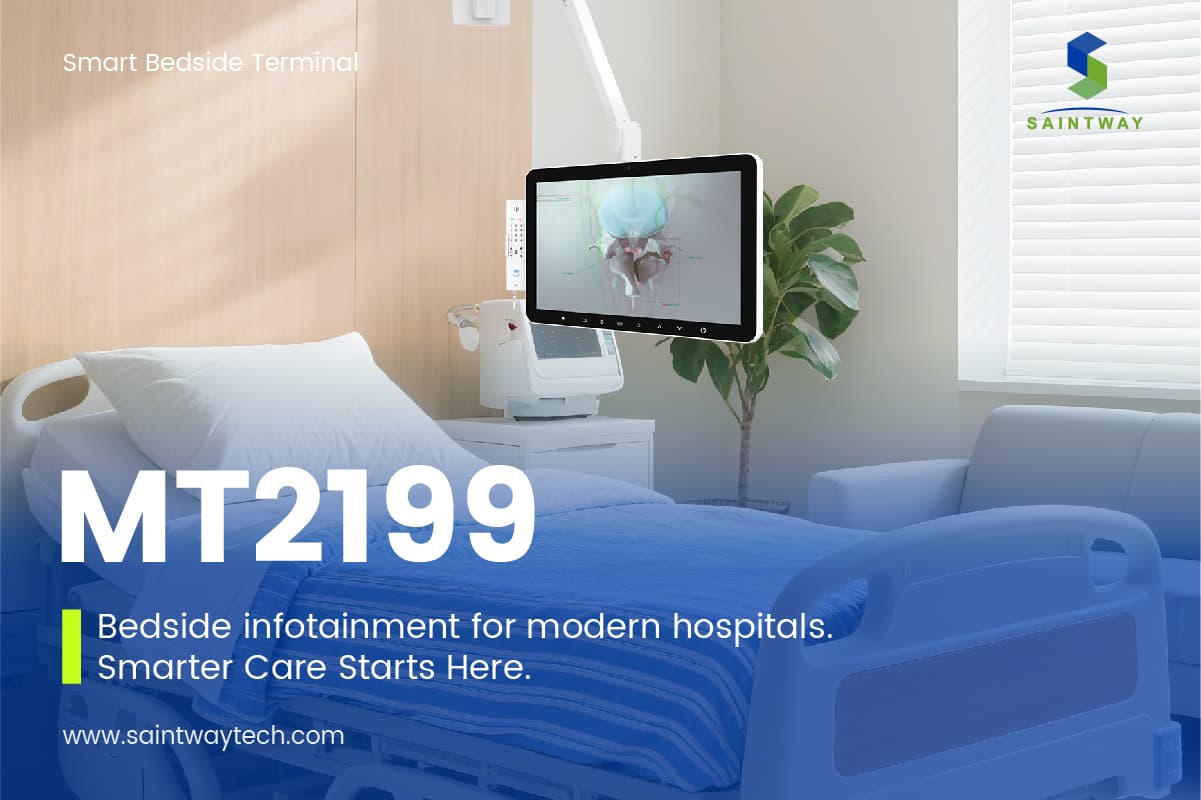
Hospital administrators, clinical engineers, and procurement officers face a distinct challenge when upgrading patient rooms: balancing clinical safety with patient comfort. The standard home television is rarely suitable for a medical environment. It lacks the necessary sanitation features, cannot integrate with hospital infrastructure, and often fails to meet strict electromagnetic compatibility standards. Searching for a “hospital patient room TV” is not just about finding a screen; it is about finding a medical-grade display that reduces infection risks, simplifies installation, and improves the overall patient experience. This guide breaks down the specific requirements, technical specifications, and selection criteria needed to implement a reliable in-room media system.
Why Standard TVs Fail in Clinical Settings
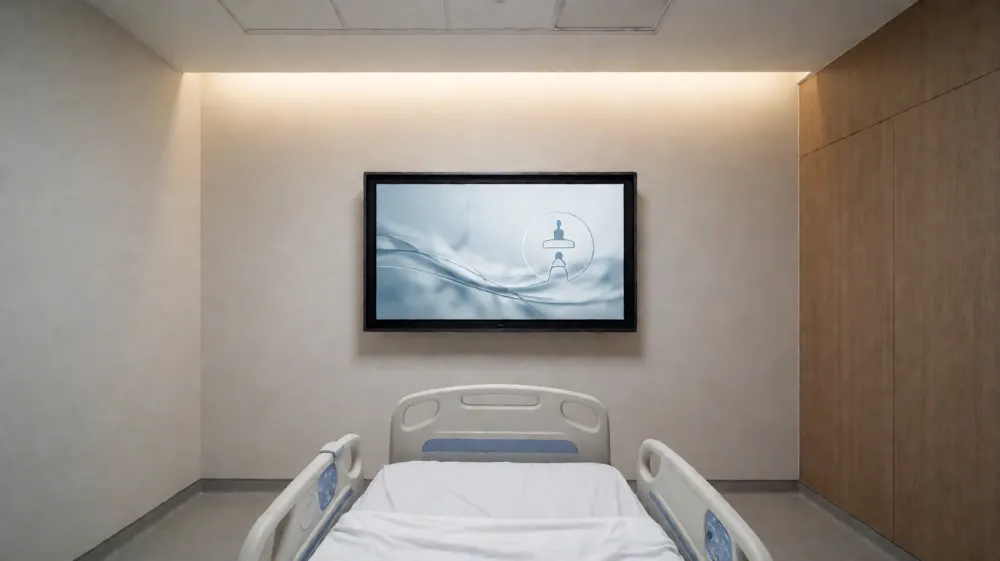
Using a domestic consumer-grade television in a hospital creates several operational hazards. First, hygiene is a primary concern. Most home TVs have glossy plastic bezels that harbor bacteria and are difficult to clean with hospital-grade disinfectants. Second, installation is complex. Consumer units require wall mounts, power cabling, and separate remote controls, which can be lost, stolen, or break, leading to high maintenance costs. Third, there is no digital signage capability. Hospitals increasingly need to display orientation videos, medication reminders, and educational content seamlessly. A medical-grade patient room TV is designed to solve these specific pain points by integrating audio, display, and control into a single, sanitized unit.
Key Specifications and Technical Parameters
When evaluating manufacturers, you must look beyond screen size. The following technical parameters define a true medical-grade display. Ensure the unit meets these criteria before finalizing a purchase.
- Disinfectable Construction: The front glass and bezel must be rated for use with common hospital disinfectants such as bleach, 70% isopropyl alcohol, and CaviCide.
- Integrated Loudspeaker: Built-in speakers eliminate the need for separate audio hardware, reducing clutter and points of failure.
- Remote Control & Hub Integration: The unit must support wireless communication with a bedside hub or a centralized hospital IT system to change channels and volume without physical interaction.
- Electromagnetic Compatibility (EMC): The TV must pass IEC 60601-1 medical equipment safety standards to ensure it does not interfere with adjacent medical monitoring devices.
- Mounting System: A “no-drill” magnetic or adhesive mounting system is preferred to avoid damaging high-end hospital wall finishes.
- Operating Temperature: The unit must remain stable in HVAC-controlled environments ranging from 10°C to 40°C.
- Input Latency: For interactive services, the display must process input commands within 200ms to ensure a responsive user interface.
Comparison: Medical-Grade vs. Consumer-Grade Displays
The table below highlights the critical differences between a dedicated hospital patient room TV and a standard consumer television. Use this comparison to justify your budget allocation to stakeholders.
| Feature | Medical-Grade Patient Room TV | Consumer-Grade TV |
|---|---|---|
| Surface Material | Anti-microbial, glass-fronted, disinfectant-rated | Plastic bezel, prone to scratch and harbor germs |
| Installation | Magnetic/Adhesive, tool-free, no wall drilling | Requires screws, wall anchors, and electrical wiring |
| Connectivity | Wi-Fi, Zigbee, or RS-485 integrated with Bed Side Unit | Manual remote control, no central IT integration |
| Sanitation | Can be wiped down with industrial cleaners | Cleaning can damage surface or void warranty |
| Content Management | Centralized Digital Signage/Cloud Management | Manual channel selection, no scheduled content |
| Safety Certification | IEC 60601-1 Medical Equipment Standard | Consumer safety standards only |
| Lifespan Maintenance | Modular, hot-swappable in many models | Fixed unit, difficult to replace without tools |
Critical Considerations for Procurement Teams
Before issuing a Request for Proposal (RFP), consider the long-term lifecycle of the device. Hospitals operate in 24/7 environments where the television will be used continuously.
- Durability and Vandalism Resistance: The glass front should be at least 4mm thick to withstand accidental impacts from bed rails or medical equipment.
- Flicker-Free Technology: Use IPS or VA panels that do not flicker, which can cause eye strain for patients resting for long periods.
- Audio Clarity: Integrated speakers must provide clear audio without requiring high decibel levels that could disturb neighboring patients. Look for a frequency range of 100Hz to 20kHz.
- Warranty and Support: Medical-grade manufacturers typically offer a 3-year warranty with next-business-day replacement. Consumer TVs usually offer only 1 year with parts repair.
- Power Efficiency: With hundreds of units on the floor, a power consumption of less than 20W in standby mode significantly impacts the facility’s energy costs.
Implementation Best Practices
Installing a patient room TV is not just a plug-and-play event. It requires coordination with the IT and Facilities departments.
- Network Security: If the TV connects to the hospital Wi-Fi, it must be on a segregated VLAN to protect patient data and prevent unauthorized access.
- Content Strategy: Define who controls the content. Should it be the hospital’s marketing team or a third-party service provider? Ensure the firmware supports your preferred CMS (Content Management System).
- User Interface Design: The remote or touchscreen interface should be high-contrast and large-buttoned to accommodate elderly patients or those with visual impairments.
- Testing Protocol: Before mass deployment, run a pilot in one ward. Test the disinfectant compatibility with your specific cleaning protocols for 30 days to check for surface degradation.
Frequently Asked Questions
Can a hospital patient room TV be updated remotely?
Yes, modern medical-grade displays support Over-The-Air (OTA) updates. This allows IT staff to push firmware patches and content changes from a central server to all units simultaneously, reducing the need for physical maintenance visits to each room.
What is the average lifespan of a medical-grade hospital TV panel?
Industry data suggests that high-quality industrial LED backlights and panels have a rated life of 50,000 to 100,000 hours. In a 24/7 operation, this translates to roughly 5 to 10 years of continuous use before brightness degradation becomes noticeable.
Do these TVs interfere with patient monitoring equipment?
No, provided the unit is certified to IEC 60601-1 standards. This certification ensures the device emits minimal electromagnetic interference (EMI) and is immune to interference from other medical devices. Always verify the specific EMC testing reports for the model you select.
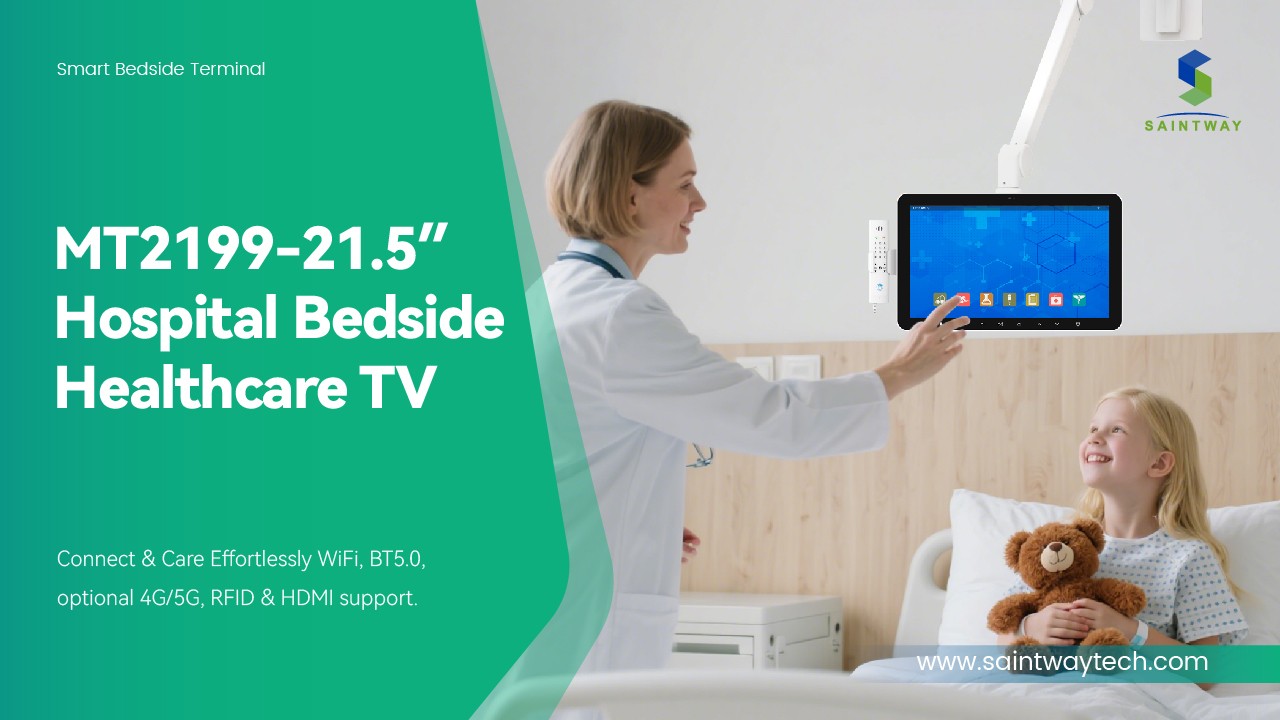
Request a Free Product Quote
Selecting the right display unit is a critical step in modernizing your patient experience. To help you evaluate the best options for your facility, we can provide detailed data sheets, warranty terms, and pricing for our medical-grade patient room TV series. Contact our sales engineering team today for a free consultation and a tailored quote based on your facility size and integration requirements.
Latest Content
- The Ultimate Guide to Choosing a Medical Display Manufacturer (2026)
- Reshaping the Ward Experience: From Hardware Terminals to Supply Chain Strategy
- Bedside Terminal: The Complete Guide to Patient-Centric Hospital Technology
- Integrated Bedside Infotainment: 2026 Implementation & Security Guide
- The 2026 Definitive Guide to Patient Bedside Entertainment Terminals