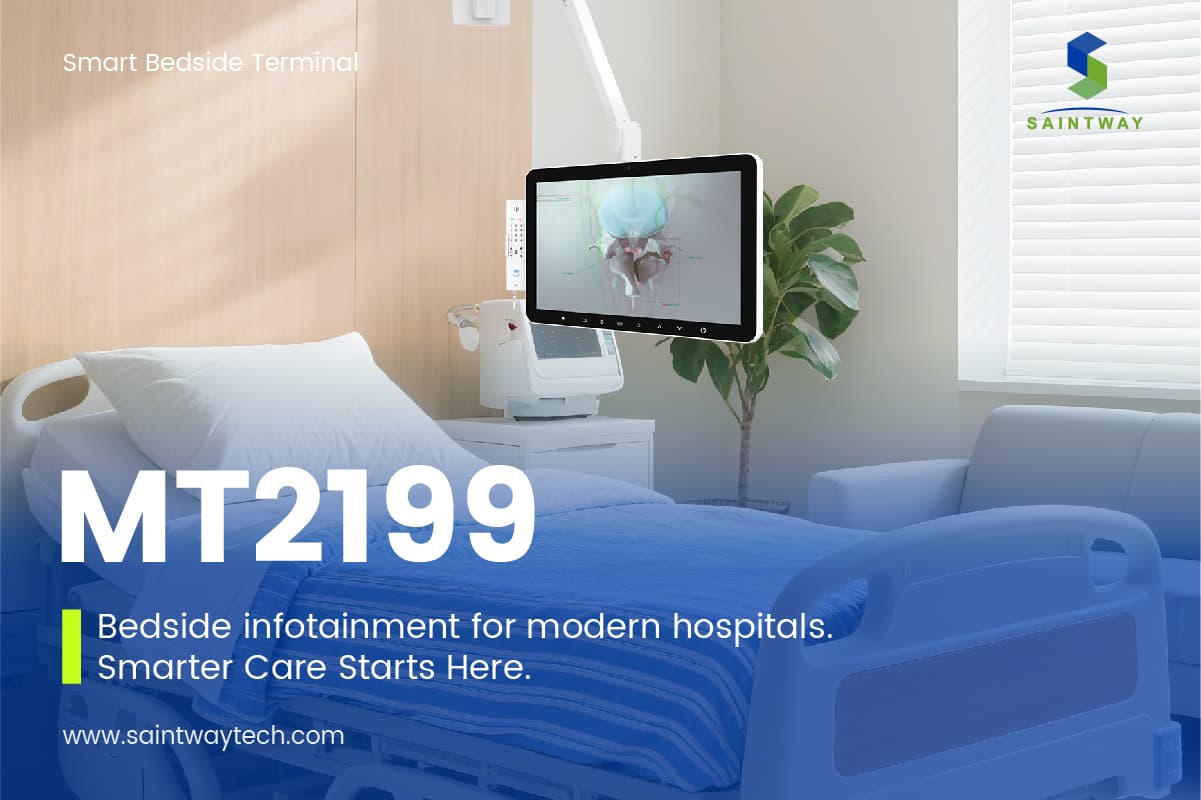
A medical display manufacturer designs, engineers, and produces monitors that meet stringent clinical‑grade standards (e.g., DICOM Part 14, IEC 60601‑1, FDA 510(k), CE MDR). Unlike consumer‑grade screens, these devices guarantee:
Consistent luminance & contrast for accurate grayscale rendering.
Stable calibration over thousands of hours (often with built‑in sensors).
Compliance with infection‑control surfaces (antimicrobial coating, sealed bezels).
Robust warranty & service networks tailored to hospital uptime requirements.
Manufacturers may sell directly to health systems, act as OEMs for equipment vendors (e.g., ultrasound, endoscopy), or provide custom‑integration services for PACS/RIS workflows.
Why Specialization Matters in Medical Displays
Risk of Using Non‑Medical Displays
Impact on Clinical Workflow
Incorrect grayscale rendering (non‑DICOM)
Misdiagnosis, repeat imaging
Luminance drift over time
Inconsistent readings, need for frequent re‑calibration
Specialized manufacturers mitigate these risks by embedding hardware‑level calibration, medical‑grade IEC certifications, and dedicated field‑service teams that understand hospital SLAs.
Critical Selection Criteria
When evaluating a medical display manufacturer, use this scorecard (weight each factor according to your institution’s priorities).
Category
Key Questions
Why It Matters
Regulatory & Certifications
• FDA 510(k) / CE MDR? • DICOM Part 14 compliance? • IEC 60601‑1, IEC 62304 (software)?
• Adjustable stand (height, tilt, swivel)? • Antimicrobial coating, fan‑less design? • Cable management & medical‑grade power connectors?
Improves workflow efficiency & infection control.
Warranty & Service
• Standard warranty length (years)? • On‑site vs. depot service? • Mean Time To Repair (MTTR) & parts availability?
Directly influences uptime & TCO.
Total Cost of Ownership (TCO)
• Unit price vs. lifespan (typically 5‑7 years). • Energy consumption (W). • Calibration service contracts.
Helps justify CAPEX vs. OPEX budgets.
References & Case Studies
• Installations in similar modalities (radiology, pathology, OR). • Peer‑reviewed publications or KLAS ratings.
Provides real‑world validation.
Innovation Roadmap
• Support for HDR, wide‑color gamut? • AI‑assisted workflow features (e.g., auto‑windowing). • Modular upgrade path (e.g., SB‑controlled firmware).
Future‑proofs investment.
Tip: Create a simple spreadsheet, assign scores (1‑5) per criterion, and compute a weighted total. Vendors scoring ≥ 80 % overall are usually worth a deeper technical evaluation.
Top Medical Display Manufacturers in 2026
Manufacturer
Headquarters
Flagship Models (2025)
Key Differentiators
Typical Warranty
Barco
Kortrijk, Belgium
Nio Color 5MP, Nio Fusion 8MP
• Industry‑leading luminance uniformity < 2 % • Integrated Barco QAWeb™ for automated DICOM QA • Strong global service network (≈ 150 service centers)
3 years on‑site (extendable)
EIZO
Hakusan, Japan
RadiForce RX560, RX850
• Patented Digital Uniformity Equalizer (DUE) • EcoView Sense™ reduces power by up to 30 % • Long‑life LED backlight (100 k hrs)
5 years limited
Sony Medical
Tokyo, Japan
LMD‑X310MD, LMD‑X550MD
• Triluminos™ color for pathology • HDMI 2.0 + DisplayPort 1.4 with HDCP 2.2 • Built‑in anti‑glare, antimicrobial coating
3 years
LG Business Solutions
Seoul, South Korea
5ME380D‑B, 8ME380D‑B
• IPS Black technology for superior contrast • WebOS‑based remote management • Competitive price‑to‑performance ratio
Evaluate bundled thin‑client OS (e.g., Windows 10 IoT Enterprise) and licensing costs.
Frequently Asked Questions
Q1: Do I need a 5MP or 8MP display for general radiology? A: For most diagnostic radiology (CT, MR, X‑ray) a 5MP (2048×1536) screen meets DICOM Part 14 requirements. 8MP (3840×2160) is advantageous for digital pathology, mammography, or when you need simultaneous multi‑view layout without loss of detail.
Q2: How often should I calibrate a medical display? A: Manufacturers typically recommend weekly luminance checks with a calibrated photometer and monthly full DICOM QA using software. Built‑in sensors can automate weekly checks, but a quarterly professional service is still advisable.
Q3: Can I use a consumer‑grade monitor for PACS reading if I calibrate it? A: No. Consumer panels lack the required long‑term luminance stability, medical‑grade safety certifications, and uniformity guarantees. Even with calibration, they risk non‑compliance and potential liability.
Q4: What is the typical lifespan of a medical‑grade display? A: With proper care, 5‑7 years is standard. LED backlights now exceed 100 k hrs, but mechanical components (stands, buttons) may wear sooner.
Q5: How do I evaluate total cost of ownership? A: Use the formula: