
- What is a Bedside Infotainment System?
- The Clinical Case for Bedside Infotainment Systems
- Six Proven Benefits of Bedside Infotainment Systems
- Real-World Implementation: Key Features
- Hardware Options and Deployment Flexibility
- Clinical Safety and Infection Control
- Implementation Strategy for Healthcare Facilities
- Measuring Success: Key Performance Indicators
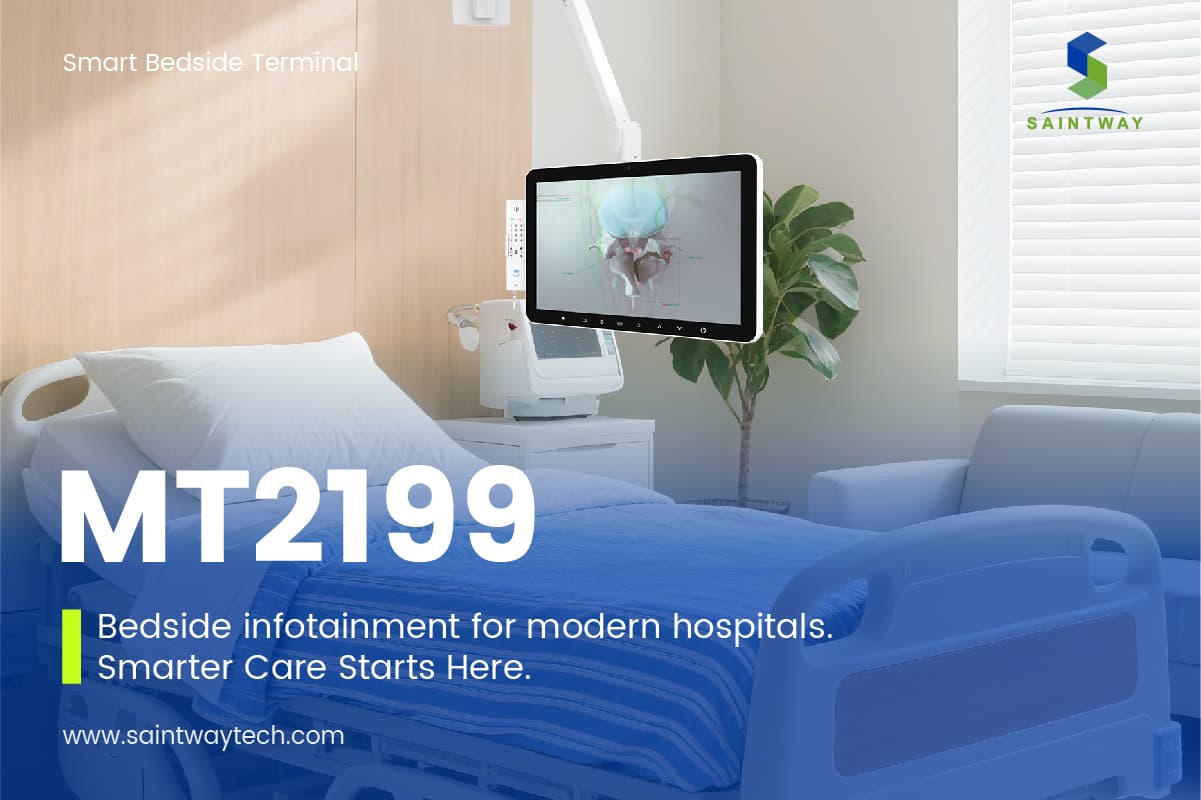
A bedside infotainment system represents far more than entertainment technology in modern healthcare. These integrated platforms combine interactive television, patient communication tools, educational content, and clinical access into a single touchscreen device positioned at the patient’s bedside. Evidence from healthcare systems across North America demonstrates that bedside infotainment system implementations directly improve patient satisfaction, reduce hospital readmissions, and enhance clinical engagement—making them a strategic investment in patient-centered care.
What is a Bedside Infotainment System?
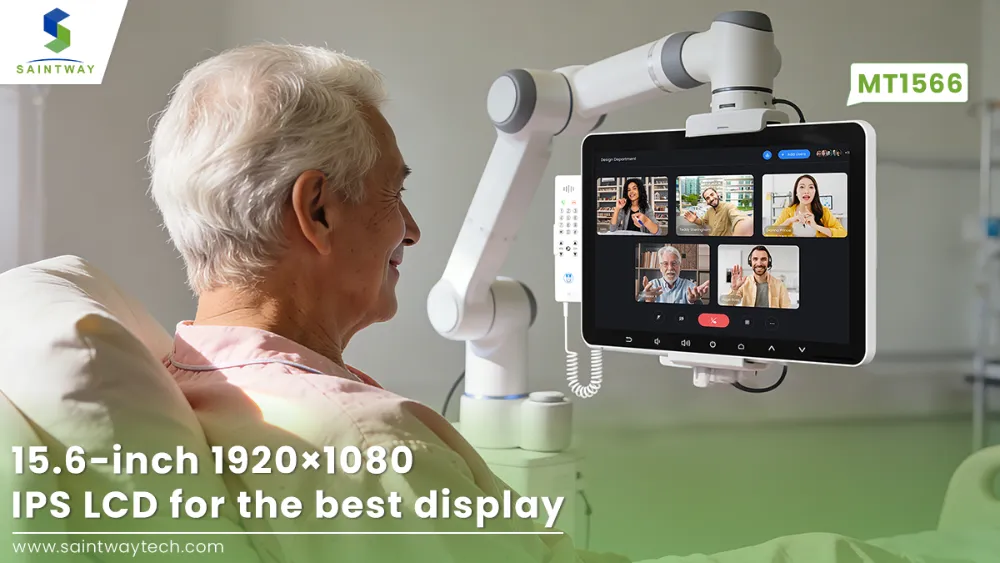
A bedside infotainment system is a purpose-built healthcare technology platform that integrates multiple functions into a single bedside terminal. Unlike consumer tablets or televisions, these systems are specifically engineered for hospital environments with features including:
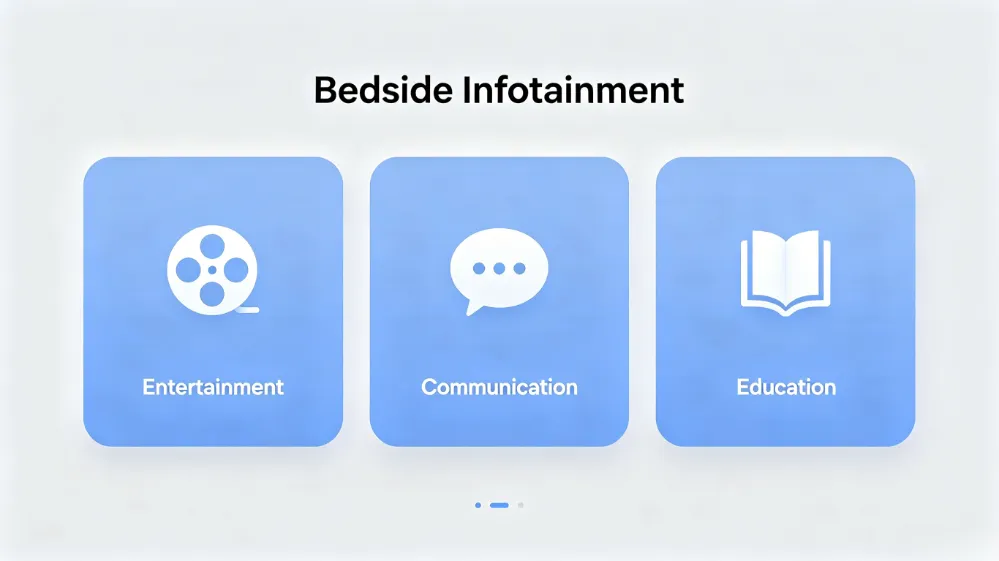
- Interactive Entertainment: Television, movies, music, and games tailored for patient wellness
- Patient Communication: Two-way messaging with nursing staff and care teams
- Clinical Access: Secure viewing of personal health information and care plans
- Educational Content: Diagnosis-specific materials and discharge preparation resources
- Service Management: Meal ordering, room adjustments, and hospital information access
- Staff Integration: Electronic health record (EHR) access for clinicians and secure authentication
The global bedside infotainment system market is experiencing significant growth, with North America accounting for 44.6% of the market in 2025 as hospitals prioritize patient experience and digital engagement. The market is projected to expand at a 6.9% compound annual growth rate through the forecast period, driven by advances in touchscreen technology and AI-powered personalization.
The Clinical Case for Bedside Infotainment Systems
Hospital Readmission Reduction
One of the most compelling benefits of bedside infotainment system technology is documented reduction in hospital readmissions. A Samsung study found that hospitals using patient entertainment systems reported better patient satisfaction and health outcomes, with decreased hospital readmissions as a direct result.
This outcome stems from multiple factors. Patients using bedside infotainment system platforms receive better discharge education through interactive video tutorials and real-time FAQs. When patients understand their discharge instructions and post-care requirements, they’re significantly more likely to follow treatment plans at home, preventing complications that lead to readmission.
Patient Satisfaction and Engagement
Research from Community Health Systems (CHS) demonstrates exceptional adoption rates: 98% of patients used the bedside infotainment system during their hospital stay in 2014. This near-universal adoption reflects both the intuitive design of modern systems and the genuine value patients perceive.
The entertainment value alone contributes significantly to patient satisfaction. Long hospital stays create psychological stress and boredom. A bedside infotainment system providing access to movies, games, music, and internet access creates a sense of normalcy and control—critical factors for emotional wellness during medical treatment.
Six Proven Benefits of Bedside Infotainment Systems
1. Enhanced Patient Education and Health Literacy
Patients are more likely to follow discharge instructions and participate in their care when information is delivered through familiar, interactive formats. A bedside infotainment system displaying video tutorials, animations, and visual explanations simplifies complex medical concepts.
This is particularly valuable for:
- Post-operative patients learning wound care procedures
- Chronic disease patients understanding medication regimens
- Pediatric patients preparing for procedures
- Geriatric patients managing multiple conditions
2. Reduced Nurse Call Volume and Improved Workflow Efficiency
Traditional nurse call systems generate significant overhead through non-clinical requests. CHS hospitals reported more streamlined in-room patient requests through bedside infotainment system implementations, leading to fewer interruptions for nurses with non-nursing requests.
When patients can order meals, adjust room temperature, control lighting, and request non-urgent assistance through the bedside infotainment system, nursing staff can focus on clinical care. This workflow optimization reduces staff burnout and improves care quality.
3. Improved Communication Between Patients and Care Teams
Modern bedside infotainment system platforms include two-way communication tools enabling patients to directly request help, ask questions, or communicate concerns with their care team.This capability is particularly beneficial for patients who may not want to use traditional call bells or who require assistance at odd hours.
The ability to directly communicate through an entertainment system streamlines the process and improves response time for hospital staff. Patients feel heard and supported, while care teams receive clear, documented requests.
4. Emotional Wellness and Stress Reduction
Long hours alone in a hospital bed create psychological challenges. Entertainment features in a bedside infotainment system break up the monotony of hospital life and provide meaningful diversions. This is especially beneficial for:
- Pediatric patients facing extended stays
- Oncology patients undergoing lengthy treatments
- Geriatric patients isolated from family
- Post-operative patients managing pain and anxiety
When patients feel emotionally supported and entertained, they’re more likely to comply with care plans and participate actively in their treatment journey.
5. Ergonomic Comfort and Patient Safety
Modern bedside infotainment system designs prioritize ergonomics with flexible mounting systems allowing patients to adjust device position without leaving their beds. A patient recovering from surgery may need to maintain a specific position for hours; the flexibility of a bedside infotainment system mounting allows them to watch educational content or entertainment without physical strain.
This ergonomic consideration prevents additional discomfort and potential complications from forced repositioning.
6. Data-Driven Hospital Operations and Quality Improvement
A bedside infotainment system generates valuable operational data. Hospital administrators can:
- Collect usage statistics and patient satisfaction surveys
- Access real-time information about patient requests and satisfaction
- Identify high-demand content and services
- Deploy targeted improvements based on patient feedback
- Track engagement metrics across departments
LOC Medical emphasizes that this data enables hospitals to make informed decisions about resource allocation and service improvements.

Real-World Implementation: Key Features
Touchscreen Interface Design
Advances in touchscreen technology and user interface design have improved usability for patients of all age groups. Hospital networks are standardizing digital bedside solutions across facilities to ensure consistent patient experience. Modern bedside infotainment system interfaces feature:
- Large, high-contrast text for elderly patients
- Intuitive icons requiring minimal instruction
- Voice-activated controls for patients with mobility limitations
- Multilingual capabilities for diverse patient populations
AI-Powered Personalization
Recent developments in 2024-2025 show manufacturers embedding artificial intelligence capabilities to deliver adaptive user interfaces and predictive content recommendations. A bedside infotainment system with AI learns patient preferences and suggests relevant entertainment, educational content, and services tailored to individual needs.
EHR Integration and Clinical Access
Leading bedside infotainment system platforms integrate seamlessly with hospital electronic health record systems. Clinical staff access secure authentication through magnetic stripe readers or biometric verification, enabling bedside access to patient data for diagnoses and care planning. ARBOR Technology
Multi-Device Ecosystem
Modern patient engagement extends beyond the bedside terminal. More than 50% of patient engagement today occurs on personal devices, with higher percentages among younger demographics. HFM Magazine Leading bedside infotainment system platforms support “bring your own device” (BYOD) access, allowing patients to engage through their personal tablets, phones, or laptops while maintaining the same clinical integration and content.
Hardware Options and Deployment Flexibility
Size and Configuration Options
Bedside infotainment system providers offer multiple hardware configurations:
- 10-inch displays: Suitable for space-constrained rooms, home care, and clinic settings
- 21.5-inch displays: Optimal for hospital rooms with better visibility and interaction surface
- Mounting options: Wall-mounted, overbed tables, or mobile carts for flexibility
Saintway Technology emphasizes that this flexibility enables deployment across diverse healthcare settings from acute care hospitals to home care services.
Operating System Flexibility
Modern bedside infotainment system solutions support multiple operating systems:
- Android-based systems: Offer application flexibility and customization
- Windows platforms: Ensure compatibility with existing medical software
- Linux systems: Enable customized healthcare integration and security hardening
This flexibility allows hospitals to select systems that integrate with existing IT infrastructure and clinical workflows.
Clinical Safety and Infection Control
Hygienic Design
Bedside infotainment system devices incorporate anti-bacterial housing and ingress protection to maintain clinical safety standards. Medical-grade certifications ensure compliance with healthcare regulations.
Data Security and Privacy
HIPAA compliance is built into enterprise bedside infotainment system platforms. Secure clinician authentication, encrypted data transmission, and role-based access controls protect sensitive patient information while enabling appropriate clinical access.
Implementation Strategy for Healthcare Facilities
Phase 1: Pilot Program
Begin with a limited deployment in one or two units (e.g., medical-surgical floor, oncology) to assess implementation challenges and gather user feedback from patients and staff.
Phase 2: Staff Training and Workflow Integration
Develop comprehensive training programs for nursing staff and clinical teams. Integrate bedside infotainment system usage into existing workflows and protocols. Create patient orientation materials explaining system features and benefits.
Phase 3: Full Deployment
Expand to additional units based on pilot results. Establish standardized content libraries and ensure consistent system configuration across facilities.
Phase 4: Continuous Optimization
Monitor usage statistics, patient satisfaction surveys, and clinical outcomes. Use data to refine content offerings, improve user interface design, and identify additional clinical applications.
Measuring Success: Key Performance Indicators
Track these metrics to demonstrate bedside infotainment system value:
- Patient Satisfaction Scores: HCAHPS scores and targeted bedside technology satisfaction surveys
- Nurse Call Volume: Reduction in non-clinical requests
- Readmission Rates: 30-day and 90-day readmission metrics
- Patient Engagement: System usage rates and feature adoption
- Staff Satisfaction: Nursing staff feedback on workflow impact
- Clinical Outcomes: Discharge education completion rates and post-discharge compliance
Latest Content
- What Is a Smart TV Box? Complete Guide to Streaming Devices in 2026
- Selecting the Right TV for Hospital Beds: A Practical Guide to Patient Entertainment and Comfort
- Hospital Patient Room TV: Specs & Buying Guide
- Patient Entertainment Systems: Benefits, Features, and Future Trends
- Understanding Bedside TVs in Hospitals: Complete Patient Guide 2026