
- What Is a Smart Hospital Bedside System Solution?
- Key Components of a Smart Hospital Bedside System
- Core Functions and Capabilities
- Benefits for Patients, Nurses, and Hospitals
- Real-World Use Cases and Applications
- Technical Considerations and Implementation
- Future Trends in Smart Hospital Bedside Solutions
- Frequently Asked Questions (FAQs)
What Is a Smart Hospital Bedside System Solution?
A smart hospital bedside system solution integrates hardware, software, sensors, and AI to transform traditional patient rooms into intelligent, connected care environments. These systems combine bedside terminals, ambient monitoring, and virtual care tools to support clinical workflows while enhancing patient engagement.
Definition and Core Concept
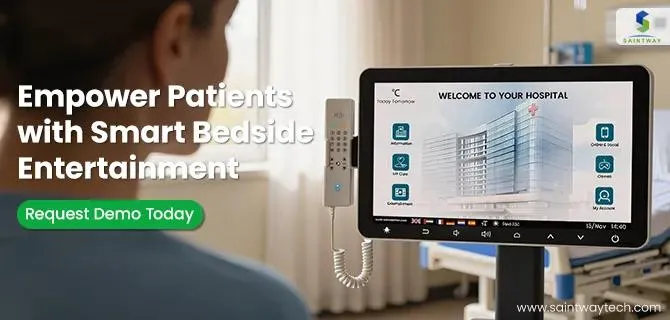
A smart hospital bedside system, often called a smart patient room platform, connects bedside devices with hospital infrastructure. It enables real-time data sharing, automated tasks, and remote support. The goal is to create self-aware rooms that respond to patient needs and assist care teams without adding burden.
Evolution from Traditional Bedside Terminals to Smart Systems
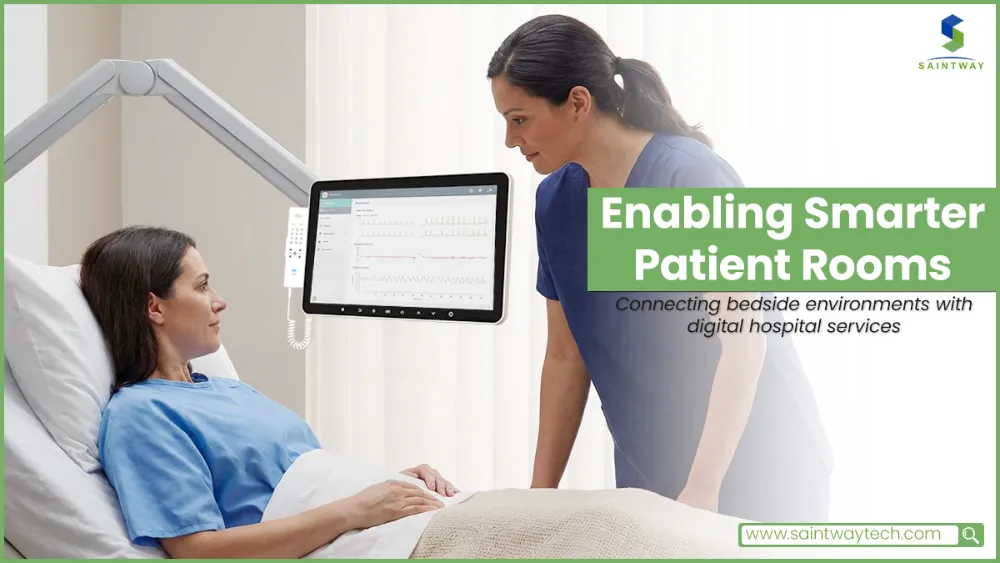
Early bedside terminals focused mainly on infotainment and basic controls. Today’s smart systems add AI, computer vision, ambient sensors, and seamless EHR integration. This evolution supports virtual nursing and predictive monitoring, aligning with the rise of smart hospitals recognized in global rankings like Newsweek’s World’s Best Smart Hospitals 2026.
Key Components of a Smart Hospital Bedside System
Hardware – Bedside Terminals, All-in-One Devices, and Displays
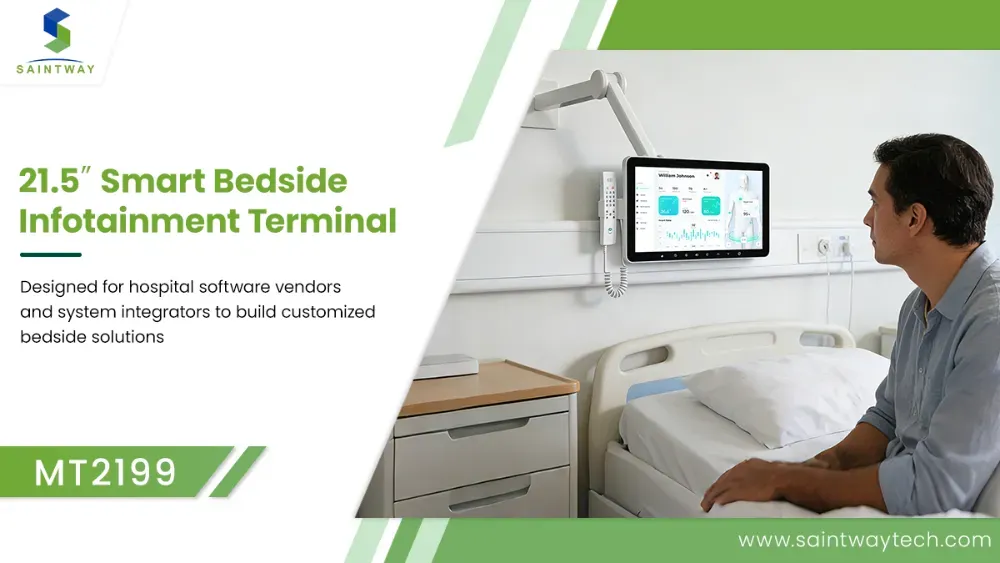
Core hardware includes touchscreen bedside terminals or all-in-one wall-mounted units with high-resolution displays. Many incorporate cameras, microphones, speakers, and antimicrobial surfaces for infection control. Devices often support glove-friendly touch and sunlight-readable screens for clinical use.
Software and Integration Layers (EHR, RTLS, Virtual Care)
The software layer connects to electronic health records (EHR), real-time location systems (RTLS), nurse call systems, and telehealth platforms. Integration allows automatic data flow from vital signs monitors, IV pumps, and smart beds into a unified view.
Sensors and AI Technologies (Ambient Monitoring, Computer Vision)
Ambient sensors use computer vision and AI to detect movement, falls, or positioning without wearable devices. Voice-activated controls and edge computing process data locally for faster response and privacy protection.
Core Functions and Capabilities
Patient Engagement and Infotainment
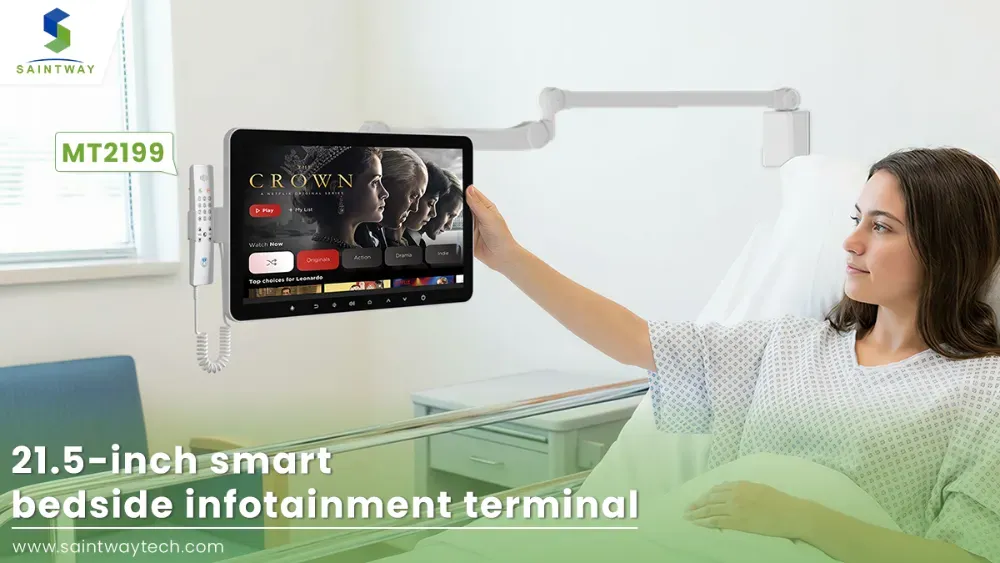
Patients control lights, blinds, temperature, TV, and meal ordering through intuitive interfaces. Systems deliver personalized education videos, entertainment options, and direct communication with care teams, improving satisfaction and autonomy.
Clinical Workflow Support and Virtual Nursing
Virtual nursing enables remote nurses to handle admissions, discharges, medication verification, and patient education via two-way audio/video. This frees bedside staff for hands-on care while maintaining protocol compliance.
Real-Time Monitoring, Education, and Communication
AI-powered monitoring tracks fall risk, bed exits, and patient status in real time. Alerts route directly to mobile devices with context, reducing response times. Built-in tools provide tailored health education and family communication features.
Streamlined Administrative Tasks (Admission, Discharge, Meal Ordering)
Bedside systems automate documentation, discharge instructions, and service requests. Nurses report significant time savings on routine tasks, with some platforms showing reduced alarm response from over 2 minutes to under 1 minute in studied implementations.
Benefits for Patients, Nurses, and Hospitals
Enhanced Patient Experience and Satisfaction
Patients gain greater control and information access, leading to higher engagement and perceived care quality. Features like on-demand education and entertainment make stays less stressful.
Reduced Workload and Improved Efficiency for Bedside Nurses
Virtual support and automation handle repetitive tasks such as documentation and routine monitoring. Studies show potential savings of up to 15% of a nurse’s shift time, lowering burnout and allowing more direct patient interaction.
Operational and Clinical Benefits for Healthcare Facilities
Hospitals see improved safety through fewer false alarms and faster interventions, better resource utilization, and measurable gains in patient throughput. Integration reduces errors and supports compliance in high-acuity settings.
Real-World Use Cases and Applications
Inpatient Acute Care and Smart Patient Rooms
In acute care wards, smart bedside systems support continuous monitoring and virtual oversight, particularly useful during staffing shortages or high patient volumes.
Integration Scenarios with Existing Hospital Systems
Deployments often start with pilot rooms and scale using existing EHR and nurse call infrastructure. Successful examples include platforms from Artisight, Stryker (with care.ai), and Oneview Healthcare, integrated in facilities like Henry Ford Health and OhioHealth.
Field Examples in Virtual Care and Safety Enhancement
Virtual nursing and ambient AI help with fall prevention, workflow coordination, and remote specialist consultations, extending clinical reach without additional on-site staff.
Technical Considerations and Implementation
Hygiene, Durability, and Infection Control Features
Devices feature antimicrobial coatings, sealed designs for easy cleaning, and compliance with hospital-grade standards to minimize infection risks.
Security, Compliance, and Data Integration Best Practices
Systems use encrypted connections, role-based access, and HIPAA-compliant (or equivalent) protocols. Edge processing keeps sensitive data local where possible.
Choosing the Right Solution in 2026
Evaluate based on integration ease, AI capabilities, vendor support for virtual nursing, and proven ROI in similar settings. Scalability with existing infrastructure remains a key factor.
Future Trends in Smart Hospital Bedside Solutions
AI and Ambient Intelligence Advancements
Ambient AI and predictive analytics will further automate documentation and risk detection, making rooms increasingly proactive.
Scaling with Existing Infrastructure
Future platforms emphasize cloud-hybrid models and open APIs to accelerate adoption across health systems without full rip-and-replace.
Frequently Asked Questions (FAQs)
What is a smart hospital bedside system solution?
It is an integrated platform using bedside terminals, sensors, AI, and virtual care tools to enhance patient monitoring, engagement, and clinical workflows in hospital rooms.
How does virtual nursing work with bedside systems?
Virtual nurses use secure audio/video links and real-time data to support admissions, education, and monitoring remotely, reducing bedside workload.
What are the main benefits for nurses?
Reduced documentation time, fewer false alarms, faster response to patient needs, and more time for direct care.
Are smart bedside systems compatible with existing EHRs?
Yes, leading solutions integrate with major EHR platforms and other hospital systems for seamless data flow.
What should hospitals consider before implementation?
Focus on staff training, change management, security compliance, infection control features, and measurable outcomes like response time and satisfaction scores.
Sources:
- Newsweek / Statista: World’s Best Smart Hospitals 2026
- Artisight official platform descriptions and case integrations
- Stryker / care.ai SmartHospital Platform documentation
- Evideon (Vibe Health) workflow efficiency reports
- Peer-reviewed studies on smart patient communication systems (e.g., PMC articles on alarm response improvements)
- HIMSS and AHA reports on virtual nursing and ambient intelligence (2025–2026)
Latest Content
- What Is a Smart TV Box? Complete Guide to Streaming Devices in 2026
- Selecting the Right TV for Hospital Beds: A Practical Guide to Patient Entertainment and Comfort
- Hospital Patient Room TV: Specs & Buying Guide
- Hospital Patient TV Systems 2026: The Complete Buyer's Guide to Interactive Patient Care
- Understanding Bedside TVs in Hospitals: Complete Patient Guide 2026