
How Bedside Infotainment Terminals Elevate Safety, Efficiency, and Patient Satisfaction
In modern hospitals, response time is more than a metric — it is a direct reflection of patient safety, care quality, and operational efficiency.
This is why Nurse Call systems, especially when integrated with Bedside Infotainment Terminals, are becoming a core component of smart ward transformation across Europe, the U.S., and Australia.
Today’s patients expect clarity, comfort, and fast support. At the same time, clinical teams face rising workloads, documentation demands, and staff shortages.
A smarter Nurse Call workflow is no longer optional — it is essential.
The Pain Points in Traditional Nurse Call Systems
Hospitals around the world struggle with similar challenges:
· Slow or unclear communication between patients and nurses
· Generic call types, forcing nurses to respond without knowing the patient’s actual need
· High workload from unnecessary room visits
· Fragmented systems — call stations, patient records, vital sign systems are not connected
· Data gaps affecting handovers and care visibility
These problems increase stress, delay treatment, and reduce patient satisfaction.
The Smart Solution: Nurse Call Integration With Bedside Infotainment Terminals
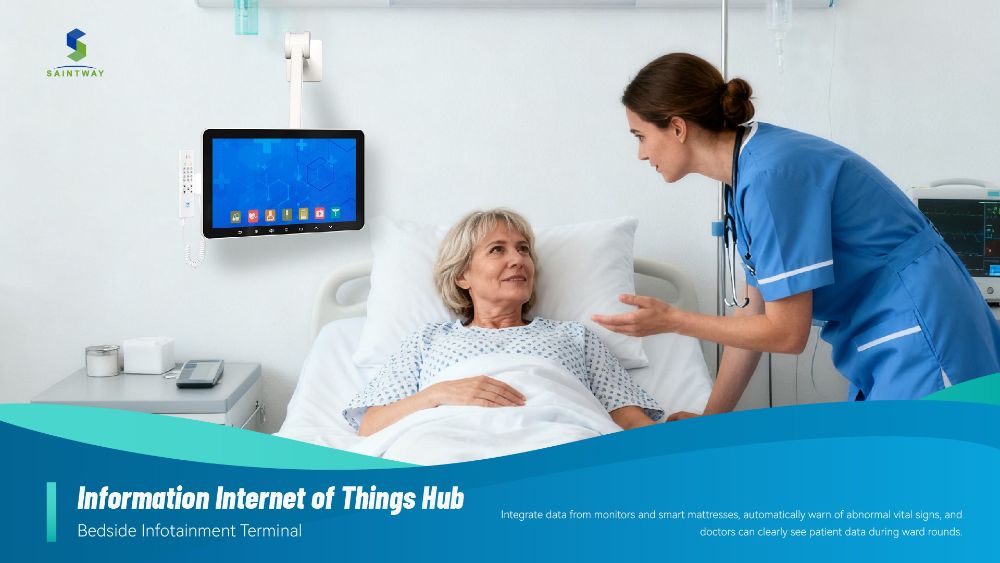
When Nurse Call is integrated directly into a Bedside Infotainment Terminal, the entire workflow becomes smarter, faster, and more transparent.
1. One-Touch, Personalized Patient Requests
Patients can choose specific call types such as:
· Pain relief
· Water refill
· Bathroom assistance
· Meal-related queries
· Emergency requests
This helps nurses prioritize responses and reduce unnecessary interruptions.
2. Real-Time Notification to Nurse Stations
Requests are sent instantly to:
· Central nurse stations
· Mobile nursing devices
· Wearable alerts (depending on hospital system)
The result? Faster response times and fewer missed calls.
3. Integrated Patient Data View
When paired with Android-based terminals, nurse call requests can connect to:
· EMR/HIS records
· Bedside digital information
· Treatment schedules
· Vital sign monitoring platforms
Nurses no longer need to check multiple systems — everything is accessible at the bedside.
4. Workflow Automation & Analytics
Smart nurse call systems allow hospitals to track:
· Response time metrics
· Call categories
· Peak demand times
· Staff workload patterns
These insights support better staffing and care quality improvements.
5. Better Patient Experience
Patients feel:
· Heard
· Supported
· Less anxious
· More in control of their own care
This directly improves satisfaction scores (HCAHPS/NPS), an important metric in U.S. and European hospitals.
Why Software Developers & Integrators Love This Approach
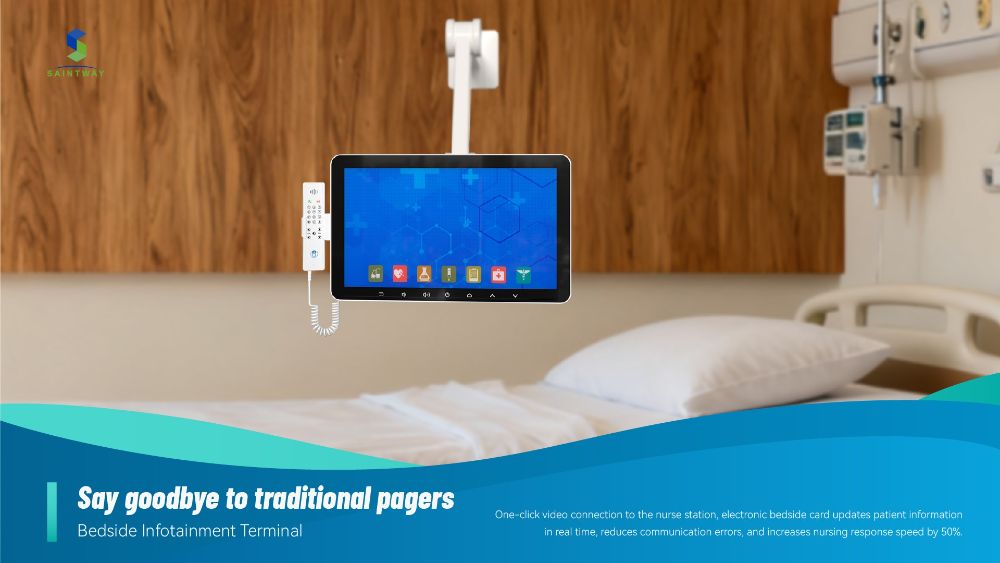
With Android OS, PoE/PoE+, and open SDK/APIs, bedside terminals like SaintwayTech’s MT1566 and MT2199 enable:
· Smooth integration with third-party Nurse Call systems
· Custom UI/UX based on hospital workflows
· Cloud-based dashboards and alerts
· Interoperability with EMR, PACS, RTLS, and smart IoT platforms
This flexibility allows developers to design truly smart ward solutions, not just digital screens.
The Future of Nurse Call in Smart Hospitals
We are moving toward intelligent, automated clinical environments where:
· AI prioritizes urgent calls
· Patient behavior data predicts needs
· Calls trigger automated workflows
· Communication becomes seamless and patient-centered
Bedside infotainment terminals — with integrated Nurse Call — will continue to be the central hub connecting patients, staff, and hospital systems.
Latest Content
- Top Bedside Infotainment Terminal Manufacturers 2026: Reviews & Guide
- Identity & Security at the Bedside:Building Trust in Smart Ward Architectures
- Preparing Smart Wards for Hybrid Care and Long-Term Scalability
- The Digital Bedside Revolution: Solving the "Quiet Crisis" in General Hospital Wards
- Bedside Terminals in 2026: Why Top Hospitals Are Making the Switch