
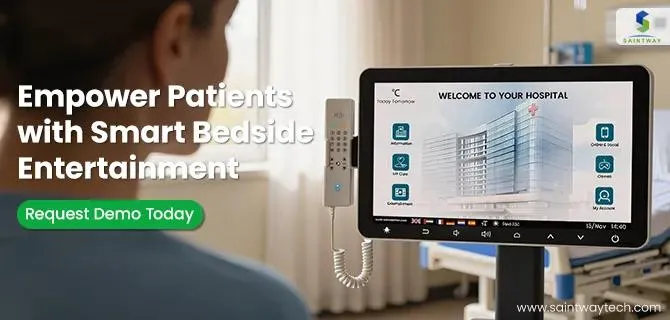
As hospitals across Europe, North America, and Australia mature in their digital transformation journeys, attention is shifting from isolated systems to cohesive, intelligent ward environments.
By 2026, the smart ward is no longer about digitization alone — it’s about orchestration, interoperability, and workflow intelligence.
For healthcare software developers and hospital system integrators, this evolution introduces new expectations and opportunities.
From Digitization to Orchestration
Early hospital IT initiatives focused on replacing paper with software.
Leading hospitals are now building orchestrated ward ecosystems, where systems exchange context, not just data.
Clinical documentation, nurse call platforms, patient interaction systems, and operational tools are increasingly expected to work as a unified environment rather than disconnected components.
This shift places greater emphasis on:
·Stable integration layers
·Clear system boundaries
·Event-driven communication
·Long-term maintainability
Workflow-Centered Design Becomes the Priority
Technology success in 2026 is measured by how well it supports clinical reality.
Hospitals are prioritizing systems that:
·Reduce unnecessary staff movement
·Minimize alert fatigue
·Support role-based interaction
·Adapt to different care phases
Solutions that align naturally with nursing and clinical workflows consistently outperform feature-heavy but workflow-blind implementations.
Patient Interaction as a Core Layer
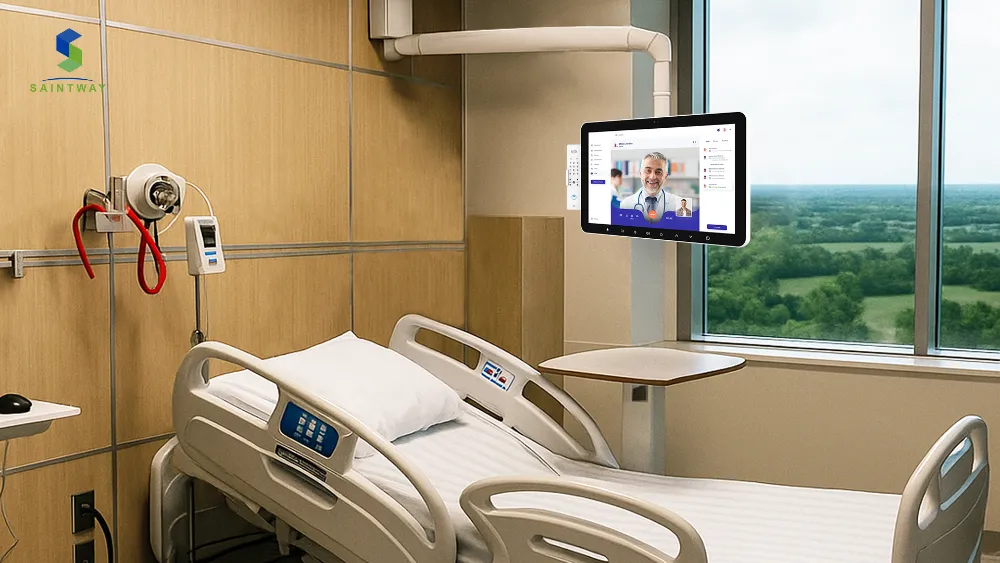
Patient-facing systems are no longer peripheral.
They are now a core interaction layer in the smart ward — supporting communication, education, transparency, and comfort.
From an architectural perspective, this introduces new design considerations:
·Context-aware interfaces
·Accessibility and multilingual support
·Clear separation between patient and clinical data
·Secure identity handling
Identity, Security, and Context Awareness
As ward systems become more interconnected, identity management becomes foundational.
Hospitals are standardizing around:
·Role-based access
·Context-aware permissions
·Secure but frictionless authentication
Security in 2026 is not an overlay — it is embedded into everyday workflows.
Data-Driven Ward Operations
Smart wards increasingly generate operational intelligence:
·Response-time analysis
·Staffing optimization
·Workflow bottleneck detection
This data supports continuous improvement — provided systems are designed with reliable data pipelines and ownership clarity.
Hybrid Care as the New Normal
Smart wards are now built with hybrid care in mind:
·In-room care
·Virtual consultations
·Remote specialist access
Systems must remain stable, secure, and consistent across physical and digital touchpoints.
What This Means for Developers and Integrators
The smart ward of 2026 favors partners who:
·Think in systems, not devices
·Design for interoperability early
·Understand clinical environments
·Support long-term evolution, not just deployment
Hospitals increasingly choose partners who contribute to digital strategy, not just project delivery.
Final Thought
The most successful smart wards are not the most complex — they are the most coherent.
In 2026, excellence in healthcare technology will be defined by how well systems work together to support care, collaboration, and human experience.
Latest Content
- Consumer vs Medical-Grade Tablets in Healthcare: Why Compliance Matters
- The 2026 Definitive Guide to Patient Bedside Entertainment Terminals
- Beyond the Screen: The 2026 Playbook for Smart Bedside Infotainment Systems
- How to Choose Smart Bedside Terminal: The Complete Hospital Buying Guide for 2026
- Designing Workflow-Centered Hospital Systems: Lessons from Real Ward Environments