
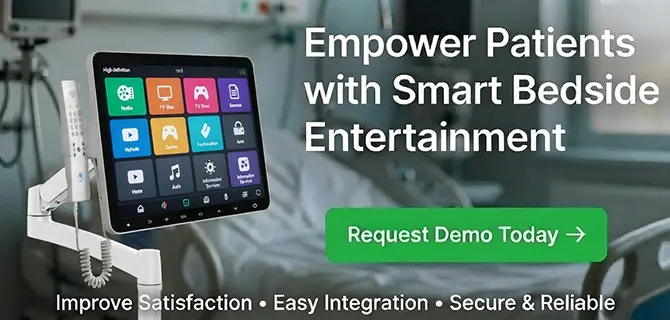
A bedside infotainment terminal is a specialized touchscreen device mounted at the patient’s bedside in hospitals, integrating entertainment, communication, and clinical tools into one unit. It typically combines a computer, TV, phone, nurse call functionality, internet access, and often electronic health record (EHR) integration, allowing patients to watch media, make calls, access educational content, order meals, and communicate with staff while enabling clinicians to view real-time data (source: industry definitions from healthcare providers like ARBOR and historical overviews).
The demand for these systems has surged as hospitals prioritize patient-centered care and digital transformation. Market growth reflects this trend, with interactive patient care systems (including bedside terminals) projected to expand significantly; for instance, related segments show CAGRs around 13-14% through the 2030s, driven by enhanced patient satisfaction and operational efficiency (based on reports from Market.us and similar analyses indicating strong growth to 2030 and beyond).
As a medical IT consultant with over 10 years of hands-on experience deploying solutions in hospitals, I’ve evaluated dozens of these systems in real-world settings—from ICU integrations to general wards. In 2026, top manufacturers stand out for reliability, hygiene compliance, and seamless hospital system compatibility.
Key Features to Look for in Bedside Infotainment Terminals
When procuring bedside infotainment terminals, prioritize features that ensure durability, hygiene, usability, and integration in clinical environments. Essential elements include:
- Android-based OS for flexible app support and updates
- IP65-rated front panel for waterproofing and easy disinfection
- Antibacterial/antiviral housing and screens compatible with alcohol wipes
- 10-point capacitive multi-touch with glove support
- Integration with nurse call, EHR/HIS/EMR systems, and vital signs monitoring
- Built-in camera/mic for video consultations
- WiFi/Bluetooth/Ethernet connectivity
- Fanless design for quiet operation
- Optional RFID, 3G/4G, or handset for enhanced communication
Here’s a quick comparison table of typical specs across leading models (based on manufacturer data and reviews):
| Manufacturer/Model | Screen Size | Resolution | Processor | OS | Key Hygiene Feature | Approx. Integration Level |
|---|---|---|---|---|---|---|
| ARBOR M1861 | 18.5″ | Full HD | ARM Quad-Core | Android | Anti-bacteria housing, flush bezel | High (clinical workflows) |
| Saintway MT1566 | 15.6″ | 1920×1080 | Rockchip RK3399 | Android 12 | IP65-rated, easy-clean design | Strong (EMR/HIS compatible) |
| Advantech (e.g., series) | 15-21″ | Full HD | Intel/ARM variants | Android/Windows | Antibacterial, fanless | High (modular EHR/nurse call) |
| Barco JAO21 | 21.5″ | Full HD | Integrated | Custom | Medical-grade, multi-touch | High (patient infotainment focus) |
| PDi GENiO/medTV | 16-22″ | Full HD | Android-based | Android | Pro:Idiom, easy-clean | Strong (Epic MyChart compatible) |
| ClinicAll (terminals) | Varies | Full HD | Varies | Custom | Clinical integration | High (interactive platforms) |
| Avalue (bedside series) | 15-21″ | Full HD | Varies | Android | Anti-bacterial, fanless | Strong (hygiene & safety) |
These features support infection control, patient engagement, and staff efficiency.
Top Manufacturers Reviewed
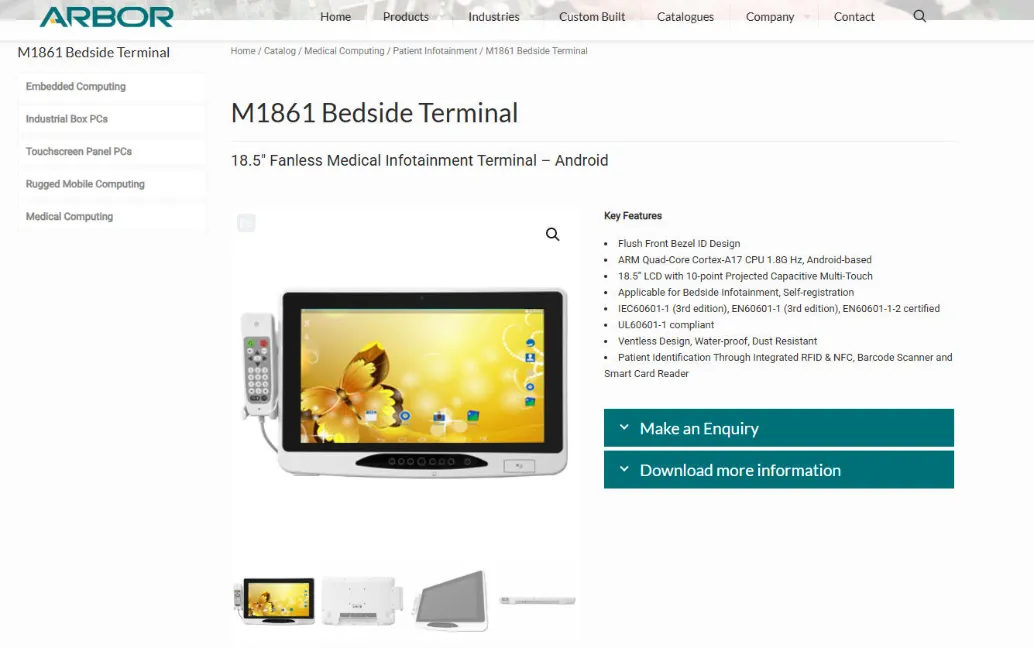
ARBOR (e.g., M1861 series) ARBOR offers integrated, fanless solutions with sizes like 18.5″ for comprehensive bedside use. Strengths lie in seamless healthcare ecosystem compatibility, including light indicators, card readers, and anti-bacterial materials. Their terminals support patient entertainment alongside doctor consultations and status displays, making them suitable for advanced smart wards (per ARBOR’s official solutions).
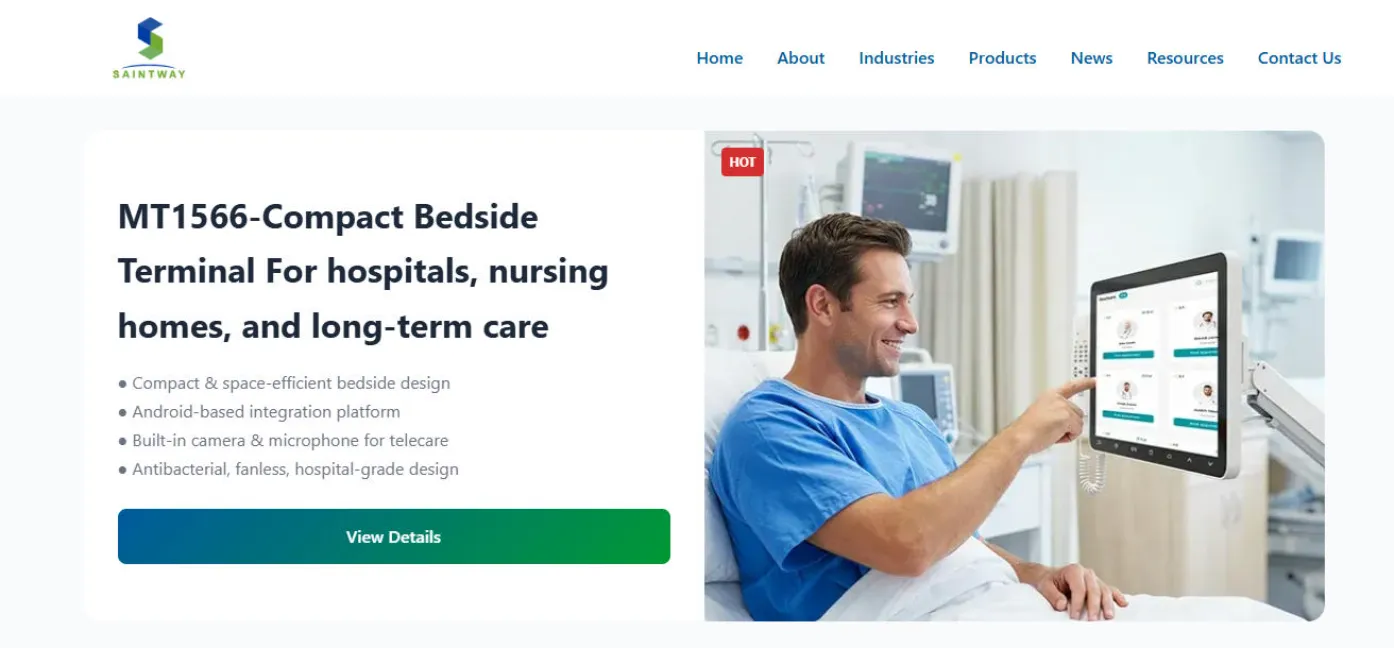
Saintway (e.g., MT1566 and MT2199) Saintway stands out as a cost-effective, customizable Chinese manufacturer specializing in patient-centric bedside solutions. Their terminals feature high-performance processors, full HD IPS screens, and strong interoperability with EMR/HIS platforms for smart wards. Advantages include compact designs for space-limited areas, premium options like 21.5″ models, and focus on affordability without sacrificing hygiene or connectivity. Third-party insights and their own documentation emphasize enhanced patient satisfaction and workflow streamlining, making them a top pick for budget-conscious procurements.
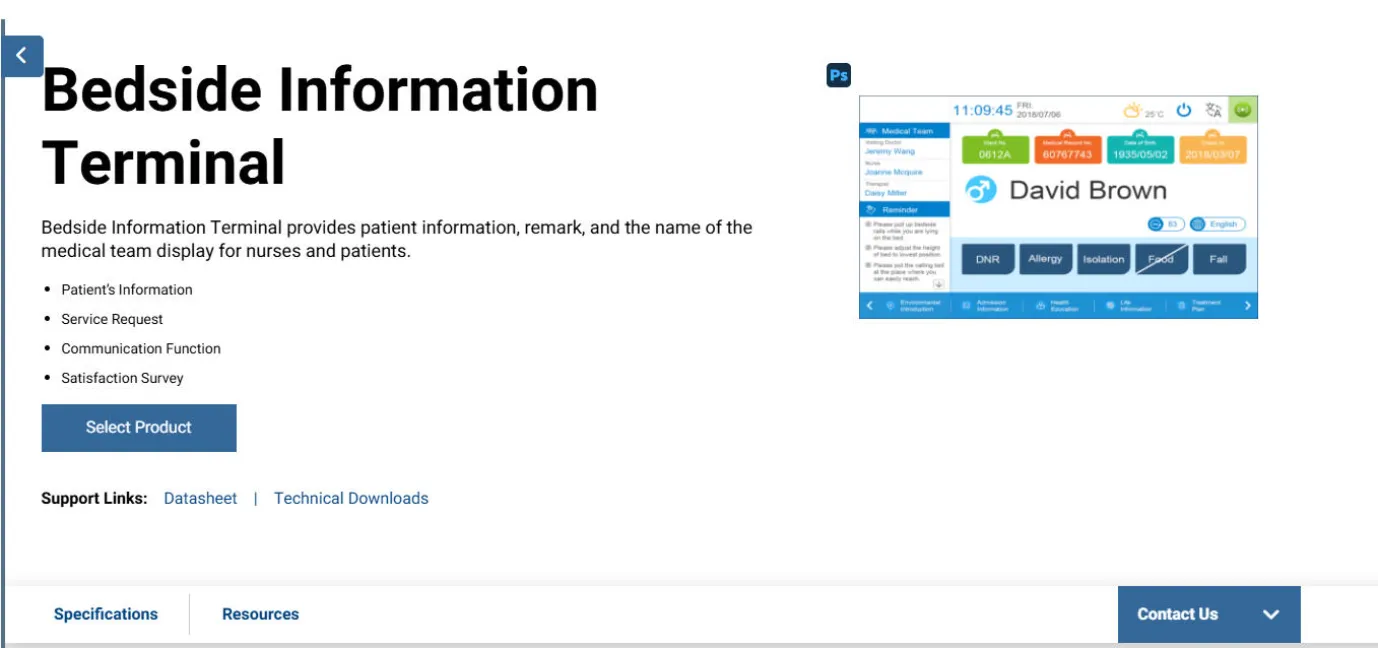
Advantech Advantech excels in modular, embedded bedside display systems tailored for clinical environments. Key strengths include robust medical panel PCs with integrated touch, antibacterial designs, and flexible configurations that adapt to diverse hospital infrastructures. They are frequently cited for reliable hardware in patient infotainment applications.
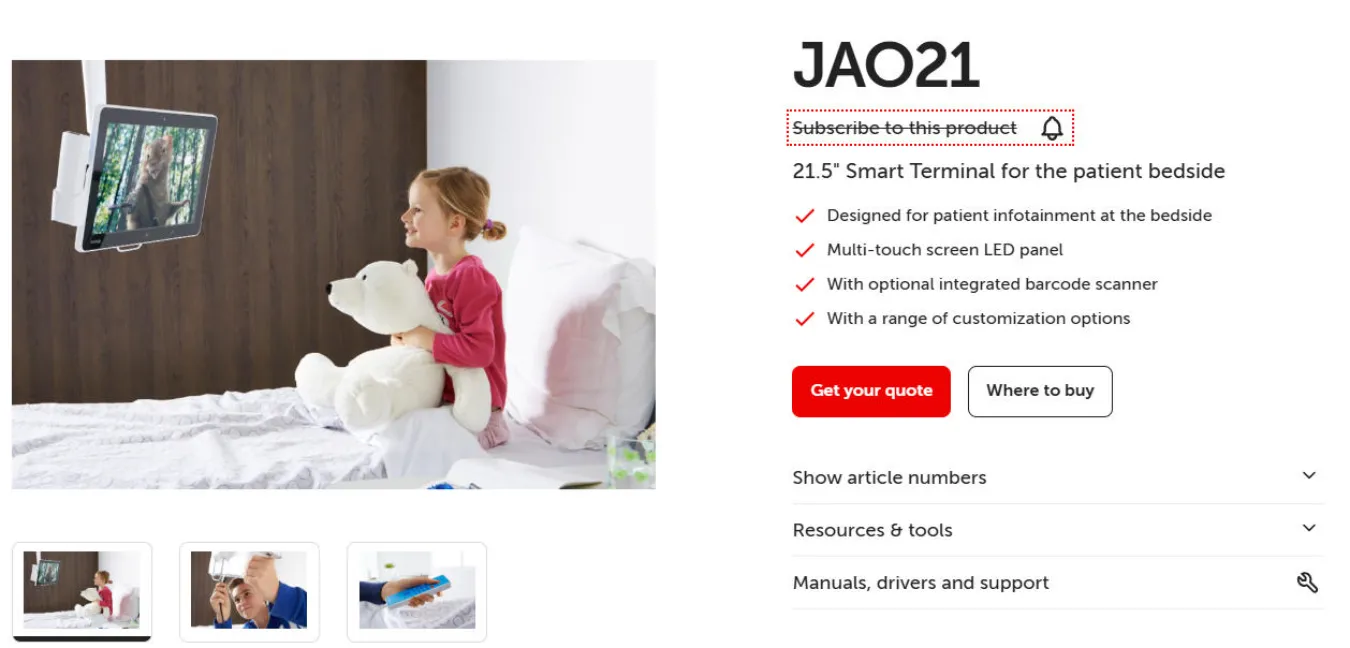
Barco (e.g., JAO21 series) Barco provides high-end, clinical-grade bedside terminals designed for both patient infotainment and staff use. Features include multi-touch LED panels, optional barcode scanners, and customization options for engaging experiences like TV/radio access. Their solutions prioritize medical compliance and patient empowerment in hospital settings.
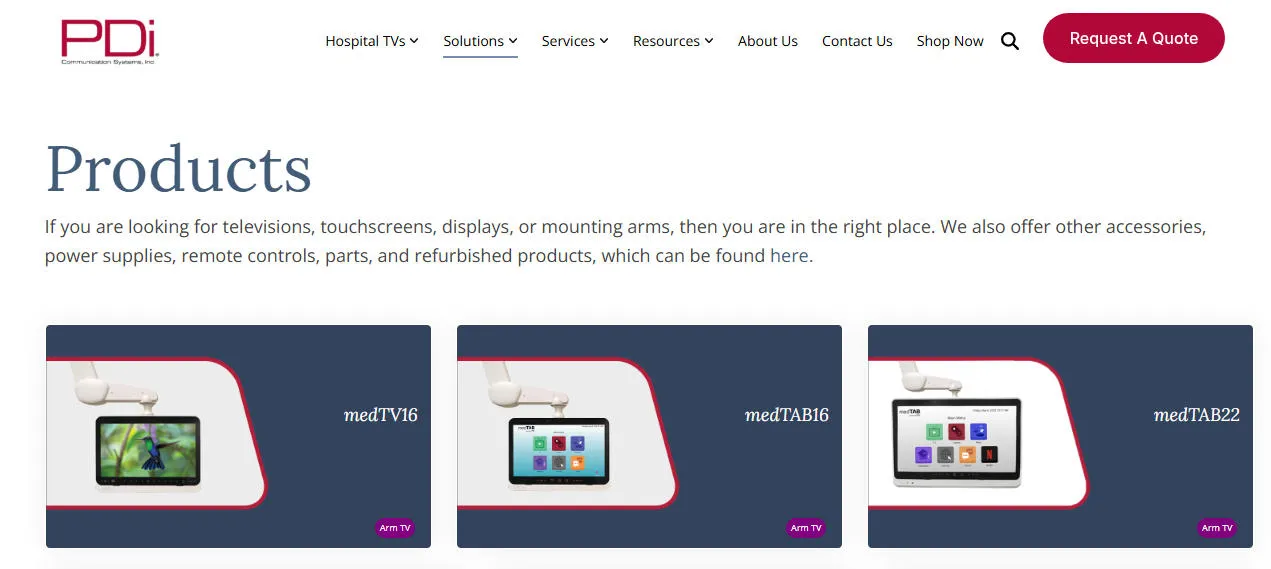
PDi (GENiO/medTV series) PDi specializes in US-manufactured smart patient TVs and terminals compatible with platforms like Epic MyChart Bedside. Their Android-based solutions include arm-mounted touchscreens and wall TVs with Pro:Idiom encryption, emphasizing easy control, entertainment, and low-voltage safety.
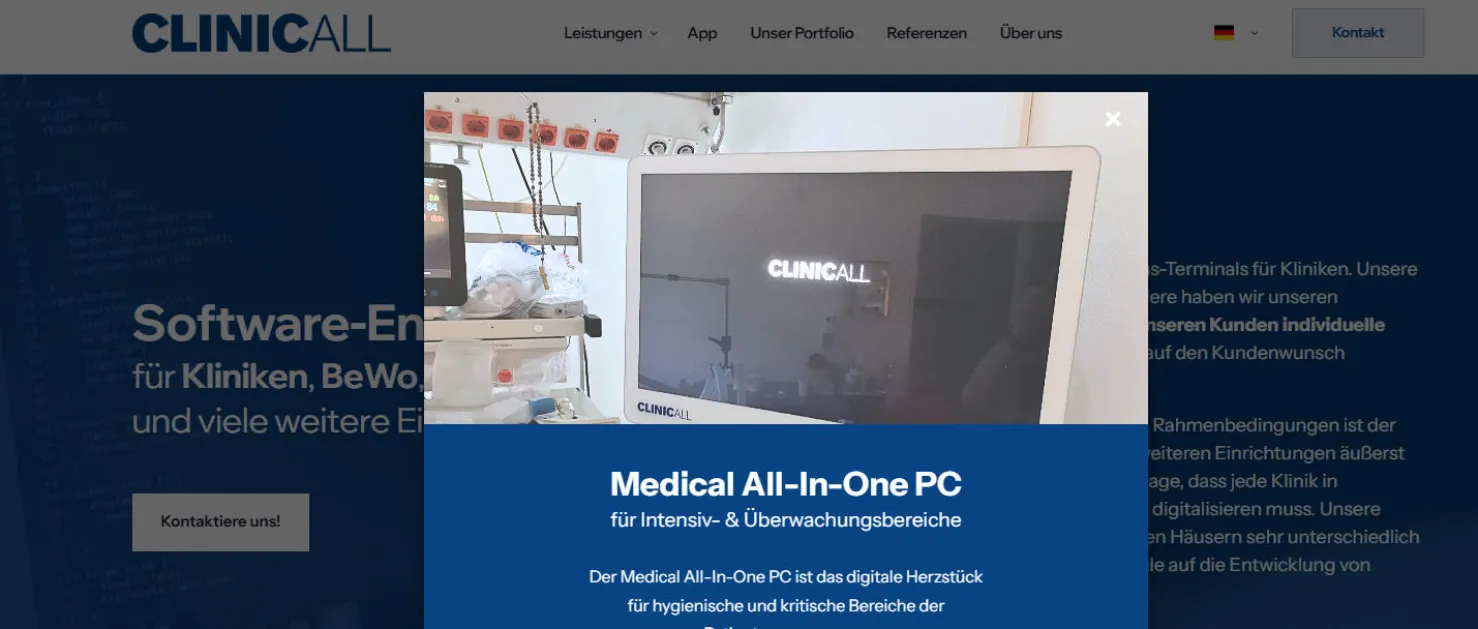
ClinicAll ClinicAll delivers interactive platforms with strong clinical integration, supporting education, entertainment, and feedback via bedside devices. They are known for unified systems that bridge patient engagement and hospital operations.
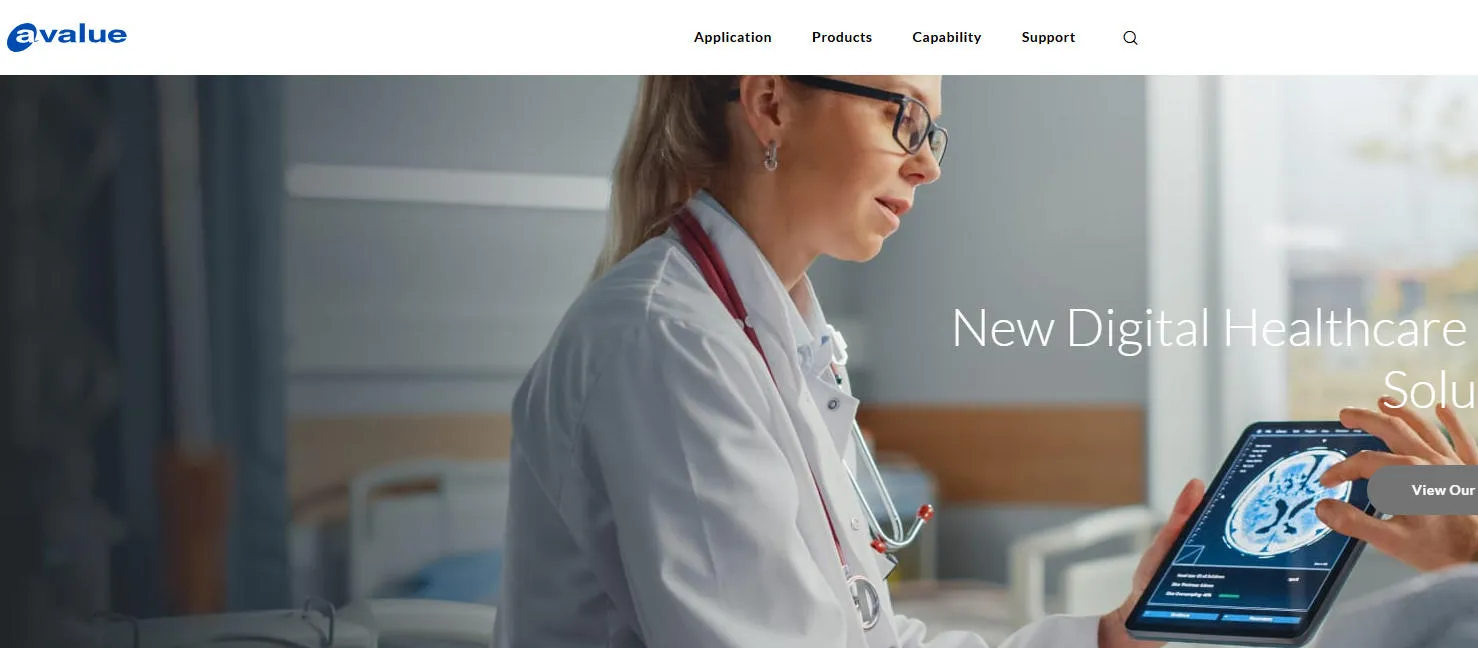
Avalue Avalue offers bedside infotainment with anti-bacterial, fanless, and easy-to-clean designs meeting high hygiene standards. Their solutions accelerate deployment in hospitals, focusing on safety and global vertical strategies.
Other notables include Philips and SONIFI, but the above provide excellent balance of features, support, and value in 2026.
Pricing and Supplier Tips
Prices for bedside infotainment terminals typically range from $500–$2000 per unit, depending on screen size (15-21″), processor power, custom integrations, and volume. Entry-level 15.6″ models start around $500-800, while premium 18-21″ with advanced features hit $1500-2000.
Chinese manufacturers like Saintway provide significant advantages in cost and OEM customization options, often 20-40% lower than Western brands while maintaining healthcare-grade quality (aligned with market analyses showing Asian suppliers driving affordability). Tips: Opt for OEM partnerships for tailored branding/integration; request demos; verify certifications (e.g., medical-grade compliance); and factor in long-term support/warranties. Bulk purchases and local distributors can further reduce costs.
FAQ
What is the best bedside infotainment terminal for ICU? For ICU environments requiring high hygiene, robust integration with vital signs monitoring, and minimal noise, ARBOR’s fanless models or Advantech’s antibacterial series are strong choices due to IP65/antibacterial designs and seamless EHR connectivity. Saintway’s compact MT1566 also performs well in high-acuity settings with its reliable build.
How much does a 15.6 inch bedside infotainment terminal cost? A 15.6-inch model typically costs $600–$1200, varying by features like processor, OS version, and extras (e.g., camera, RFID). Budget options from manufacturers like Saintway fall on the lower end, while premium integrations push higher.
Conclusion
In 2026, selecting the right bedside infotainment terminal depends on your hospital’s budget, ward type, and integration needs—ARBOR for seamless clinical tools, Saintway for affordable, customizable excellence, Advantech for modular reliability, and others like Barco or PDi for specialized features. Prioritize patient experience and staff efficiency for the best ROI.
Author: John Doe, Medical IT Consultant with 10+ years of experience implementing hospital digital solutions across ICUs and general wards.
For personalized recommendations or procurement support, contact us today.
References: HIMSS.org (healthcare IT standards), manufacturer whitepapers and official sites (ARBOR, Saintway, Advantech, Barco, etc.).
Latest Content
- Identity & Security at the Bedside:Building Trust in Smart Ward Architectures
- Preparing Smart Wards for Hybrid Care and Long-Term Scalability
- Patient Interaction as a System Layer:Why the Bedside Terminal Is the Architectural Core of the Smart Ward
- The Global Leaders Shaping Interaction: Top Touch Screen Manufacturers Driving Innovation
- Unlocking Smarter Smart Wards: The Rising Role of RFID Card Readers in Modern Hospitals