
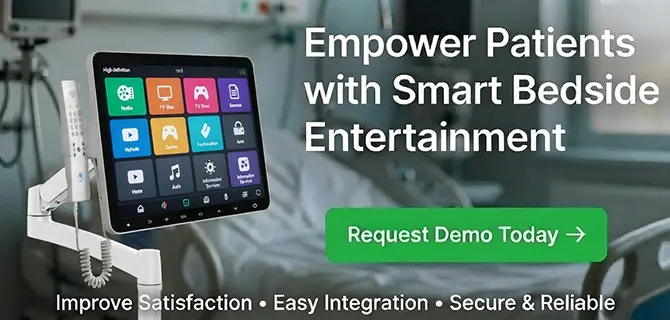
As hospitals across Europe, North America, and other developed healthcare markets accelerate digital transformation, the concept of the smart ward has moved from vision to expectation. Touchscreens, nurse call systems, bedside terminals, IPTV, RTLS, mobile apps, and analytics platforms are increasingly common.
Yet many smart ward projects struggle—not because the features are insufficient, but because the integration architecture is weak.
In modern hospital environments, interoperability is no longer a “nice to have.” It is the foundation that determines whether smart ward investments deliver long-term value or become isolated digital silos.
Features Age. Architecture Scales.
Smart ward projects often begin with feature-driven discussions:
· Does the bedside terminal support video calls?
· Can the system display patient education content?
· Is there nurse call integration?
These questions matter—but they are short-term.
What determines success over 3-5 years is how well systems talk to each other, evolve, and scale.
Hospitals rarely run a single vendor stack. Instead, they operate complex ecosystems that may include:
· HIS / EMR platforms
· Nurse call systems
· RTLS and staff workflow tools
· IPTV or media platforms
· Pharmacy, nutrition, and scheduling systems
· Third-party patient engagement apps
Without a solid integration architecture, each new feature increases complexity, cost, and operational risk.
The Reality of Smart Ward Interoperability
In practice, interoperability in smart wards means handling:
·Multiple protocols and standards (HL7, FHIR, REST APIs, proprietary interfaces)
·Different system lifecycles (software updated yearly, hardware deployed for 3–5 years)
·Vendor diversity across regions and hospital groups
·Security and access control across patient-facing and clinical systems
A feature-rich device or application that cannot integrate cleanly becomes a bottleneck—not an asset.
Why Integration Architecture Should Lead the Design
Successful smart ward projects share several architectural principles:
1. Interface-First Design
Systems should expose clear, well-documented APIs that allow integration without deep customization. This enables faster deployment and easier upgrades.
2. Loose Coupling Between Systems
Patient interfaces, clinical workflows, and backend systems should interact through defined services—not hard-coded dependencies. This reduces failure points and vendor lock-in.
3. Role-Based Data Access
Interoperability is not just about data flow, but who can see what—patients, nurses, doctors, and administrators all require different views and permissions.
4. Hardware as an Integration Endpoint
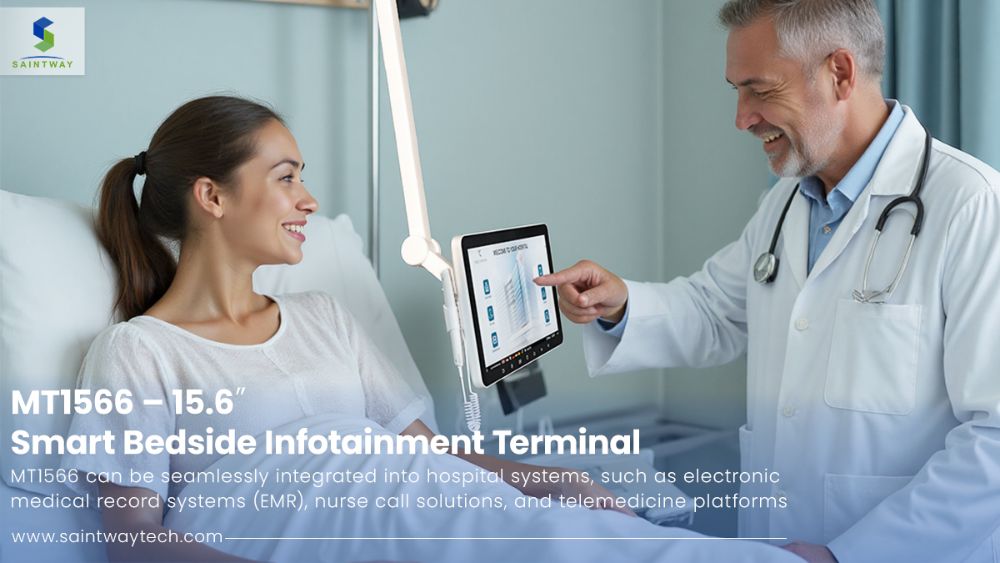
In smart wards, bedside terminals are not just displays.
They are integration endpoints where EMR data, nurse call events, patient interactions, and real-time updates converge.
The Cost of Poor Integration
Hospitals pay a real price when integration is treated as an afterthought:
· Manual workarounds for nurses and staff
· Inconsistent patient information across systems
· Delayed response times and communication gaps
· Higher long-term integration and maintenance costs
· Difficulty adopting future applications or vendors
These challenges directly affect patient experience, staff efficiency, and operational resilience.
What System Integrators and Software Teams Should Prioritize
For integrators and developers building smart ward solutions, the focus should shift from “What features can we add?” to:
· How easily can this system integrate into an existing hospital environment?
· Can new applications be deployed without reworking the entire stack?
· Will this architecture support future digital health initiatives?
In mature healthcare markets, hospitals increasingly evaluate partners based on architectural compatibility, not just UI demos.
Smart Wards Are Ecosystems, Not Products
A smart ward is not defined by a single device, screen, or application. It is an ecosystem of interconnected systems working together to improve care delivery and patient experience.
In that ecosystem, interoperability is the true differentiator.
Features attract attention.
Architecture determines longevity.
Latest Content
- Top Bedside Infotainment Terminal Manufacturers 2026: Reviews & Guide
- Identity & Security at the Bedside:Building Trust in Smart Ward Architectures
- Preparing Smart Wards for Hybrid Care and Long-Term Scalability
- Revolutionizing Healthcare: The Power of Medical Touch Screens
- The Future is Now: Revolutionizing Patient Care with Bedside Infotainment Systems