
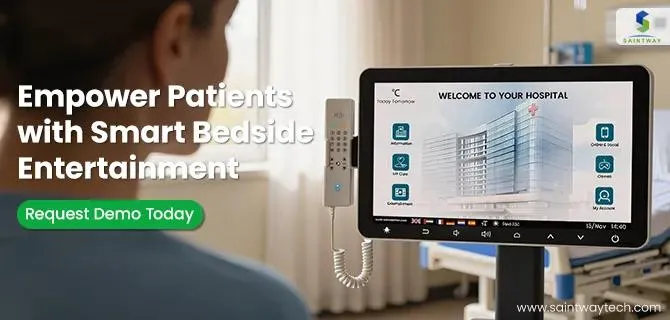
Walk into a modern private hospital in São Paulo or a new wing in Brasília, and you will notice something different. Patients are not just lying in bed staring at the ceiling or pressing a call button every few minutes. They are watching educational videos about their upcoming procedure, ordering dinner from a digital menu, video calling family members, and even filling out satisfaction surveys—all from a tablet mounted right next to their bed.
That is the promise of the hospital bedside information terminal. And in Brazil, where medical tourism is growing, private hospital competition is fierce, and patient expectations are rising faster than budgets, these terminals have moved from a luxury to a practical necessity.
A hospital administrator in Rio de Janeiro once told me that before bedside terminals, their nurses spent nearly an hour per shift answering non-urgent requests—”When is my doctor coming?” “Can I get a glass of water?” “What time is dinner?” After deploying interactive patient care terminals, those low-value interruptions dropped by more than half. Nurses focused on clinical care. Patients felt more in control. And the hospital saw its patient satisfaction scores climb into the top tier nationally.
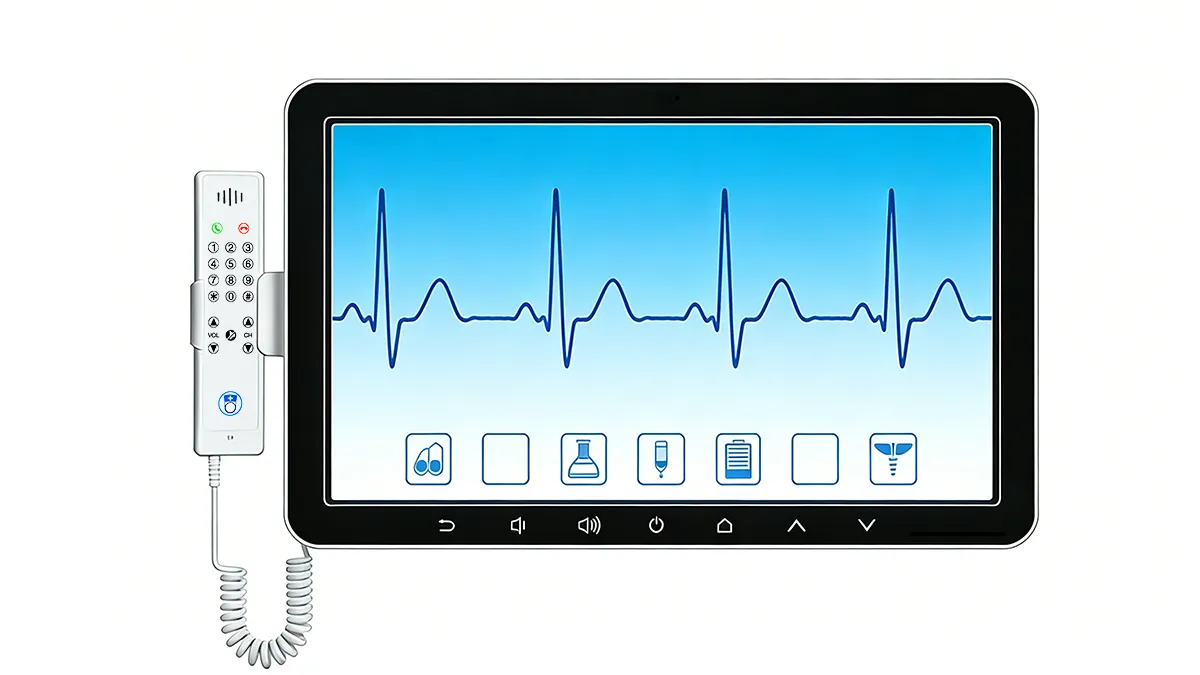
Why Brazilian Hospitals Are Leading the Adoption in Latin America
Brazil’s healthcare system is unique. The public SUS system serves millions, but private hospitals and insurance networks compete aggressively for paying patients and medical tourists from the United States, Europe, and elsewhere in Latin America. In that environment, patient experience is not a nice-to-have—it is a competitive weapon.
How do bedside information terminals improve patient satisfaction in Brazilian hospitals? By giving patients control over their environment and access to information that reduces anxiety. A patient admitted for cardiac surgery in Belo Horizonte can watch a video explaining exactly what will happen before, during, and after the procedure. They can see their daily schedule, learn about their medications, and even review discharge instructions at their own pace.
For international patients, bedside terminal multilingual support for medical tourists in Brazil is a game changer. English, Spanish, and even Arabic interfaces mean a patient from Miami or Madrid can navigate their hospital stay without relying on overworked translators. One hospital in São Paulo that specializes in orthopedic surgery for international patients saw a 34% increase in positive online reviews after deploying multilingual bedside terminals.
Integration with Brazilian Hospital EHR Systems
The real power of a bedside terminal is not the screen—it is what connects to it. Can bedside terminals integrate with Brazilian hospital EHR systems? Yes. Leading terminals use HL7 or FHIR APIs to pull data directly from the hospital’s electronic health record. That means the patient sees their own medication list, scheduled procedures, and care team information, all updated in real time.
A hospital in Porto Alegre integrated their bedside terminals with the same EHR their doctors and nurses use. When a physician ordered a new medication, it appeared on the patient’s terminal within minutes, along with an educational video about that medication’s purpose and side effects. Patients stopped asking nurses to repeat information they had already been told, and medication adherence improved.
Compliance with Brazilian data protection law (LGPD) is built into these systems. Patient data is encrypted, access is logged, and the terminal automatically logs out when the patient is discharged or when the room is empty. Privacy is not an afterthought—it is a design requirement.
Reducing Nurse Call Fatigue
Nurse call fatigue is real. In busy hospitals, nurses can receive hundreds of non-urgent calls per shift. Each interruption breaks concentration and increases stress. Reduce nurse call fatigue with interactive patient terminals in Brazil by giving patients a digital alternative.
From the bedside terminal, a patient can request water, a blanket, housekeeping, or a nurse visit—all categorized by urgency. A request for “pain medication” goes to the clinical team immediately. A request for “extra pillow” goes to housekeeping. The right person responds to the right request, and nurses only get alerts that truly need their clinical judgment.
A hospital in Curitiba tracked their call data before and after deploying bedside terminals. Non-urgent call volume dropped by 58%. Nurses reported feeling less frazzled at the end of their shifts, and patient complaints about response times fell by nearly half.
Meal Ordering and Service Requests
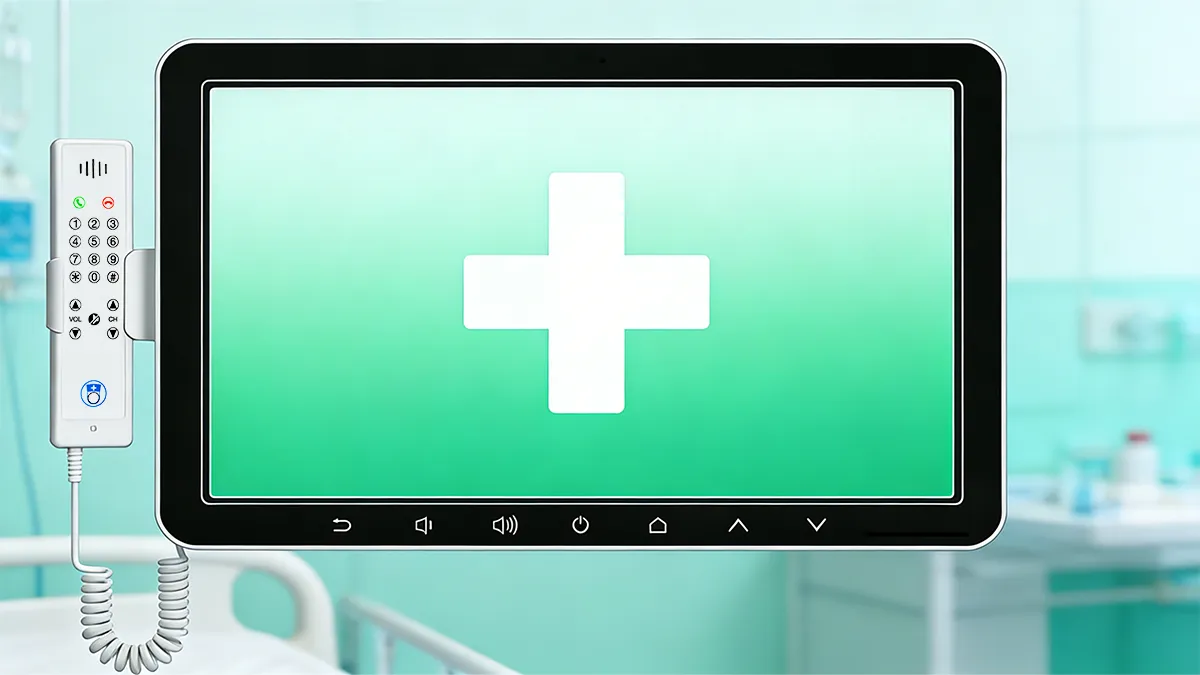
Hospital food has a bad reputation for a reason. But some of that is logistical—patients are asked what they want hours in advance, choices are limited, and there is no flexibility. How to use bedside terminals for meal ordering and service requests changes that.
The patient sees the day’s menu, complete with photos and nutritional information, and taps their selections. The order goes directly to the kitchen. If a patient misses the normal ordering window, they can still request a late tray or a snack. Special dietary needs—low sodium, diabetic, gluten-free—are pulled from the EHR and automatically enforced.
A hospital in Recife implemented bedside meal ordering and saw food waste drop by 22%. Patients ate more of what they actually wanted, and the kitchen produced less of what nobody chose. The same terminal handles other service requests: schedule a chaplain visit, request a wheelchair for discharge, or ask for fresh linens.
Patient Education and Discharge Planning
One of the most underutilized tools in healthcare is the patient’s own time. When a patient is lying in bed waiting for a test result or the next round of medications, that is an opportunity for education. How bedside terminals support patient education and discharge planning turns downtime into learning time.
The terminal delivers short videos, animations, and quizzes on topics like post-surgical wound care, medication management, and recognizing warning signs. Patients can watch at their own pace, rewatch as needed, and even share content with family members via email or QR code.
For discharge planning, the terminal presents a personalized checklist: follow-up appointments scheduled, prescriptions sent to pharmacy, home care instructions reviewed. The patient acknowledges each item on the screen, and that acknowledgment is recorded in the EHR. A hospital in Salvador reduced their 30-day readmission rate for heart failure patients by 18% after implementing tablet-based discharge education—patients actually understood what they needed to do after leaving the hospital.
Entertainment and Connectivity
A hospital stay can be boring and isolating. Bedside terminal integration with hospital TV and entertainment systems solves that. Patients can watch live TV, browse a library of movies, listen to music, or play simple games—all through the same terminal that handles their clinical needs.
More importantly, the terminal provides internet access and video calling. A patient in a hospital in Florianópolis can video call their grandchildren who live in another state. A medical tourist from the United States can check in with family back home without burning through international roaming on their personal phone. That connection reduces the sense of isolation that makes hospital stays feel longer and harder.
Durability for Hospital Environments
Hospitals are harsh environments for electronics. Constant cleaning with harsh disinfectants, accidental drops, and the occasional spilled liquid are daily realities. Bedside information terminal durability for hospital disinfection requires sealed enclosures (IP54 or higher), antimicrobial coatings, and screens that can withstand repeated wiping with alcohol or bleach-based wipes.
Consumer tablets in medical-grade cases fail within months. Purpose-built bedside terminals are designed for thousands of disinfection cycles. A hospital in Brasília learned this lesson after replacing consumer tablets twice in one year. The upfront cost of a rugged bedside terminal was higher, but the total cost of ownership over three years was actually lower because they did not keep buying replacements.
Screen Readability in Low-Light Hospital Rooms
Hospital rooms are rarely brightly lit. At night, patients need to see the terminal without disturbing their roommate. Bedside terminal screen readability in low-light hospital rooms means automatic brightness adjustment down to very low levels, with no distracting flicker. The terminal also includes a physical mute button for the speaker, so patients can watch videos with headphones without disturbing anyone.
Privacy and Security for Patient Data
Brazil’s LGPD is strict about patient data. Privacy and security features of bedside terminals for patient data include automatic logout after a period of inactivity, encrypted data transmission, and the ability for nurses to remotely reset or lock a terminal. No patient can see another patient’s information, even if they are in a semi-private room. The terminal’s camera is covered by a physical shutter when not in use, addressing a common patient concern about privacy.
Return on Investment for Brazilian Hospitals
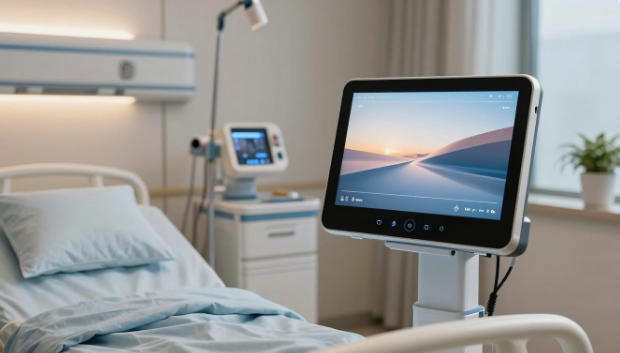
Return on investment for bedside terminals in Brazilian healthcare comes from multiple sources: reduced nurse overtime from fewer interruptions, lower food waste, improved patient satisfaction scores that drive more referrals, and reduced readmissions from better discharge education.
A hospital network in São Paulo with three facilities calculated their ROI after two years of bedside terminal deployment. The terminals paid for themselves in 14 months, and ongoing annual savings exceeded the annual operating cost by a factor of three. That does not even include the intangible benefits: better online reviews, higher employee satisfaction among nurses, and a reputation for being technologically advanced.
Best Bedside Terminal for Private Hospitals in São Paulo and Beyond
What is the best patient bedside terminal for private hospitals in São Paulo? There is no single answer, but the right terminal should have: antimicrobial coating, integration APIs for EHR and nurse call systems, multilingual support, and a rugged design rated for hospital disinfection. It should also be backed by a vendor who understands Brazilian healthcare regulations and can provide local support.
A hospital in Campinas chose a terminal that checked all those boxes and added one more: a telehealth module that lets patients video consult with specialists without leaving their room. That feature became invaluable during respiratory illness seasons when moving patients through the hospital posed infection risks.
Who Should Deploy Bedside Terminals Right Now
If your hospital still relies on paper menus, a basic nurse call system, and patient education brochures that nobody reads, you have a clear opportunity. Brazilian patients expect more. Medical tourists have choices. And nurses deserve technology that lets them focus on clinical care instead of answering the same non-urgent questions dozens of times per shift.
From a luxury private hospital in São Paulo to a busy public hospital in Salvador, the pattern is the same. Better patient experience, less wasted food, fewer readmissions, and happier nurses. In Brazilian healthcare, that is not just nice to have—it is the new standard.
FAQ
Can bedside terminals integrate with Brazilian hospital EHR systems?
Yes. Leading terminals use HL7 or FHIR APIs to pull data directly from the hospital’s EHR. Patients see their own medication list, scheduled procedures, and care team information updated in real time, all while complying with Brazil’s LGPD data protection law. A hospital in Porto Alegre integrated their bedside terminals with the same EHR their doctors and nurses use. When a physician ordered a new medication, it appeared on the patient’s terminal within minutes, along with an educational video about that medication’s purpose and side effects.
How do interactive patient terminals reduce nurse call fatigue?
Patients can request water, blankets, housekeeping, or nurse visits through categorized digital requests. Non-urgent requests are routed to the appropriate service team, so nurses only receive alerts that truly need their clinical judgment. A hospital in Curitiba tracked their call data before and after deploying bedside terminals. Non-urgent call volume dropped by 58%. Nurses reported feeling less frazzled at the end of their shifts, and patient complaints about response times fell by nearly half.
How do bedside terminals support patient education and discharge planning?
The terminal delivers short videos and quizzes on wound care, medications, and warning signs. For discharge, patients review a personalized checklist and acknowledge each item, with that acknowledgment recorded in the EHR to support readmission reduction. A hospital in Salvador reduced their 30-day readmission rate for heart failure patients by 18% after implementing tablet-based discharge education—patients actually understood what they needed to do after leaving the hospital.
What privacy and security features do bedside terminals have for patient data?
Features include automatic logout after inactivity, encrypted data transmission, remote lock or reset by nurses, and a physical camera shutter. Patient data is protected under Brazil’s LGPD, and no patient can see another patient’s information even in semi-private rooms. The terminal’s camera is covered by a physical shutter when not in use, addressing a common patient concern about privacy.
What is the return on investment for bedside terminals in Brazilian healthcare?
ROI comes from reduced nurse overtime, lower food waste, improved patient satisfaction driving more referrals, and reduced readmissions. One São Paulo hospital network with three facilities calculated their ROI after two years of bedside terminal deployment. The terminals paid for themselves in 14 months, and ongoing annual savings exceeded the annual operating cost by a factor of three.
Does the bedside terminal support multiple languages for medical tourists?
Yes. Bedside terminal multilingual support for medical tourists in Brazil includes English, Spanish, and even Arabic interfaces. A patient from Miami or Madrid can navigate their hospital stay without relying on overworked translators. One hospital in São Paulo that specializes in orthopedic surgery for international patients saw a 34% increase in positive online reviews after deploying multilingual bedside terminals.
About the author: Dr. Renata Oliveira-12 years in Brazilian healthcare IT, former hospital quality director, consultant to 25+ private hospitals across Brazil on patient experience technology.
Latest Content
- Understanding Bedside TVs in Hospitals: Complete Patient Guide 2026
- Future Hospital Bedside Data Terminal Technology: 2026-2030 Roadmap for Smart Patient Rooms
- Hospital Bedside Data Terminals Cost Effectiveness: ROI & Patient Outcomes Guide 2026
- Identity & Security at the Bedside:Building Trust in Smart Ward Architectures
- Patient Interaction as a System Layer:Why the Bedside Terminal Is the Architectural Core of the Smart Ward