
By David Mercer, Healthcare Technology Specialist (Last updated: DEC 2025)
The Silent Revolution at Patients’ Fingertips
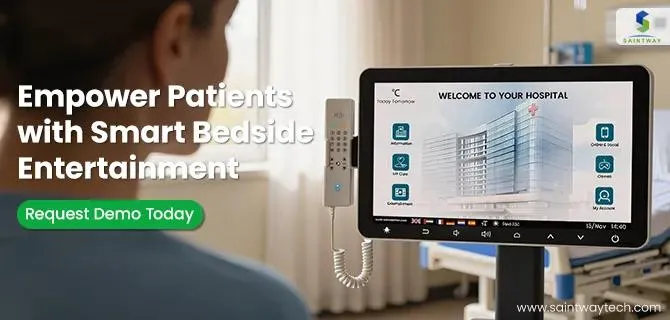
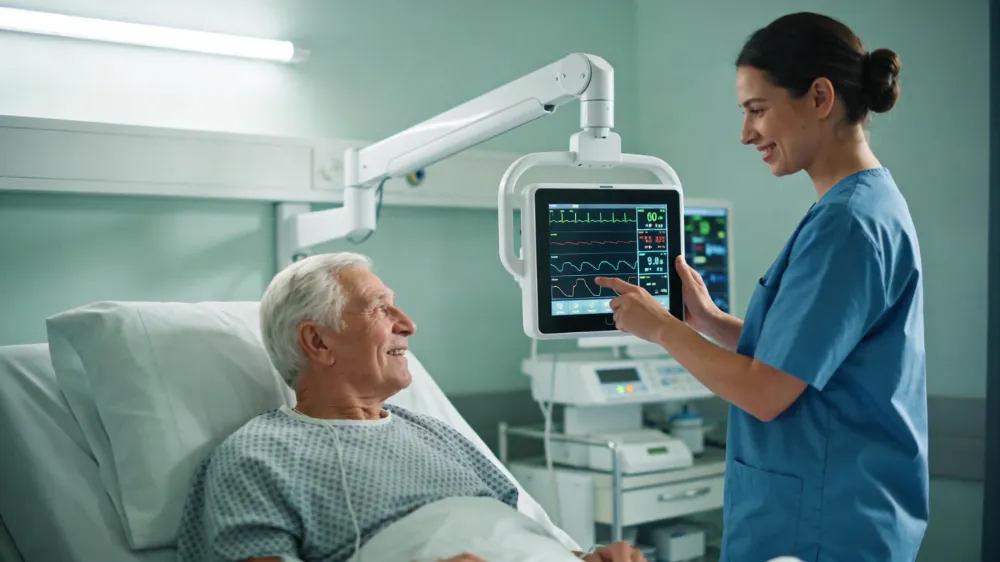
Walk into any leading hospital today, and you’ll notice something different – sleek touchscreens mounted beside each bed, replacing the tangled cords of old call buttons. These aren’t just fancy TVs; they’re transforming how care gets delivered.
At Memorial Health, nurse Sarah Wu recalls the “before and after”: “We used to play phone tag with dietary services. Now when Mr. Johnson in Room 412 orders his lunch, the kitchen gets it instantly – no more cold trays arriving at shift change.”
By the Numbers: Why This Matters
- ▸ 68% faster medication reconciliation (Brigham & Women’s 2025 trial)
- ▸ 1.2 million fewer call bell activations across 23 HCA facilities last year
- ▸ 41-minute daily time savings per nurse (JAMA Internal Medicine study)
What Exactly Are We Talking About?
Picture an iPad Pro meets hospital bed – but built tougher than your smartphone. These systems combine:
Core Functions
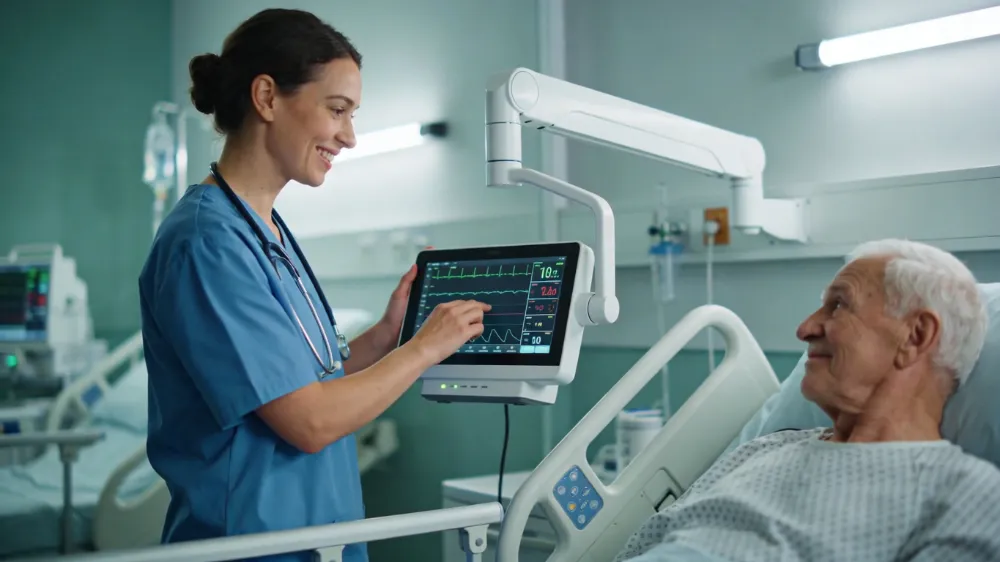
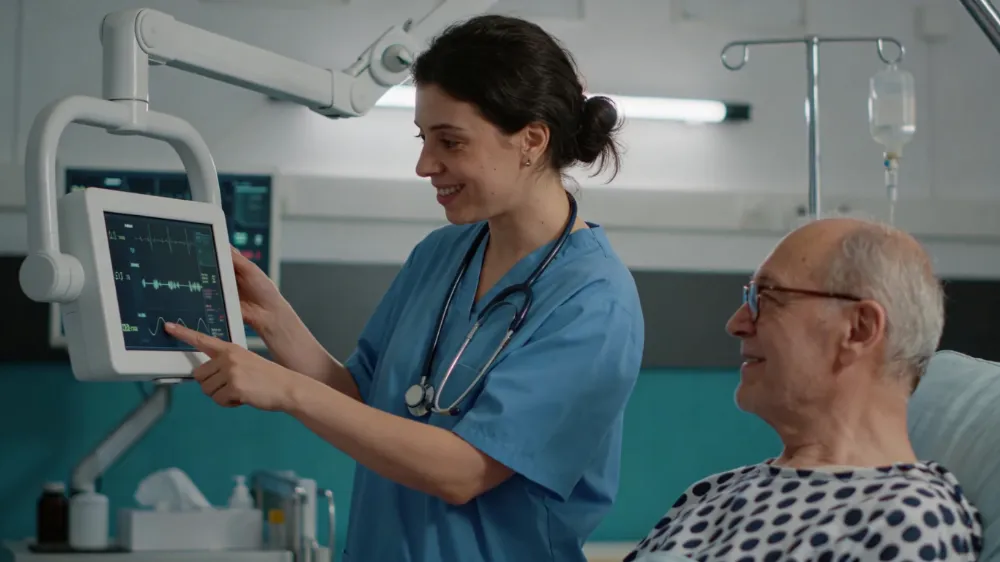
- Real-time vitals monitoring (with color-coded alerts)
- Secure messaging to care teams
- Customizable patient education videos
What They’re Not Contrary to some administrators’ fears, they don’t:
❌ Replace face-to-face care (nurses still do hourly rounds)
❌ Require constant IT support (most units report <1% downtime)
The Game-Changing Benefits
1. Cutting the “Where’s My…?” Epidemic
Ever seen a nurse sprinting to find a blood pressure cuff? Bedside terminals reduce that scramble by:
- Equipment tracking: RFID tags show available devices on floor maps
- Supply requests: Need more gauze? Ordered directly from materials management
Pro tip: Look for systems with voice shortcuts – at Johns Hopkins, saying “STAT linens” triggers priority delivery.
2. Turning Waiting Rooms into Healing Spaces
Post-op boredom isn’t trivial – it slows recovery. Modern terminals offer:
- Entertainment: Curated Netflix selections (no horror films, per patient safety protocols)
- Virtual windows: Alpine views for windowless rooms (shown to reduce pain med use by 12%)
Implementation Pitfalls to Avoid
The “Too Many Clicks” Trap
Some early adopters made a critical error: forcing staff through endless menus. The fix?
Gold Standard Layout
| Button | Function |
|---|---|
| Red | Immediate nurse call |
| Blue | Non-urgent requests |
| Green | Repeat last meal order |
Infection Control Must-Haves
- Screen materials: Gorilla Glass with antimicrobial coating lasts 3x longer than plastic
- Cleaning mode: Locks screen during disinfection (prevents accidental orders)
Real-World Success Stories
Case 1: Reducing Falls at Night UC San Francisco added motion-activated path lighting to their terminals. Result? 28% fewer 3AM bathroom falls.
Case 2: The Language Barrier Fix Miami Children’s Hospital uses AI-powered translation – parents tap symptoms in their native language, displayed as icons to staff.
Your Next Steps
- Start Small: Pilot 5-10 units in one unit (med-surg works well)
- Measure What Matters: Track call light response times pre/post installation
- Listen to Frontline Staff: Their tweaks make or break adoption
“The best systems feel invisible – like they’ve always been there.” – Dr. Elena Rodriguez, Chief Nursing Officer, Texas Medical Center
Saintway Technology: A trusted expert in smart healthcare solutions, specializing in customized hardware/software to enhance patient care.
Latest Content
- How to Choose Smart Bedside Terminal: The Complete Hospital Buying Guide for 2026
- Bedside Infotainment vs Traditional Hospital TV: 2026 Strategic Decision Framework
- Hospital Television Systems: 2026 Strategic Implementation Guide for Healthcare Facilities
- Preparing Smart Wards for Hybrid Care and Long-Term Scalability
- The Future is Sterile: Why Medical Touch Screens are Revolutionizing Patient Care and Hospital Efficiency