
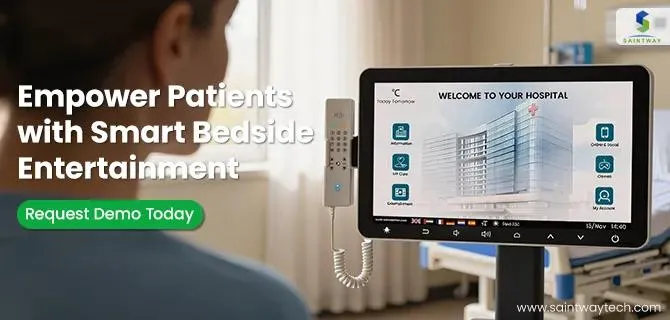
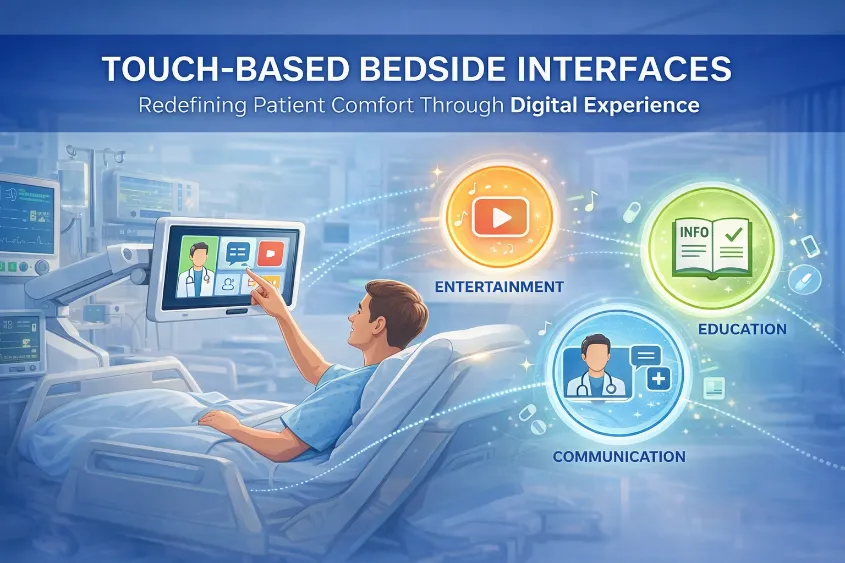
In modern smart wards, patient comfort is no longer defined solely by physical care. Digital interaction has become a critical layer of the patient experience—one that influences satisfaction, engagement, and even clinical outcomes. At the center of this shift is the touch-based bedside interface, evolving from a simple entertainment screen into a multifunctional digital touchpoint.
For healthcare software developers and system integrators, this transformation opens new opportunities—and new design responsibilities.
Why Touch Interaction Matters in Patient-Centered Care
Patients in a hospital environment often face stress, uncertainty, and reduced mobility. A well-designed touch interface provides immediate, intuitive control over their environment and information, helping restore a sense of autonomy.
Unlike traditional remote controls or wall-mounted systems, touch-based bedside interfaces offer:
·Direct, visual interaction without learning curves
·Accessibility for patients with limited mobility
·Faster access to information, services, and communication tools
The result is a calmer, more engaged patient—without adding workload to clinical staff.
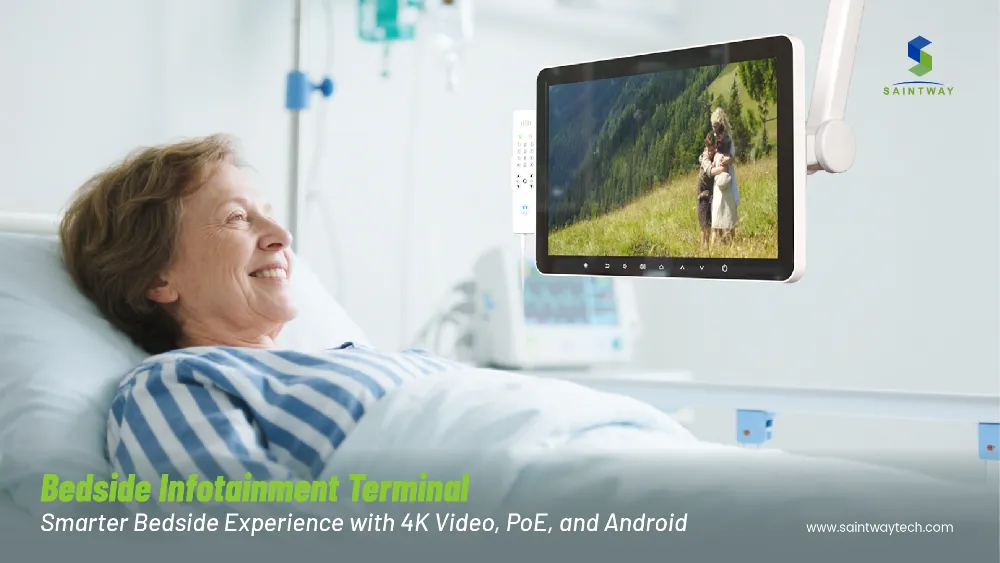
Entertainment: More Than Distraction
Entertainment remains a core use case, but its role has evolved. On-demand video, IPTV, and streaming services delivered through touch interfaces help patients manage anxiety and long hospital stays.
For developers, this means:
·Supporting modern media formats and streaming protocols
·Ensuring smooth performance without compromising system stability
·Designing interfaces that are simple enough for all age groups
Entertainment is no longer just content delivery—it’s part of emotional care.
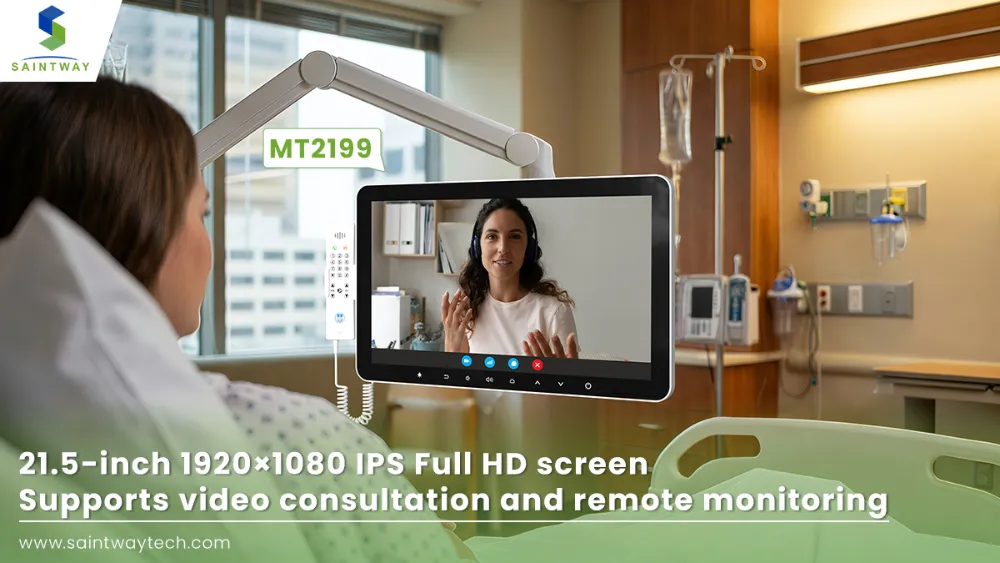
Education: Turning Information Into Understanding
Touch-based interfaces enable hospitals to present educational content in a patient-friendly way—procedures, recovery guidance, medication explanations, and post-discharge instructions.
From a software perspective, this creates demand for:
·Modular content frameworks
·Multilingual UI support
·Integration with hospital education platforms and clinical workflows
Well-designed educational interfaces reduce confusion, improve compliance, and support better outcomes.
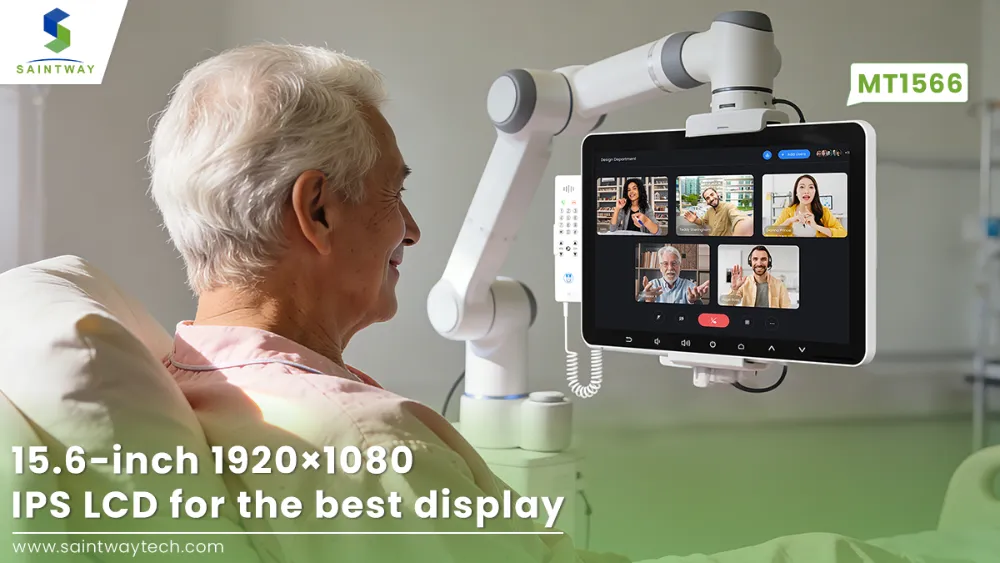
Communication: Bridging Patients, Families, and Care Teams
Communication is one of the most impactful areas where touch interfaces add value. Video calls with family, messaging with nursing staff, and service requests all become accessible through a single screen.
For system integrators, the challenge is seamless integration:
·Connecting bedside interfaces with nurse call systems
·Ensuring low-latency, reliable communication
·Maintaining data privacy and role-based access
When implemented well, communication features reduce call-light pressure and improve patient satisfaction simultaneously.
Design Considerations for Developers and Integrators
Building effective touch-based bedside solutions requires attention beyond functionality:
·UI clarity: Large icons, minimal steps, and clear visual hierarchy
·Responsiveness: Immediate feedback to every interaction
·Consistency: Unified experience across entertainment, education, and communication modules
·Scalability: Easy deployment across different ward types and hospital sizes
The bedside interface is often the only digital system patients interact with directly—its quality reflects the hospital’s overall digital maturity.
Looking Ahead
As smart wards continue to evolve, touch-based bedside interfaces will play an increasingly strategic role. They are becoming platforms—not endpoints—capable of supporting new applications, integrations, and patient engagement models.
For healthcare software developers and system integrators, the opportunity lies in designing experiences, not just systems—experiences that respect patient comfort while aligning with clinical and operational workflows.
The future of patient-centered care will be touched—literally—by the quality of these interfaces.
Latest Content
- Understanding Bedside TVs in Hospitals: Complete Patient Guide 2026
- Future Hospital Bedside Data Terminal Technology: 2026-2030 Roadmap for Smart Patient Rooms
- Hospital Bedside Data Terminals Cost Effectiveness: ROI & Patient Outcomes Guide 2026
- Hospital Television Systems: 2026 Strategic Implementation Guide for Healthcare Facilities
- Bedside Infotainment vs Traditional Hospital TV: 2026 Strategic Decision Framework