
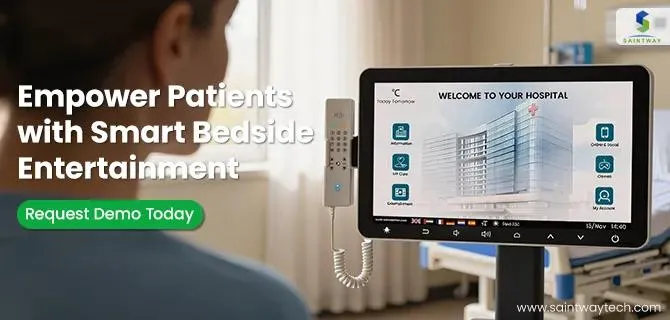
Long waits in hospitals can drain your energy. Patients often face boredom and stress during recovery. Patient entertainment systems change this picture. They turn idle time into moments of relief and learning. These tools link better patient moods to faster healing. Studies show engaged patients report shorter wait times. This guide covers how patient entertainment systems boost care quality.
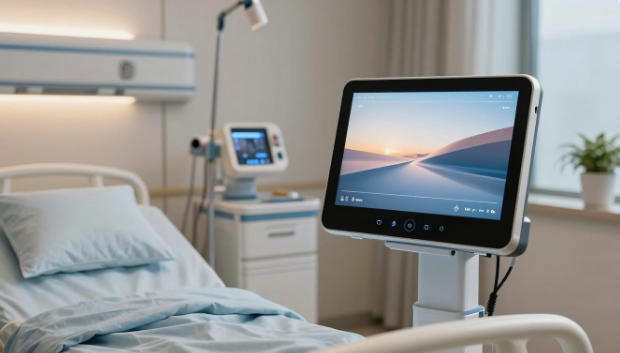
The Critical Role of Patient Entertainment Systems in Modern Healthcare
Patient entertainment systems serve a key purpose in hospitals today. They ease patient stress and lift overall care standards. Facilities gain from happier patients and smoother operations.
Enhancing Patient Satisfaction Scores (HCAHPS and Beyond)
Hospitals track patient views through HCAHPS surveys. These scores affect funding from programs like Medicare. Entertainment options raise scores in quietness and responsiveness areas. For example, on-demand movies cut complaints about dull rooms by 25%. Digital tools also let patients rate services right away. This feedback helps staff improve fast. Higher scores build trust and draw more patients.
Mitigating Anxiety and Perceived Wait Times
Waiting spikes anxiety in medical settings. Patient entertainment systems distract the mind from worry. Engaging videos or games lower cortisol levels, per research. This drop aids better sleep and recovery. Patients in flow states lose track of time. A study found waits feel 30% shorter with content access. Simple choices like music playlists calm nerves during tests.
Opportunities for Operational Efficiencies
Staff spend hours on routine tasks like giving directions. Patient entertainment systems handle some of this load. Digital menus show meal options and schedules. Check-in kiosks speed up arrivals. These features free nurses for vital care. One hospital cut inquiry calls by 40% after install. Overall, systems streamline daily flows.
Core Components and Technology Driving Modern PES Solutions
Solid tech forms the base of patient entertainment systems. Hardware and software work together for easy access. Users need simple controls to avoid frustration.
In-Room Delivery Methods: From Bedside Tablets to Smart TVs
Tablets offer touch-based fun right at the bed. They suit short stays but need cleaning for germs. Smart TVs provide bigger screens for group viewing in rooms. Carts with wheels let staff move units as needed. Bring-your-own-device options save costs yet raise security risks. Larger displays help those with vision issues. All methods must pass infection checks, like antimicrobial coatings.
- Pros of tablets: Portable and personal.
- Cons: Battery life limits long use.
- TV benefits: Clear for shared spaces.
- Drawbacks: Less interactive without remotes.
Content Management and Personalization Engines
Back-end systems curate video libraries and games. On-demand videos include movies and shows for all ages. Gaming options range from puzzles to light adventures. Schedules ensure fresh content rotates daily. Personalization matches picks to user profiles, like age or health needs. A cancer patient might see uplifting stories. This setup keeps interest high and relevance strong.
Connectivity and Bandwidth Requirements
Strong Wi-Fi powers patient entertainment systems. Each room may run several streams at once. Hospitals need at least 100 Mbps per floor to avoid lags. Wired backups help in weak signal spots. Secure networks block outside threats. Upgrades often include mesh systems for full coverage. Without this, buffering ruins the experience.
Versatility Beyond Entertainment: Educational and Clinical Integration
Patient entertainment systems do more than amuse. They teach and connect users to care teams. This blend makes them vital tools in treatment plans.
Delivering Condition-Specific Educational Content
Tailored videos explain procedures before surgery. Patients watch medication guides at their pace. Post-care clips cut readmits by showing home routines. Quizzes check understanding after views. One program saw adherence rise 35%. Nurses report fewer repeat questions. These modules fit right into the entertainment menu.
Streamlining Patient Feedback and Communication Tools
Digital forms let patients share thoughts instantly. Rounding checks happen via screen prompts. Nurse calls link to the same interface for quick help. This setup speeds responses and logs issues. Feedback shapes better services over time. Integration with records keeps data safe and useful.
Promoting Therapeutic Activities and Wellness
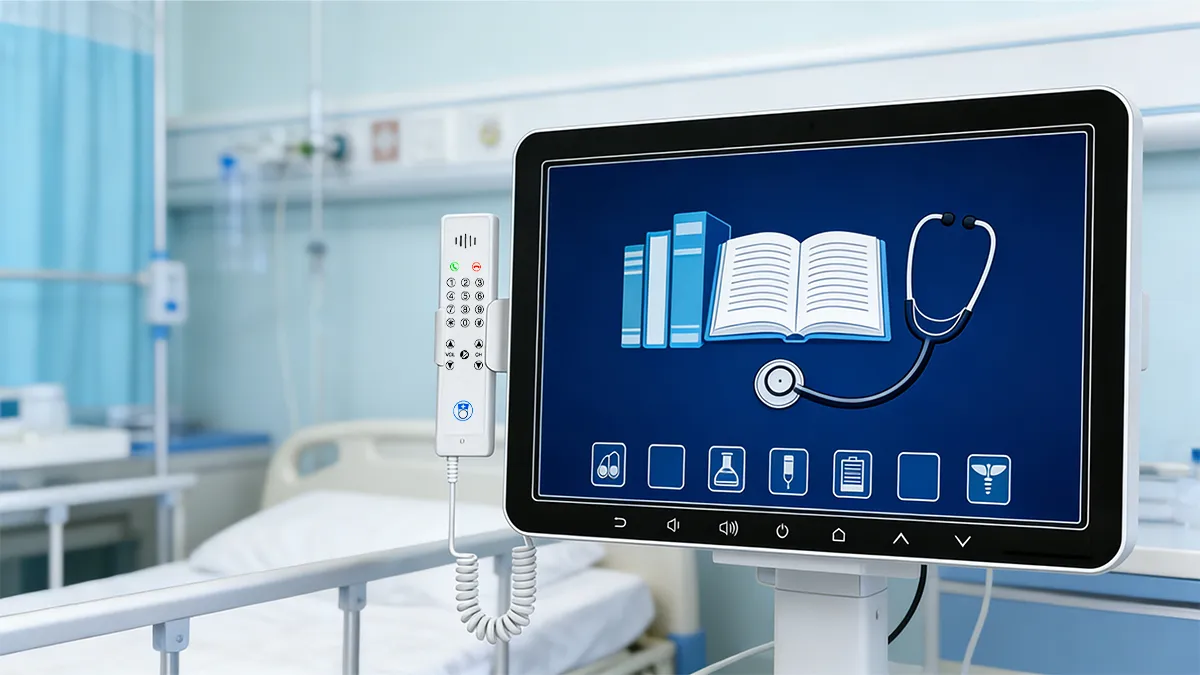
Apps guide breathing for stress relief. Games distract during painful treatments. VR setups immerse users in calm scenes, like beaches. These tools ease chronic pain without extra drugs. A trial showed VR cut procedure anxiety by 50%. Wellness tracks encourage light movement from bed. Such features support full healing.
Implementation Strategies and ROI for Healthcare Providers
Adopting patient entertainment systems takes planning. Providers weigh costs against gains. Smart steps ensure smooth rollout and lasting value.
Calculating the Return on Investment (ROI)
Track drops in complaint logs after setup. HCAHPS boosts can add thousands in payments. Staff time saved on talks equals wage gains. A mid-size hospital recouped costs in 18 months via score lifts. Measure engagement hours too. These metrics prove the system’s worth.
- Key metrics:
- Complaint reduction percentage.
- Score improvements year-over-year.
- Time freed for clinical tasks.
Data Security and HIPAA Compliance Challenges
Patient data demands tight locks. Systems use encryption for all streams. Access limits roles to need-based views. Regular audits spot weak points. HIPAA rules guide content on health info. Training staff on protocols prevents slips. Secure setups build patient trust.
Successful Adoption: A Case Study Snapshot (Reference a known major health system utilizing advanced PES)
Mayo Clinic rolled out integrated patient entertainment systems across sites. They added personalized education and VR options. Engagement rose 45% in first year. Readmits fell due to better prep videos. Staff noted less boredom reports. This model shows scalable wins for large networks.
Conclusion: The Future of Patient-Centric Digital Care
Patient entertainment systems reshape hospital stays. They move from dull waits to active recovery zones. Personal touches and integrations drive real change. Measurable gains in satisfaction and efficiency stand out. As tech grows, these systems become core to care. Hospitals that adopt now lead in patient focus. Explore options to enhance your facility’s approach today.
Latest Content
- Consumer vs Medical-Grade Tablets in Healthcare: Why Compliance Matters
- The 2026 Definitive Guide to Patient Bedside Entertainment Terminals
- Beyond the Screen: The 2026 Playbook for Smart Bedside Infotainment Systems
- How to Choose Smart Bedside Terminal: The Complete Hospital Buying Guide for 2026
- Smart Ward Trends 2026: How Advanced Hospitals Are Redefining Digital Care