
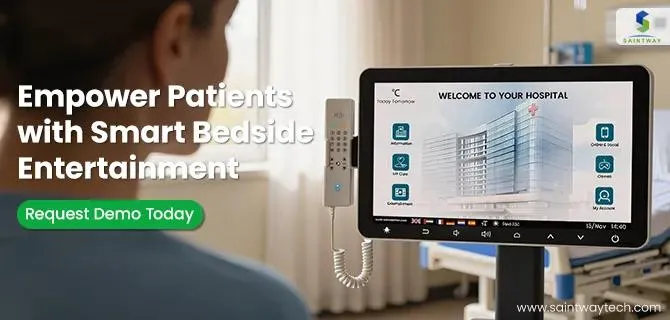
After spending two decades helping healthcare facilities navigate technology procurement, I’ve witnessed the evolution of bedside terminals from simple entertainment screens to comprehensive clinical hubs. When administrators ask me how to choose Smart Bedside Terminal systems that actually deliver ROI, I always start with this fundamental truth: the right bedside terminal transforms patient experience while streamlining clinical workflows—but only if you select based on hospital-specific requirements rather than flashy features.
The global bedside terminal market reached $1.2 billion in 2024 and is projected to hit $3.5 billion by 2034, growing at 11.5% CAGR. This explosive growth reflects a shift from “nice-to-have” amenities to essential infrastructure for modern healthcare delivery. Whether you’re outfitting a new wing or upgrading legacy systems, this guide provides the technical depth and practical insights you need to make an informed decision.
What Is a Smart Bedside Terminal?
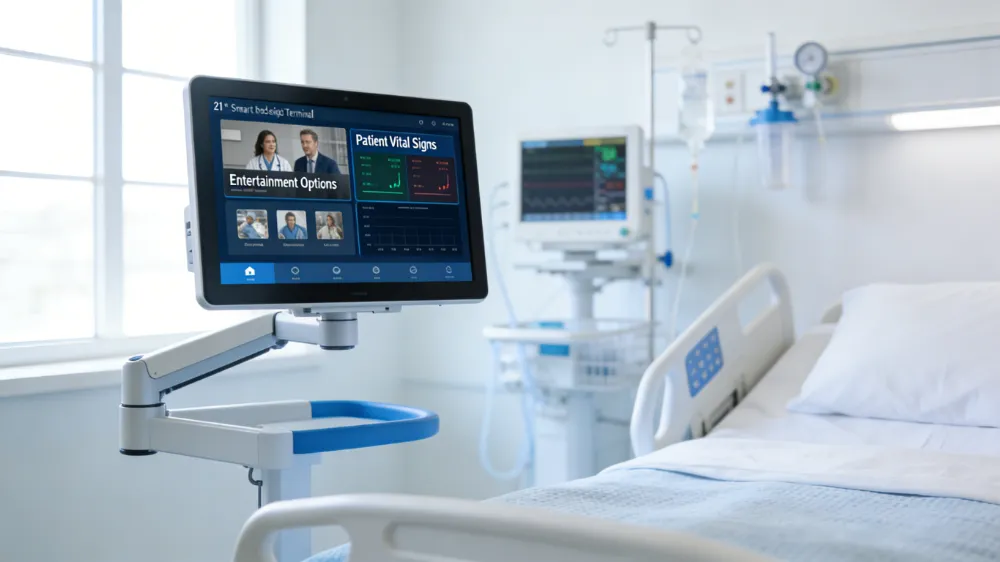
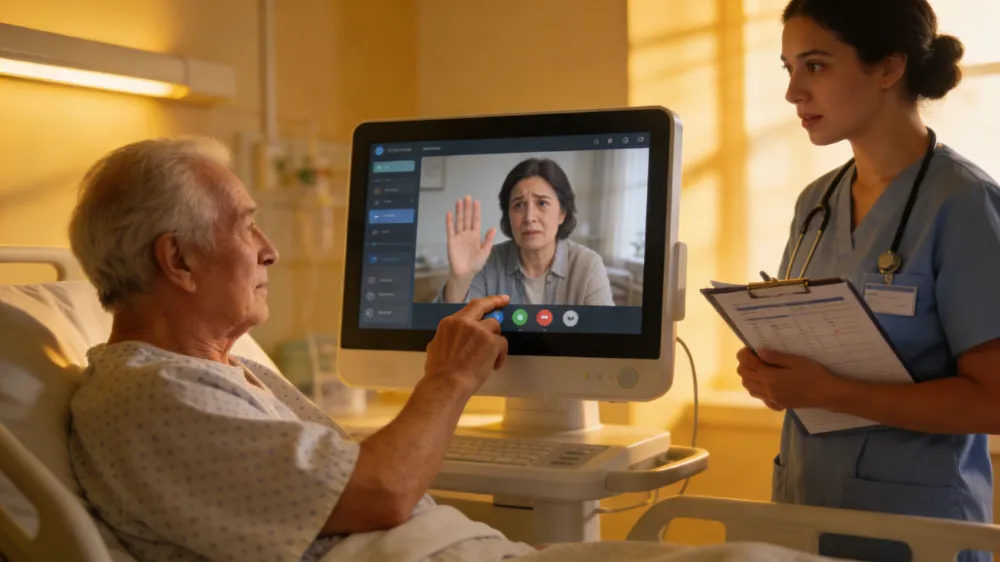
A Smart Bedside Terminal is a medical-grade touchscreen device mounted at the patient’s bedside that integrates entertainment, clinical data access, communication tools, and hospital service management into a single platform. Unlike consumer tablets, these specialized devices are engineered for 24/7 clinical environments with antimicrobial surfaces, IEC 60601-1 electrical safety compliance, and seamless EHR integration
Modern terminals serve three distinct user groups:
- Patients: Access entertainment, education content, meal ordering, and video calls with family
- Clinical Staff: View vital signs, medication schedules, and care plans; document at the point of care
- Administrators: Gather satisfaction data, streamline workflows, and reduce operational costs
The distinction between consumer tablets and clinical-grade terminals is stark. While an iPad costs $400-$800 upfront, it lacks medical certifications, antimicrobial protection, and EHR connectivity. Over five years, the total cost of ownership for consumer devices often exceeds clinical alternatives when you factor in replacement costs, infection control protocols, and manual data entry inefficiencies
Why Hospitals Are Investing in Smart Bedside Terminals in 2026
The business case for bedside terminals has never been stronger. Recent implementations demonstrate measurable returns across multiple dimensions:
Clinical Outcomes Improvement
At Johns Hopkins Hospital, a pilot program using smart terminals with integrated monitoring contributed to a 15% reduction in code blue incidents over six months.
The devices enabled continuous vital sign monitoring with automated alerts to nursing staff, facilitating faster interventions.
A 450-bed urban teaching hospital reported even more dramatic results after deploying 380 terminals across patient care areas:
- Patient satisfaction scores jumped from 58th to 84th percentile nationally
- Call bell usage decreased 42%
- Nursing time on non-clinical requests reduced by 31%
- 30-day readmission rates dropped from 14.2% to 11.8%
- 28-month payback period based on reduced overtime and improved CMS reimbursement
Financial ROI
Mayo Clinic calculated a 14-month ROI after hospital-wide bedside terminal implementation, factoring in reduced readmissions, lower staff turnover (saving $50,000-$100,000 per nurse replacement), and energy efficiency gains compared to traditional TV systems.
The financial benefits extend beyond direct cost savings. Improved documentation accuracy drives better case mix index (CMI) scores, directly impacting reimbursement rates. One study found that tele-ICU implementations (which share infrastructure requirements with bedside terminals) increased annual revenues by 46% and direct contribution margin per case by nearly 300%.
How to Choose Smart Bedside Terminal Specifications
When evaluating technical specifications, prioritize these seven categories based on your facility’s specific needs:
1. Medical-Grade Certifications (Non-Negotiable)
| Certification | Purpose | Why It Matters |
|---|---|---|
| IEC 60601-1 | Medical electrical safety | Ensures safe operation in patient vicinity; prevents electrical shock hazards |
| ISO 13485 | Medical device quality management | Validates consistent manufacturing processes and risk management |
| EN 60601-1-2 | Electromagnetic compatibility | Prevents interference with life-sustaining equipment |
| HIPAA/GDPR | Data privacy compliance | Mandatory for patient health information protection |
| IP65 Rating | Dust/water ingress protection | Enables safe cleaning with hospital-grade disinfectants |
Red Flag: Any vendor reluctant to provide current certification documentation should be eliminated immediately. These aren’t marketing badges—they’re legal and safety requirements.
2. Display Technology
Screen specifications directly impact usability for patients with varying visual acuity and lighting conditions:
- Size Range: 15.6″ to 21.5″ is standard for adult patients; 10.1″ to 13.3″ for pediatric or space-constrained rooms
- Resolution: Minimum 1920×1080 Full HD; 4K becoming standard for high-acuity areas
- Brightness: 400-500 nits minimum for hospital lighting conditions; anti-glare coating essential
- Touch Technology: 10-point capacitive multi-touch with glove-friendly operation
- Viewing Angle: 178° horizontal/vertical for patient comfort in various positions
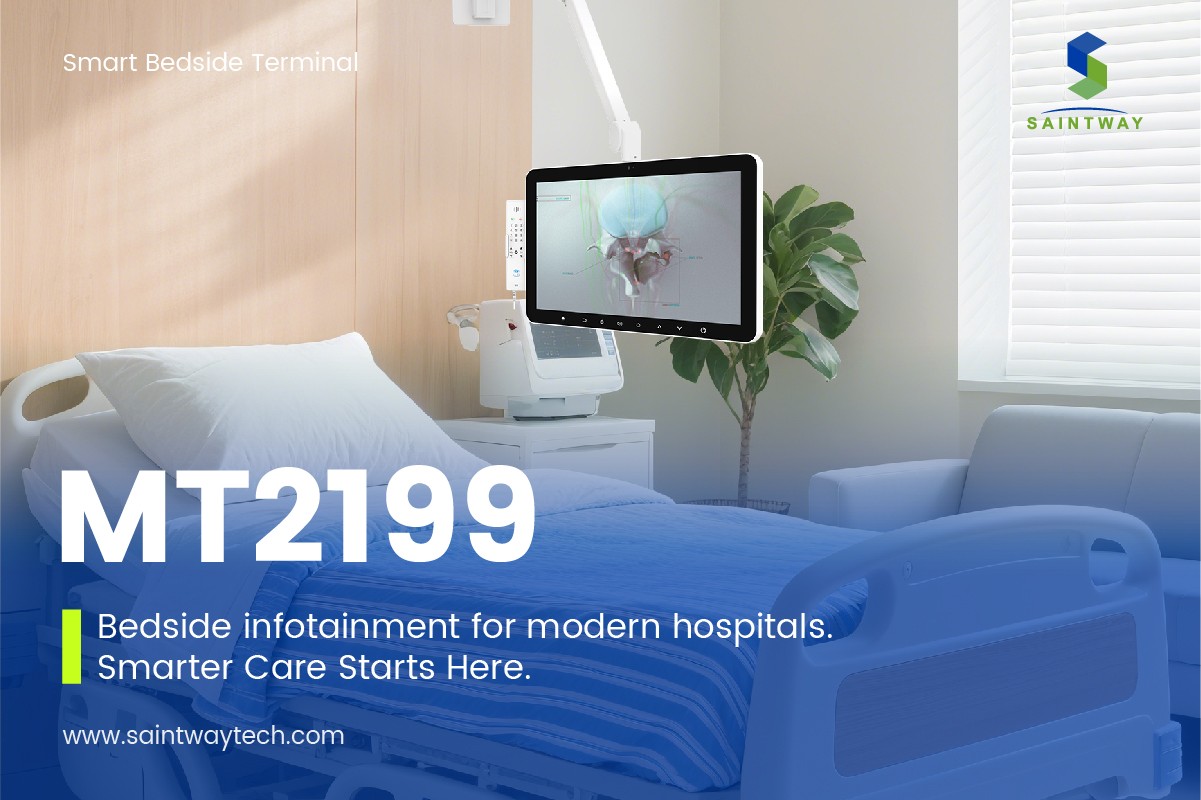
The Saintway MT2199 exemplifies current standards with its 21.5″ IPS display, 500 cd/m² brightness, and P-CAP touch technology that responds reliably through medical glove.
3. Processing Power and Connectivity
Modern terminals require substantial computing power to run clinical applications alongside entertainment content:
| Component | Minimum Spec | Recommended Spec |
|---|---|---|
| Processor | Quad-core 1.4GHz | Rockchip RK3399 or equivalent (Dual-core A72 + Quad-core A53) |
| RAM | 2GB | 4GB LPDDR4 for smooth multitasking |
| Storage | 32GB eMMC | 64GB+ for content libraries and app caching |
| OS | Android 11 | Android 12 or Windows 10 IoT for enterprise security |
| WiFi | 802.11ac | WiFi 6 (802.11ax) for high-density environments |
| Bluetooth | 4.2 | 5.0+ for peripheral connectivity |
| Ethernet | 10/100Mbps | Gigabit with PoE+ support for single-cable installation |
Integration Capability: Verify HL7 FHIR support for EHR connectivity and compatibility with your existing nurse call systems, building management systems, and patient monitoring devices.
4. Infection Control Design
Hospital-acquired infections (HAIs) cost facilities billions annually. Bedside terminals must contribute to—not compromise—infection prevention:
- Antimicrobial Materials: Silver-ion or copper-infused plastics that inhibit bacterial growth
- Fanless Design: Eliminates dust accumulation and airborne pathogen circulation
- Sealed Front Panel: IP65 rating allows cleaning with bleach, hydrogen peroxide, and quaternary ammonium compounds
- Rounded Edges: Prevents bacterial harboring in crevices
- UV-C Compatibility: Some advanced models withstand UV-C sterilization cycles
Research from Hanyang University Seoul Hospital demonstrated that rigorous environmental cleaning protocols, including terminal disinfection, contributed to reduced multidrug-resistant organism transmission in ICUs.
5. Mounting and Installation Flexibility
Installation options impact both patient ergonomics and staff workflow efficiency:
| Mount Type | Best For | Considerations |
|---|---|---|
| Wall Mount | Permanent room configurations | Fixed position; requires precise height planning |
| Articulating Arm | Multi-bed rooms or varying patient mobility | Extends 24-36″; supports landscape/portrait rotation |
| Bedside Pole Mount | ICU and high-acuity areas | Moves with bed during patient transport |
| VESA Compatibility | Future-proofing | Ensures easy upgrades without infrastructure changes |
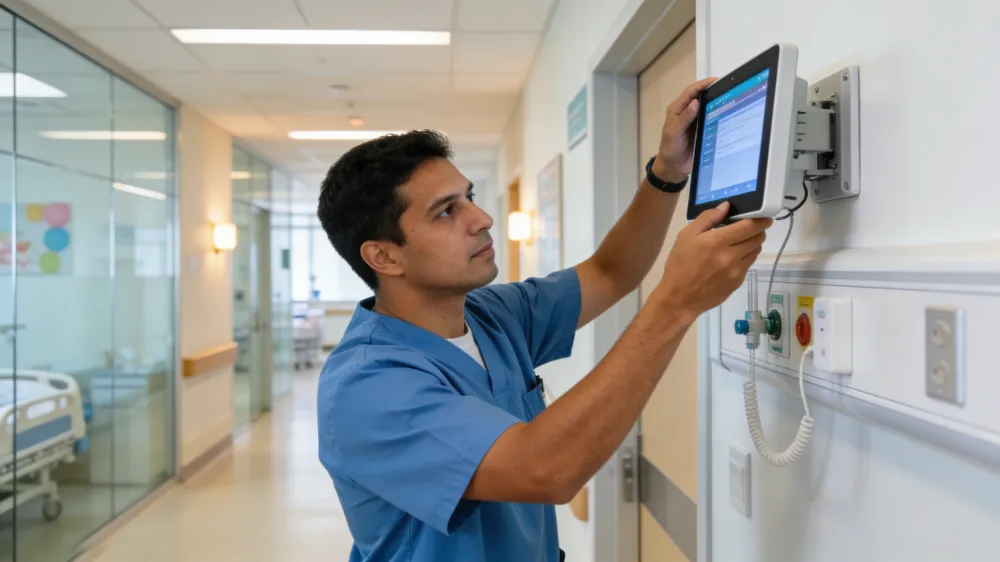
Installation Timeline: Most hospitals deploy in phases, with 1-2 weeks per ward for mounting, network configuration, and staff training.
Plan for minimal patient room downtime—many vendors offer overnight installation to avoid disrupting operations.
6. Software Ecosystem and Customization
The hardware is only as good as the software experience it delivers:
Patient Interface Requirements:
- Intuitive icon-based navigation (minimal text dependency)
- Multi-language support (minimum 10 languages for diverse populations)
- Accessibility features: voice control, screen magnification, high-contrast modes
- Personalized content based on admission diagnosis
Clinical Interface Requirements:
- Role-based access control (patient vs. staff modes)
- Single sign-on integration with hospital identity management
- Automatic session timeout with PHI protection
- Barcode/RFID reader support for medication verification
Content Management:
- Remote updating capability for all terminals
- Custom branding and hospital-specific app integration
- Educational content library with usage analytics
7. Security Architecture
Data breaches in healthcare average $10.93 million per incident—the highest of any industry. Bedside terminals require defense-in-depth:
- End-to-end encryption for all data transmission
- Hardware-level security modules for credential storage
- Network segmentation isolating clinical data from entertainment traffic
- Regular OTA security updates with vulnerability patching
- Physical security via Kensington lock slots or tamper-evident seals
Top 5 Smart Bedside Terminal Manufacturers: 2026 Comparison
Based on market presence, certification compliance, and customer feedback, these manufacturers lead the field:
| Manufacturer | Flagship Model | Key Strength | Best For |
|---|---|---|---|
| Saintway Technology | MT2199 (21.5″) | Cost-effective customization; strong Android ecosystem | Mid-size hospitals seeking value |
| Barco | JAOX series | Premium build quality; exceptional display technology | Academic medical centers |
| Advantech | HIT-W series | Industrial computing expertise; ruggedized designs | High-acuity environments |
| PDi Communication Systems | medTAB | US-based manufacturing; UL-listed safety focus | Facilities prioritizing domestic support |
| Philips Healthcare | IntelliVue XDS | Deep EHR integration; enterprise scalability | Large health systems |
Vendor Evaluation Checklist:
- Request references from hospitals with similar bed counts and patient demographics
- Validate certification documentation directly with issuing bodies (not just vendor claims)
- Conduct on-site pilot testing with actual clinical staff and patients
- Review SLAs for response times, parts availability, and software update frequency
- Assess financial stability—avoid vendors with questionable long-term viability
1. Total Cost of Ownership (TCO) Modeling
Most buyers focus on upfront hardware costs, but the 10-year TCO reveals the true financial picture. Here’s a comprehensive model based on actual hospital implementations:
| Cost Category | Clinical-Grade Terminal | Consumer Tablet (iPad) |
|---|---|---|
| Initial Hardware | $2,500-$4,500/unit | $400-$800/unit |
| Installation & Mounting | $200-$400/unit | $150-$300/unit (third-party cases/mounts) |
| Software Licensing | $15-$25/bed/month | $10-$20/bed/month (MDM + apps) |
| Infection Control | Included in design | $50/unit/year (specialized cases) |
| Replacement Cycle | 7 years | 2-3 years (consumer durability) |
| Support & Maintenance | $300-$500/unit/year | Ad-hoc; no clinical SLA |
| EHR Integration | Native HL7/FHIR | $15,000-$50,000 custom development |
| Staff Training | 4 hours included | 8+ hours (workarounds for limitations) |
| 10-Year TCO | $8,500-$12,000 | $9,200-$14,500 |
Key Insight: The break-even point occurs at 18-24 months. Beyond that, clinical-grade terminals deliver superior ROI through reduced replacement costs, avoided integration expenses, and improved staff efficiency.
2. Patient Demographic Adaptation Strategies
One size does not fit all. Leading facilities customize terminal configurations by patient population:
Geriatric Patients (65+):
- Deploy 19″+ screens with automatic UI magnification
- Enable “Silver Mode” with simplified navigation and high-contrast themes
- Integrate hearing aid compatibility and amplified audio
- University of Zurich research shows 89% of patients over 70 achieve basic proficiency after 5-minute training when interfaces are optimized for cognitive accessibility
Pediatric Patients:
- Ruggedized cases withstand drops and spills
- Parental controls limit content access
- Gamified educational modules improve engagement
- Smaller 10″-13″ screens appropriate for bed size
ICU/High-Acuity Patients:
- Integration with physiological monitors for continuous display of vital signs
- Limited entertainment options to support rest protocols
- Direct nurse communication with priority escalation
- Rapid disinfection protocols between patients
3. Future-Proofing for 2025-2030 Technology Roadmaps
The terminal you choose today must adapt to emerging technologies:
| Emerging Technology | Current Status | Integration Timeline | Selection Criteria |
|---|---|---|---|
| AI-Powered Personalization | Pilot programs active | 2025-2026 | GPU acceleration capability; edge computing support |
| 4G/5G Connectivity | Early adopters | 2025-2027 | Modular cellular radio; carrier certification |
| Ambient Intelligence | Research phase | 2027-2030 | Sensor array compatibility; API-first architecture |
| AR/VR Patient Education | Limited deployment | 2026-2028 | High-resolution display; low-latency processing |
| Voice-First Interfaces | Mainstream adoption | 2025 | Far-field microphone arrays; HIPAA-compliant voice processing |
Modular Design Priority: Select terminals with accessible component bays for RAM/storage upgrades and swappable connectivity modules. This extends useful life from 5 to 7+ years, improving sustainability metrics and capital planning.
How to Choose Smart Bedside Terminal: Step-by-Step Selection Process
Follow this proven framework developed through 50+ hospital implementations:
Phase 1: Needs Assessment (Weeks 1-2)
- Stakeholder Mapping: Interview nurses, physicians, IT, biomedical engineering, infection control, and patient experience teams
- Workflow Analysis: Document current pain points in patient communication, education delivery, and clinical documentation
- Technical Audit: Assess existing network infrastructure, EHR capabilities, and integration requirements
- Budget Planning: Establish capital and operational budgets with 5-year TCO projections
Phase 2: Vendor Screening (Weeks 3-4)
- RFP Development: Specify mandatory certifications, integration requirements, and service level expectations
- Initial Demos: Evaluate 3-4 vendors with standardized use case scenarios
- Reference Checks: Contact 2-3 current customers per vendor; ask specifically about implementation challenges and support quality
- Pilot Selection: Choose 2 finalists for bedside testing
Phase 3: Pilot Testing (Weeks 5-8)
- Unit Deployment: Install 5-10 terminals in representative care areas (medical, surgical, ICU)
- Data Collection: Track usage patterns, satisfaction scores, technical issues, and workflow impact
- Staff Feedback: Conduct structured interviews with nurses and physicians after 2 weeks of use
- Patient Surveys: Measure satisfaction with entertainment options, ease of use, and communication features
Phase 4: Decision and Contracting (Weeks 9-12)
- Scoring Matrix: Weight technical specs (30%), integration capability (25%), total cost (25%), and vendor support (20%)
- Negotiation: Secure pricing for multi-year agreements with annual technology refresh options
- Implementation Planning: Develop phased rollout schedule with training programs and change management protocols
Smart Bedside Terminal FAQ: Common Questions from Hospital Decision-Makers
Q: What’s the actual difference between consumer tablets and clinical-grade bedside terminals, and is the cost premium justified?
A: The distinction goes far beyond price tags. Consumer tablets like iPads lack medical-grade electrical safety certifications (IEC 60601-1), antimicrobial surfaces, and sealed designs capable of withstanding hospital disinfectants. While an iPad costs $400-$800 upfront versus $2,500-$4,500 for clinical terminals, the five-year total cost of ownership tells a different story. Consumer devices require replacement every 2-3 years due to durability issues, need expensive third-party cases for infection control, and demand $15,000-$50,000 in custom development for EHR integration. Clinical terminals offer native HL7/FHIR connectivity, 7-year lifespans, and 24/7 support with clinical expertise. When you factor in avoided manual data entry (saving 2,100+ hours annually in a 400-bed hospital), reduced infection risks, and regulatory compliance, clinical-grade terminals typically deliver 15-25% lower TCO while improving patient safety.
Q: How long does installation take, and will it disrupt patient care?
A: Most hospitals complete deployment in phases, allocating 1-2 weeks per ward with minimal patient disruption. The process involves three stages: pre-installation survey (checking Wi-Fi strength, power outlets, and bed positioning), physical mounting (wall, arm, or pole installation taking 30-45 minutes per unit), and system configuration (network integration, EHR connectivity testing, and content loading). Experienced vendors perform installations during evening or night shifts to avoid peak clinical hours. Staff training requires approximately 1 hour for nurses and IT teams, while patient onboarding happens through intuitive tutorial videos that play on first login. A 450-bed facility recently deployed 380 terminals across 8 units with 99.7% system uptime and no patient care interruptions
Q: Can bedside terminals integrate with our existing Epic/Cerner/Meditech EHR system?
A: Yes, modern bedside terminals support standard healthcare interoperability protocols including HL7 v2.x, HL7 FHIR, and DICOM for imaging. Integration depth varies by vendor—premium solutions offer bi-directional data flow where terminals display real-time medication schedules, lab results, and care plans while allowing clinicians to document vitals and assessments directly at the bedside. This eliminates the ” swivel chair” workflow where nurses move between patient rooms and stationary computers. When evaluating vendors, request specific integration documentation for your EHR version and ask for reference sites running the same system. The best implementations use single sign-on (SSO) so clinicians authenticate once and access both terminal functions and EHR records seamlessly. Verify that the vendor has completed integration testing with your specific EHR modules, as emergency department, perioperative, and inpatient workflows have distinct data requirements
Conclusion: Making the Right Investment
Choosing the optimal Smart Bedside Terminal requires balancing technical specifications, clinical workflows, and financial constraints. The facilities achieving the greatest success view these devices not as entertainment amenities, but as clinical infrastructure that happens to include entertainment capabilities.
Prioritize medical-grade certifications, EHR integration depth, and vendor support capabilities over marginal hardware specifications. Demand pilot testing with your actual staff and patients before committing to large-scale deployment. Calculate total cost of ownership across 7-10 years rather than focusing on upfront hardware costs.
The data is clear: hospitals implementing well-chosen bedside terminal systems see 15-42% improvements in patient satisfaction, significant reductions in nurse call burden, and measurable decreases in readmission rates with payback periods under 30 months
. In an era of value-based care and staffing shortages, these devices deliver both operational efficiency and competitive differentiation.
Start your selection process with the step-by-step framework outlined above, and you’ll be positioned to choose a system that serves your patients and staff effectively through 2030 and beyond.
Related Resources:
- IEC 60601-1 Medical Electrical Equipment Standards
- HL7 FHIR Implementation Guide
- HIMSS Analytics Infrastructure Maturity Model
Latest Content
- Bedside Infotainment vs Traditional Hospital TV: 2026 Strategic Decision Framework
- Hospital Television Systems: 2026 Strategic Implementation Guide for Healthcare Facilities
- Ultimate Guide to Hospital Bedside Entertainment & Clinical Infotainment Systems
- Smart Ward Trends 2026: How Advanced Hospitals Are Redefining Digital Care
- Designing Workflow-Centered Hospital Systems: Lessons from Real Ward Environments