
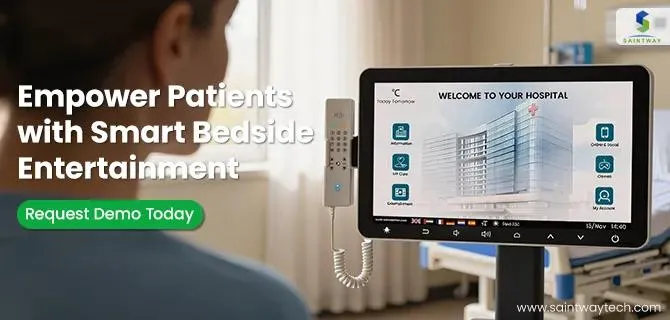
Hospital television systems have evolved far beyond mere entertainment devices in medical settings. Today, they serve as integral components of patient-centered care, blending technology, education, and connectivity to enhance the overall healthcare experience. In an era where patient satisfaction scores like HCAHPS (Hospital Consumer Assessment of Healthcare Providers and Systems) directly influence hospital reimbursements and reputations, these systems are pivotal. According to market analyses, the global hospital TV market is projected to grow from approximately $500 million in 2025 to $850 million by 2033, driven by technological advancements and a focus on improving patient outcomes. This growth reflects a shift from basic analog TVs to sophisticated digital platforms that integrate with electronic health records (EHRs), offer personalized content, and support telemedicine.
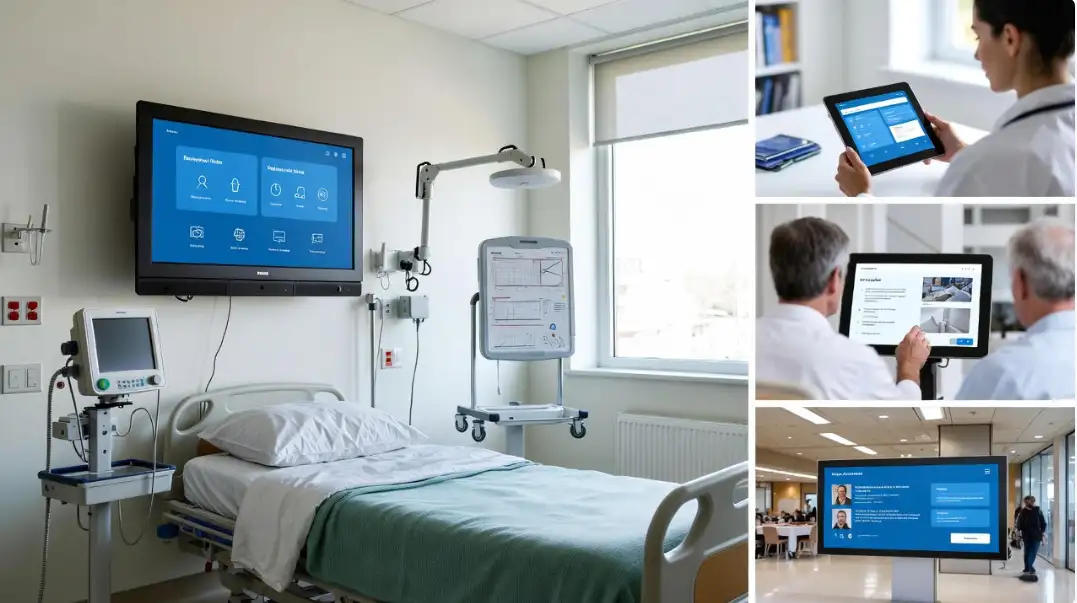
At their core, hospital television systems are designed to meet the unique demands of healthcare environments. They must be durable, hygienic, and user-friendly, accommodating patients of all ages and abilities while adhering to strict regulations like IEC 60601-1 for medical electrical equipment. Unlike consumer TVs, these systems prioritize safety features such as anti-microbial coatings, tamper-resistant designs, and low-voltage operations to prevent hazards in clinical spaces. For instance, leading brands like LG and Samsung incorporate energy-efficient LEDs and customizable interfaces that align with hospital branding, fostering a sense of familiarity and comfort for patients during often stressful stays.
The importance of these systems cannot be overstated. Research shows that access to entertainment and educational content via TVs can reduce patient anxiety by up to 35%, shorten perceived wait times, and even accelerate recovery by improving mood and adherence to treatment plans. In pediatric wards, child-friendly programming distracts young patients from procedures, while in geriatric units, health education videos promote self-care. For hospital administrators, these systems optimize workflows by routing non-clinical requests—such as meal orders or room adjustments—directly to appropriate departments, freeing nurses to focus on critical care. A study from the Journal of Advanced Nursing highlighted that patients with limited TV access post-surgery experienced higher pain and slower recovery, underscoring the therapeutic value of these technologies.
As healthcare continues to digitize, hospital TV systems are at the forefront of innovation. They bridge the gap between passive viewing and active engagement, incorporating IPTV (Internet Protocol Television) and OTT (Over-The-Top) streaming for seamless content delivery. This guide explores the evolution, key features, benefits, integrations, real-world case studies, future trends, and implementation considerations for hospital television systems, providing actionable insights for healthcare professionals, IT managers, and facility planners aiming to elevate patient care.
The Historical Evolution of Hospital Television Systems
The journey of hospital television systems began in the mid-20th century, when TVs were first introduced to patient rooms as a luxury amenity to alleviate boredom during extended hospital stays. In the 1950s and 1960s, basic black-and-white sets were installed in wealthier institutions, often funded by philanthropists or as part of post-war healthcare expansions. These early systems were rudimentary, relying on over-the-air broadcasts with limited channels, and served primarily as distractions rather than therapeutic tools.
By the 1970s and 1980s, color TVs became standard, coinciding with the rise of cable television. Hospitals adopted coaxial cable infrastructures to deliver more channels, including educational programming on health topics. However, these setups were plagued by issues like signal interference from medical equipment and high maintenance costs. Patient controls were basic—often just a pillow speaker for volume and channel selection—reflecting the era’s focus on functionality over interactivity.
The digital revolution in the 1990s marked a turning point. The transition from analog to digital broadcasting enabled clearer signals and more content options. Hospitals began integrating TVs with nurse call systems, allowing patients to summon help via the remote. Early adopters like U.S. facilities experimented with closed-circuit TV for in-house channels broadcasting hospital news, exercise videos, and relaxation content. Yet, these systems remained siloed, lacking integration with broader hospital technologies.
The 2000s brought significant advancements with the advent of flat-screen LCD and plasma TVs, which were more space-efficient and energy-saving. Regulatory pressures, such as HIPAA for data privacy, prompted designs with secure features. Brands like Philips and LG introduced hospital-grade models with Pro:Idiom encryption to protect copyrighted content. The rise of IPTV allowed content delivery over hospital networks, enabling on-demand libraries and personalized viewing.
Post-2010, the focus shifted to smart TVs and patient engagement. Influenced by consumer tech trends, hospitals adopted Android-based platforms for apps, streaming services like Netflix, and integration with EHRs for displaying personalized health data. The COVID-19 pandemic accelerated this evolution, emphasizing contactless features like voice control and virtual visits to minimize infection risks. Today, systems like Uniguest’s Healthcare Hub unify IPTV with digital signage, creating comprehensive ecosystems that support telemedicine and real-time monitoring.
This historical progression highlights a shift from entertainment-only devices to multifaceted tools that enhance clinical outcomes. As we look ahead, understanding this evolution informs current implementations, ensuring systems are scalable and future-proof.
Key Features of Modern Hospital Television Systems
Modern hospital television systems are engineered with a suite of features tailored to healthcare’s rigorous demands. At the forefront is seamless EMR integration, allowing TVs to pull real-time data from electronic medical records. For example, systems display care team details, medication schedules, and test results directly on-screen, empowering patients and reducing staff inquiries. This feature, seen in platforms like SONIFI Health’s interactive TVs, uses APIs to connect with EHRs such as Epic or Cerner.
Interactive functionality is another cornerstone. Patients can order meals, request services (e.g., housekeeping), rate pain levels, or complete surveys via intuitive touchscreens or remotes. Voice navigation and accessibility options—like closed captioning, audio descriptions, and large-text modes—ensure inclusivity for diverse populations, including those with disabilities or language barriers. Multi-lingual support, available in over 20 languages on LG models, caters to global patient demographics.
Entertainment options have expanded dramatically. Beyond traditional cable, systems offer OTT streaming for Netflix, YouTube, and Hulu, plus hospital-curated content like guided meditations, audiobooks, and games. Adaptive bitrate streaming adjusts quality based on network conditions, preventing buffering in bandwidth-limited environments. For pediatric care, child-specific apps with cartoons and educational games reduce anxiety during treatments.
Hygiene and durability are non-negotiable. Anti-microbial coatings on screens and remotes, compliant with ISO 22196 standards, inhibit bacterial growth. Models like Samsung’s feature HDMI lock-downs to prevent tampering, and UL-listing ensures safety in oxygen-rich rooms. Energy efficiency, with low-power LEDs, aligns with sustainability goals, potentially reducing hospital energy costs by 20-30%.
Technical capabilities include IPTV for local content delivery and OTT for internet-based streaming, with centralized management dashboards for IT teams to update content, monitor usage, and send emergency alerts. Integration with IoT devices allows control of room elements like lights and blinds from the TV.
These features collectively transform TVs into patient portals, fostering engagement and efficiency in modern healthcare.
Benefits for Patients, Staff, and Hospitals
The deployment of advanced hospital television systems yields multifaceted benefits, profoundly impacting patients, staff, and institutional operations.
For patients, these systems alleviate the psychological burdens of hospitalization. Entertainment distracts from pain and boredom, with studies showing improved mood and faster recovery—e.g., elderly stroke patients exhibited better cognitive function after TV exposure. Educational content, such as videos on disease management, boosts health literacy; one Italian study found children watching procedural explanations were more cooperative. Personalization reduces anxiety, with interactive tools enabling virtual family visits, potentially cutting isolation-related depression by 25%.
Staff benefit from workflow optimization. By routing non-clinical requests (e.g., meal orders) directly to support teams, nurses save time—up to 15-20% in some facilities—for direct care. Real-time alerts from integrated systems, like pain ratings sent to mobile devices, enable proactive responses, enhancing multidisciplinary collaboration. Training modules broadcast via TVs support professional development, improving care quality.
At the institutional level, these systems drive financial and reputational gains. Higher patient satisfaction scores (e.g., 4-15% increases in communication and responsiveness metrics) correlate with better reimbursements. Efficiency reductions in food waste (£27 million annually in the UK) and readmissions through better discharge education yield cost savings. Sustainability features lower energy bills, while data analytics from usage patterns inform resource allocation.
Overall, these benefits create a virtuous cycle: happier patients lead to motivated staff and thriving hospitals.
Integration with Healthcare Technologies
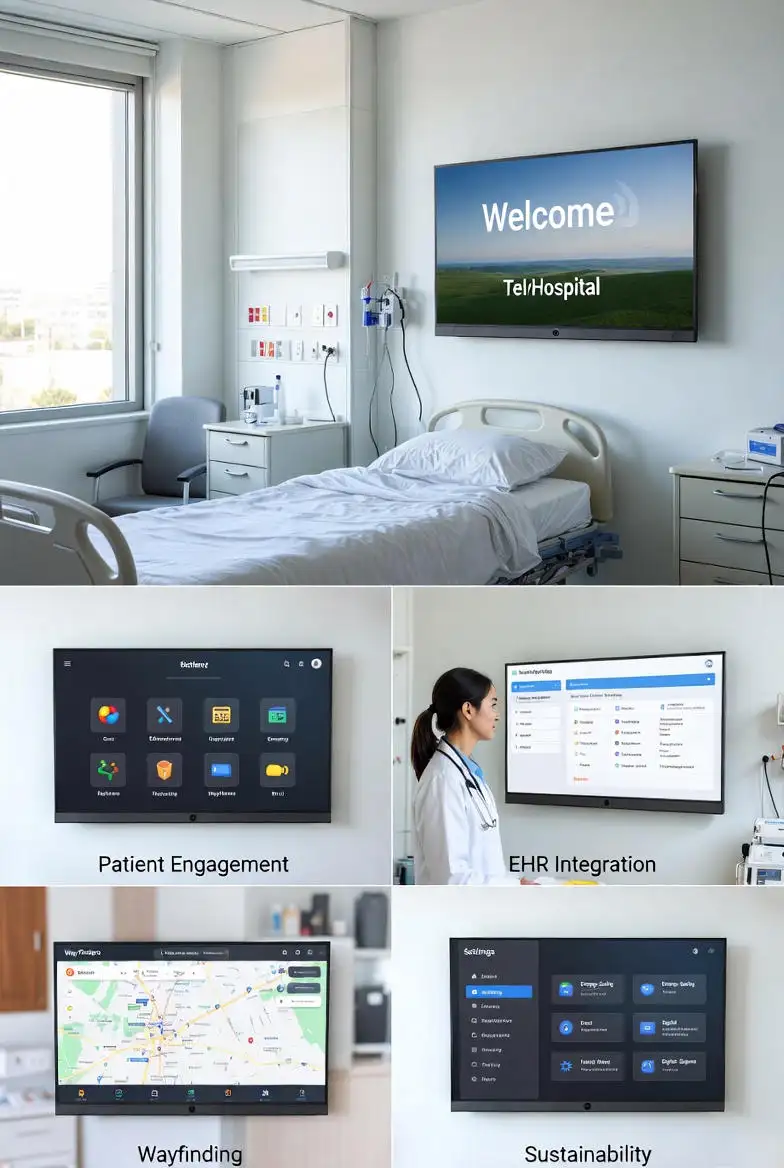
Integration is where hospital TV systems shine as ecosystem enablers. Central to this is EHR connectivity, allowing TVs to display personalized data like vital signs or discharge plans without breaching privacy. Platforms like GetWellNetwork route alerts to nurses’ phones, streamlining responses.
Telemedicine capabilities turn TVs into virtual consultation hubs. During the pandemic, features for video calls and remote monitoring (e.g., integrating with sensors for pulse and oxygen levels) became essential. Uniguest’s solutions support interpreter services and family updates via mobile apps.
Digital signage integration extends TVs to waiting areas, providing wayfinding, health tips, and alerts, reducing perceived wait times by 35%. IoT linkages allow control of environmental factors, enhancing comfort.
Security protocols, including encryption and access controls, ensure compliance with HIPAA. Future integrations may include AI for predictive analytics, flagging at-risk patients based on viewing patterns.
These integrations unify disparate systems, boosting efficiency and care quality.
Case Studies and Real-World Applications
Real-world implementations demonstrate the transformative power of hospital TV systems.
At Carolinas HealthCare System, the GetWellNetwork IPC system was piloted in 2013 across facilities. Integrating smart TVs with EHRs, it enabled video education, pain ratings, and request routing. Outcomes included 98% patient usage, 4-15% satisfaction score increases, and reduced nurse interruptions, with 46-76% of patients engaging with discharge info.
A Midwest urban hospital installed 300+ LG TVs with ProDirect customization, resulting in a 25% patient satisfaction boost through branded interfaces and feedback portals.
Moffitt Cancer Center partnered with Uniguest for an IPS in its new surgical facility, enhancing patient empowerment via entertainment, controls, and education, leading to seamless care delivery.
These cases illustrate measurable improvements in engagement, efficiency, and outcomes.
Future Trends and Innovations
Looking to 2033, hospital TV systems will incorporate AI for personalized content recommendations and predictive health insights. IoT and big data will enable real-time monitoring, while sustainability trends favor recyclable materials and low-energy designs.
Telehealth will expand, with TVs as hubs for virtual nursing. Emerging markets in Asia-Pacific will drive adoption, with a CAGR of 7%. Challenges like high costs will be addressed through cloud-based solutions.
Challenges and Considerations
Despite benefits, challenges include initial costs ($500-$2,000 per unit), regulatory compliance, and cybersecurity risks. Hospitals must prioritize scalable vendors, staff training, and ROI assessments.
Conclusion
Hospital television systems are indispensable for modern healthcare, blending entertainment with empowerment. By adopting these technologies, facilities can achieve superior patient care and operational excellence.

More Saintway Hospital television systems Solutions pls visitor www.saintwayech.com
Latest Content
- Integrated Bedside Infotainment: 2026 Implementation & Security Guide
- How to Choose Smart Bedside Terminal: The Complete Hospital Buying Guide for 2026
- Bedside Infotainment vs Traditional Hospital TV: 2026 Strategic Decision Framework
- Unlocking Smarter Smart Wards: The Rising Role of RFID Card Readers in Modern Hospitals
- Patient Interaction as a System Layer:Why the Bedside Terminal Is the Architectural Core of the Smart Ward