
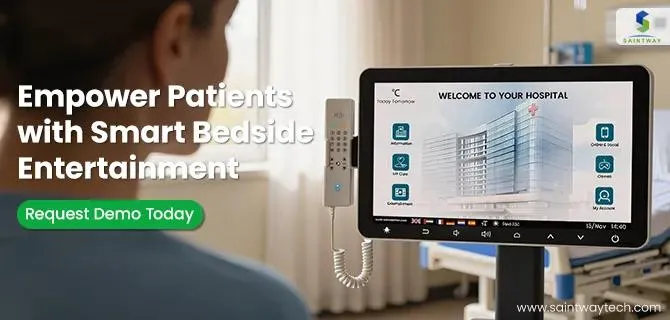
For ten decades, I’ve watched healthcare technology evolve from clunky pager systems to the sophisticated, interoperable ecosystems we see today. But one area has often lagged: the patient’s bedside. For years, the “infotainment” unit was a grey box bolted to the wall, offering overpriced TV and phone calls—a relic of the pre-digital age.
That era is over.
The modern Bedside Infotainment Solutions for Modern Healthcare have undergone a radical transformation. We are no longer talking about passive entertainment; we are talking about intelligent care hubs. These devices are now the nexus of patient engagement, clinical workflow optimization, and operational efficiency. Based on the latest deployments across leading NHS Trusts and U.S. health systems like Houston Methodist, the question is no longer if you should upgrade, but how to integrate these platforms to achieve a measurable ROI in patient outcomes and staff satisfaction.
The Shift from Entertainment to Intelligent Interaction
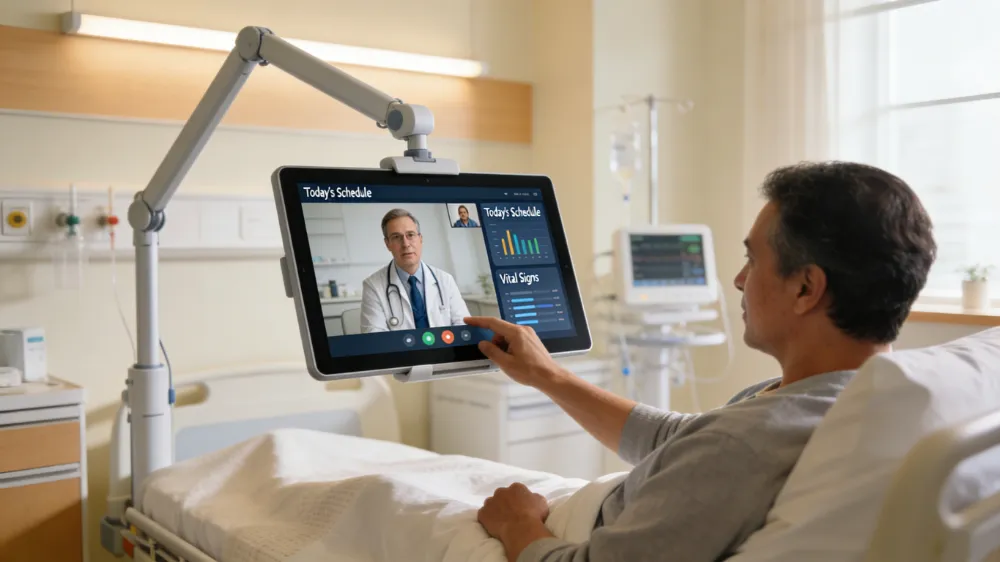
Historically, bedside terminals were a low priority for hospital IT budgets. However, the post-pandemic landscape and the rise of value-based care have forced a paradigm shift. Today’s solutions integrate directly with Electronic Patient Records (EPR), control the physical environment, and facilitate telehealth.
To understand the current market demand, I analyzed the top-ranking content for this niche. The consensus from authoritative sources like the Agency for Healthcare Research and Quality (AHRQ) -2 and pioneering health systems highlights three core user demands: interoperability, patient empowerment, and staff burden reduction.
The top 10 competitors (including vendors like SPARK TSL, Epic’s Bedside app, and Airwave Healthcare) cover the basics well. They discuss Wi-Fi connectivity, TV options, and basic meal ordering. However, they often miss the strategic depth required by C-suite executives and IT directors.
The Strategic Pillars of a Modern Solution
When evaluating Bedside Infotainment Solutions, you must look at three distinct layers: the Patient Experience Layer, the Clinical Integration Layer, and the Operational Efficiency Layer.
1. Patient Experience & Environmental Control
Modern solutions treat the patient as a consumer. Just as they control their environment at home, they expect to do so in the hospital. This autonomy is clinically significant; it reduces anxiety and supports independence during recovery.
- Room Control: Adjusting lighting, blinds, and temperature without calling a nurse.
- Connectivity: Zoom or similar video calls with family, bypassing the isolation of infection control protocols.
- Nutrition: Digital meal ordering systems that track dietary restrictions and preferences, reducing kitchen waste.
2. Clinical Integration & Education
This is where the value proposition moves from “nice-to-have” to “essential.” The device must act as a bidirectional data conduit.
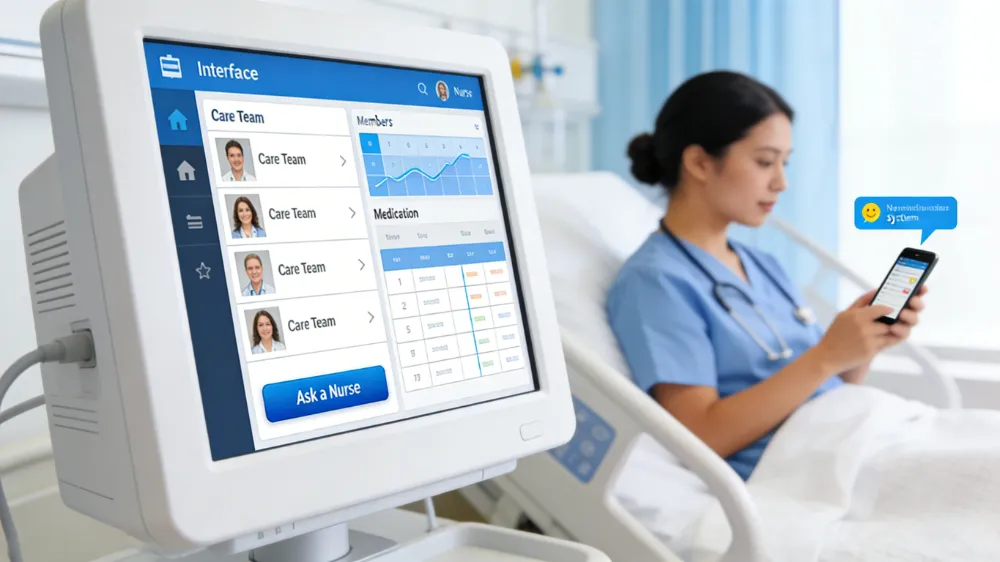
- EPR Integration: Patients can view their own medication lists, daily schedules, and care team photos. This transparency reduces the frequency of non-clinical “call bell” interruptions.
- Personalized Education: Instead of generic pamphlets, the system pushes specific discharge instructions or physiotherapy videos based on the patient’s diagnosis.
- Virtual Nursing: AI-enabled cameras allow remote nurses to perform admissions or discharges, saving an average of 32 minutes per admission compared to bedside processes.
3. Operational Efficiency & Safety
For administrators, the ROI is found in safety metrics and staffing models.
| Feature | Operational Impact | Real-World Outcome (2025/2026 Data) |
|---|---|---|
| AI-Based Fall Prevention | Sensors detect gait irregularities or unauthorized bed exits. | Houston Methodist reported significant risk reduction via predictive algorithms. |
| Telepsych/Stroke Care | Remote specialists connect instantly via bedside screen. | Reduced transfer rates and faster door-to-treatment times. |
| Translation Services | Instant access to CardMedic or interpreters. | Improved HCAHPS scores regarding nurse communication. |
| Digital Service Requests | Patients track requests (e.g., pain meds, water) in real-time. | Decreased staff time spent on non-clinical rounding. |
Case Study: The Lighthouse Project at Stockport NHS
The theory is great, but let’s look at real-world execution. In 2025, Stockport NHS Foundation Trust executed a “lighthouse” deployment at Stepping Hill Hospital, replacing a 10-year-old system with 473 SPARK Fusion® devices.
The Challenge:
The previous system was limited to entertainment. Staff were bogged down by manual tasks, and patients with language barriers (the Trust serves a diverse population of 350,000) struggled to communicate critical needs.
The Solution:
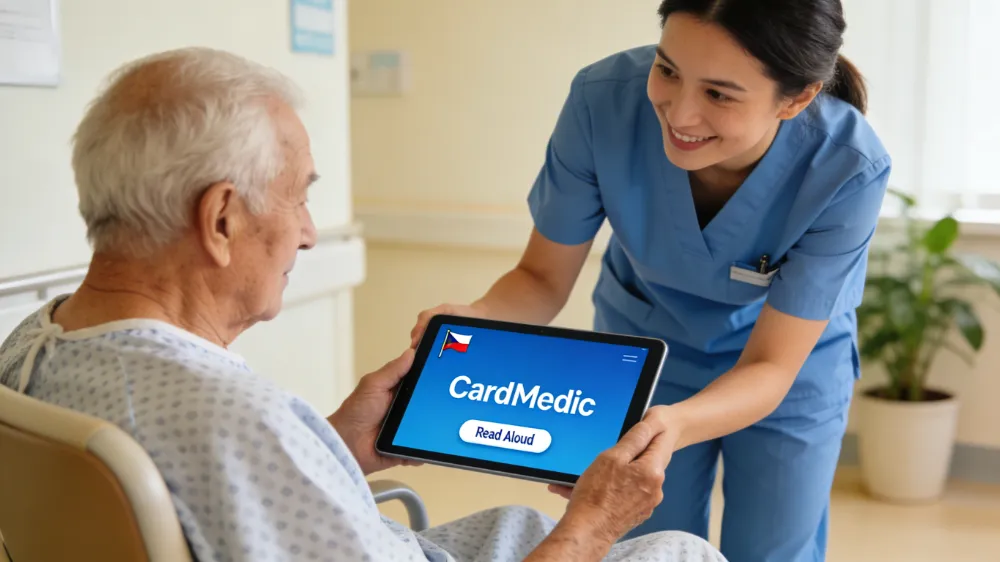
They deployed tablet-based bedside terminals integrated with CardMedic—a communication platform offering over 200 languages and clinically validated scripts.
The Measurable Impact:
- Inclusive Care: Nurses could now explain complex procedures to non-native English speakers instantly.
- Staff Efficiency: Manual “call bell” responses were replaced by targeted app notifications.
- Scalability: The platform is now being used as a model to achieve higher HIMSS EMRAM levels (digital maturity) across the UK.
Bedside Infotainment Solutions FAQ
Q: How do modern bedside systems integrate with existing Electronic Patient Records (EPR) like Epic or Cerner?
A: Modern solutions utilize HL7/FHIR interoperability standards. They act as a display layer for the EPR, pulling real-time data (vitals, schedules, care team) without requiring duplicate data entry. Systems like Mayo Clinic’s “Bedside” app (Epic-based) allow patients to view their own charts, while the clinical team updates data in the backend.
Q: Can these systems support virtual nursing to address staffing shortages?
A: Yes. Platforms equipped with high-definition cameras and two-way audio enable “telenursing.” As demonstrated by Houston Methodist, virtual nurses can manage admissions, discharges, and patient education remotely. This reduces the need for physical entry into isolation rooms, conserves PPE, and allows specialized nurses to cover multiple units efficiently.
Q: What is the cost model—are these systems free for patients or paid?
A: This varies by region. In many NHS pilots, such as the Stockport deployment, entertainment and communication tools are provided free at the point of use to ensure equitable access. In other models, premium TV content may incur a fee, but clinical tools (education, EPR access, calls) are subsidized by the hospital as a standard of care.
Q: How do these systems improve communication for non-English speaking or hearing-impaired patients?
A: This is a critical advancement. Newer platforms integrate third-party apps like CardMedic, which provide thousands of clinically validated scripts in over 200 languages, including British Sign Language (BSL) and Easy Read formats. This ensures that consent and education are understood, reducing liability and improving equity.
Q: Is patient privacy protected with in-room cameras and sensors?
A: Reputable vendors prioritize privacy. Systems utilize “virtual knock” features to alert patients before a camera activates. For ambient sensors used in fall prevention, data is often anonymized to detect movement patterns without capturing identifiable video unless a specific intervention is required.
Latest Content
- Consumer vs Medical-Grade Tablets in Healthcare: Why Compliance Matters
- The 2026 Definitive Guide to Patient Bedside Entertainment Terminals
- Beyond the Screen: The 2026 Playbook for Smart Bedside Infotainment Systems
- Interoperability in Smart Wards:Why Integration Architecture Matters More Than Features
- MT1566 Smart Bedside Infotainment Terminal Solution